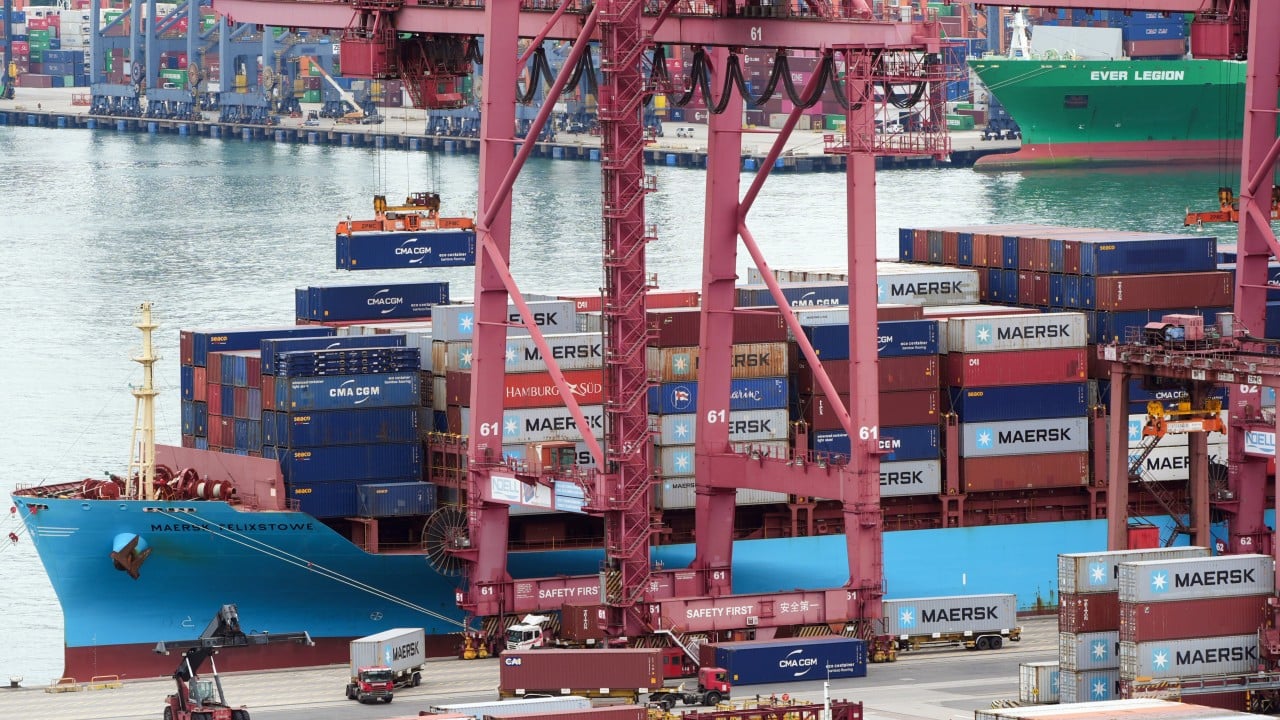
Measuring Hong Kong's trade relevance by container throughput or physical transshipment tonnage misdiagnoses what makes a logistics hub durable in a fragmented global economy. Physical cargo volume tracks historical movement; a regional control tower governs capital allocation, risk transfer, routing decisions, and working-capital liquidity across borders.
Competitor commentary on Hong Kong's transition from a passive trade hub to a regional control tower typically relies on three familiar arguments: shifting from low-margin re-exports to higher-value goods, leaning into Mainland integration and regional trade pacts, and pairing logistics with financial and legal services. That logic identifies real direction, yet leaves major analytical gaps. It treats control tower functions as an extension of shipping rather than an independent economic model, conflates physical throughput with commercial authority, and overlooks the friction points—regulatory divergence, tariff and customs compliance, working-capital bottlenecks, and supplier concentration—that determine whether multinational and regional firms actually place decision-making teams in Hong Kong.
Separating Physical Flow from Control Tower Authority
A passive trade hub monetizes proximity, port capacity, and frictionless transit. Goods arrive, clear or transfer, and depart with limited commercial orchestration on site. A regional control tower operates as a command-and-coordination layer where firms manage inventory allocation, supplier qualification, currency and liquidity risk, customs classification, and multi-country fulfillment across a region.
The two models run on different economics. Physical throughput scales with space, crane efficiency, and freight rates, yet faces structural headwinds when regional manufacturers ship directly from secondary ports or diversify production across multiple countries. Control tower economics scale with decision density—how many cross-border inventory, financing, contracting, and compliance events are governed from the city even when the underlying cargo never touches a local quay.
In trade economics, this distinction reflects the split between transactional intermediation and coordinating governance. When tariff regimes shift, freight schedules slip, and lead times stretch, firms need rapid exception handling rather than simple pass-through warehousing. A control tower captures value precisely at those exception points: rerouting shipments, reallocating safety stock, hedging foreign exchange exposure, and financing receivables.
- Inventory and allocation control: Deciding which factory fulfills an order, how much buffer stock sits in each market, and when to shift from ocean to air freight.
- Financial and liquidity control: Managing multi-currency cash pools, trade credit, invoice financing, and working-capital cycles across jurisdictions.
- Compliance and risk control: Governing rules-of-origin documentation, customs valuation, sanctions screening, insurance coverage, and dispute resolution.
- Supplier and network control: Qualifying secondary vendors, auditing lead-time reliability, and managing contract terms across dispersed manufacturing bases.
The Three Pillars of a Regional Control Tower
Turning a trading city into a credible regional control tower requires three interlocking pillars. Weakness in any single pillar caps the value of the other two.
Capital and Liquidity Architecture
Supply chains stall when working capital is trapped in transit, slow receivables, or fragmented currency accounts. A control tower needs deep banking liquidity, multi-currency settlement capability, trade finance instruments, and corporate treasury structures that let regional operators fund inventory and suppliers without friction.
A known operational fact is that Hong Kong possesses deep financial infrastructure, broad banking participation, and established trade finance and wealth management capabilities. An educated hypothesis is that its control tower share will expand fastest in structured supply-chain finance and cross-border treasury operations rather than plain-vanilla import/export lending, because multi-tier regional supply chains generate complex invoice, inventory, and currency timing gaps that standard credit lines price poorly.
Information and Compliance Synchronization
A control tower cannot steer what it cannot see in real time. Fragmented customs declarations, paper-heavy bills of lading, inconsistent product classifications, and siloed enterprise data slow down every routing and financing decision.
Synchronizing information means aligning commercial, logistics, and regulatory data so a single shipment event updates inventory visibility, customs compliance checks, insurance coverage, and financing eligibility. Without digital trade interoperability and clear documentation standards across trading partners, firms end up duplicating compliance checks in multiple offices, which erodes the cost advantage of centralizing control in one hub.
Legal Predictability and Commercial Contracting
Complex regional supply chains depend on enforceable contracts, predictable commercial law, clear risk allocation, and neutral dispute resolution. When a supplier misses delivery windows, a carrier damages high-value goods, or a joint venture breaks down across borders, companies look to the governing law and forum specified in their master agreements.
The mechanism is straightforward: commercial teams cluster where contracts are clear, courts and arbitration bodies are credible, and cross-border enforcement is understood by counterparties on all sides of a transaction. If counterparties doubt enforceability or face protracted cross-border legal friction, firms split contracting across multiple jurisdictions, diluting the hub's role as a single point of control.
Cause-and-Effect Chains Standard Trade Narratives Miss
Competitor analyses often list strengths side by side as if they automatically reinforce one another. In practice, cause-and-effect chains cut both ways and create bottlenecks that policy slogans alone cannot clear.
Supply Chain Diversification Cuts Port Volume While Raising Coordination Demand
When manufacturers diversify production across Mainland China and other Asian economies to manage cost, capacity, or geopolitical risk, direct point-to-point shipping often bypasses traditional gateway ports. That dynamic explains why a city can see falling or uneven container volumes alongside steady or growing high-value trade and regional coordination activity.
The causal link runs from network dispersion to coordination complexity. More nodes and longer, more varied routes increase variance in transit times and compliance rules. Firms respond by centralizing planning, procurement, and risk management in a specialized hub even as physical cargo moves more directly between factories and end markets. Treating port volume as the primary scorecard mistakes a legacy physical metric for the core control tower asset.
Regulatory and Customs Friction Inflates Working-Capital Cost
Tighter scrutiny on origin rules, product classifications, dual-use or technology controls, and cross-border documentation lengthens clearance times and raises inspection probabilities. Longer dwell times and delayed settlements tie up cash in inventory and receivables.
This creates a direct cost-of-capital penalty. Even a modest increase in customs hold times or documentation errors forces treasurers to hold larger cash buffers or draw more expensive short-term credit. A control tower lowers total landed cost only when its operational, legal, and financial teams reduce—rather than multiply—those compliance and settlement delays.
Talent Concentration Requires Decision Autonomy
Analysts frequently point to talent pools as a decisive advantage, yet high-calibre trade, finance, legal, and supply-chain specialists leave or underperform if local offices lack real decision authority. If regional managers in Hong Kong can only forward spreadsheets to distant headquarters for approval, the hub functions as an administrative relay rather than a control tower.
True control tower capability requires local mandate over vendor selection, credit allocation, inventory buffers, and contract negotiation. Without authority matched to responsibility, response times lag during disruptions, defeating the primary reason a firm establishes a regional command hub.
How Hong Kong Competes Across Regional Corridors
Evaluating Hong Kong's control tower potential requires examining specific operational corridors rather than treating "Asia" as a single market. Different corridors place different demands on logistics, finance, and governance.
In Mainland–Hong Kong–global corridors, Hong Kong's structural role centers on acting as a commercial, financial, legal, and international settlement interface for enterprises expanding outward or sourcing globally. The operational mechanism relies on pairing Mainland manufacturing scale and engineering depth with Hong Kong's international banking, contracting, and capital access. The main failure mode occurs when functions are duplicated without clear division of authority, adding overhead without speeding up execution.
In ASEAN and broader Asia-Pacific corridors, regional supply chains are increasingly multi-hubbed across Southeast Asia, Northeast Asia, and South Asia. Here, Hong Kong does not hold a monopoly on physical transit; competing ports and regional hubs handle massive direct flows. To win control tower mandates in these corridors, Hong Kong must compete on end-to-end orchestration—linking regional procurement, multi-currency treasury, trade credit, and dispute resolution across partners that operate under different legal and regulatory systems.
In high-value, time-sensitive sectors, such as electronics, precision components, pharmaceuticals, and specialized industrial goods, speed and reliability outweigh low per-kilogram freight cost. High value-to-weight ratios magnify the financial cost of stockouts, obsolescence, and damaged transit, making air connectivity, rapid customs clearance, and specialized insurance essential parts of the control tower stack.
What Firms Actually Evaluate Before Centralizing Control
Corporate strategy and supply-chain leaders rarely select a control tower location on abstract geopolitical themes. They evaluate concrete operational criteria that determine unit cost, speed, and risk exposure.
- End-to-end landed cost and exception speed: Total cost per delivered unit—including freight, duties, insurance, financing, and delay penalties—and how fast teams can reroute orders when a disruption hits.
- Working-capital velocity: How quickly invoices convert to cash, how efficiently multi-currency liquidity can be pooled or deployed, and how competitively trade finance is priced.
- Data and documentation interoperability: Whether customs filings, trade documents, supplier records, and financial data integrate cleanly without manual re-keying or conflicting rules.
- Contractual and dispute predictability: Whether commercial agreements can be drafted under familiar, reliable legal standards with practical enforcement and arbitration options.
- Cross-border talent depth: Availability of practitioners fluent in international supply-chain risk, structured trade finance, regulatory compliance, and regional commercial negotiation.
- Concentration and single-point-of-failure risk: Exposure to corridor bottlenecks, regulatory shifts, or over-reliance on any single trading partner or transport route.
Why Control Tower Strategies Fail—and Their Real Limits
No hub strategy eliminates structural trade-offs. Even well-executed control tower initiatives run into hard limits that any credible assessment must state plainly.
First, governance cannot override physical geography and industrial gravity. When factories cluster near raw materials, end consumers, or specialized industrial ecosystems elsewhere in Asia, physical goods will naturally move along the most direct viable routes. A control tower can coordinate those flows, but it cannot force cargo onto uneconomic detours.
Second, regulatory and policy divergence across borders creates persistent friction. Differences in customs regimes, data rules, tax treatment, and cross-border capital controls require ongoing compliance work. Policy initiatives can ease specific bottlenecks, yet structural differences between jurisdictions remain a reality that firms must actively manage rather than assume away.
Third, cost pressure tempts firms to centralize on paper while keeping control decentralized. Companies often announce a regional headquarters or control center to satisfy tax, governance, or investor expectations while leaving actual procurement, pricing, and inventory authority scattered across country managers. That gap between formal structure and real operating power produces slow decisions and bureaucratic drag.
Fourth, external shocks and trade policy shifts test every hub's resilience. Tariff changes, export controls, shipping disruptions, and macroeconomic slowdowns affect all major trading centers. A control tower reduces vulnerability through better visibility and faster reallocation, not immunity.
Tactical Blueprint for Building Control Tower Value
Turning the regional control tower concept from a broad ambition into measurable commercial advantage requires disciplined execution across four stages.
Audit Where Decisions Actually Happen
Map every high-impact supply-chain decision—supplier onboarding, safety-stock allocation, mode switching, credit extension, hedging, and contract sign-off—against the city or team that holds final approval. Identify decisions that currently require slow escalations across time zones or legal entities. Consolidate authority in Hong Kong only where local teams have the data, domain skill, and mandate to act decisively.
Engineer the Finance-Logistics-Compliance Link
Stop treating freight booking, customs compliance, and trade financing as separate silos. Connect shipment milestones and verified trade data directly to working-capital release, risk transfer, and inventory accounting. When data flows cleanly across these three functions, companies cut idle cash, reduce documentation errors, and shorten order-to-cash cycles.
Standardize Contracting and Risk Allocation
Audit standard supply, distribution, logistics, and agency contracts across regional corridors. Align governing law, insurance requirements, liability caps, and dispute resolution clauses so regional teams do not renegotiate basic risk terms from scratch on every deal. Standardized risk architecture speeds up commercial execution and lowers legal friction when disputes arise.
Track Control Metrics Instead of Vanity Throughput
Replace volume-obsessed scorecards with metrics tied to control tower performance: exception resolution time, cash conversion cycle across regional corridors, customs and documentation error rates, share of cross-border volume governed by standardized contracts, and working-capital cost per unit shipped. What gets measured shapes where leadership invests.
The Strategic Play
The winning strategic play for Hong Kong—and for enterprises building regional operations there—is to compete as a high-trust orchestration and capital-efficiency engine for complex, multi-corridor trade rather than chasing lost container volume. Policymakers and business leaders should focus relentlessly on lowering cross-border transaction friction across finance, digital trade documentation, and commercial dispute resolution while giving regional teams genuine operating authority. In a world where supply chains are wider, faster-changing, and more rule-bound than ever, the hub that controls the money, the contracts, and the exception decisions holds the durable advantage long after a container passes the breakwater.

