The Numbers Tell a Grim Story
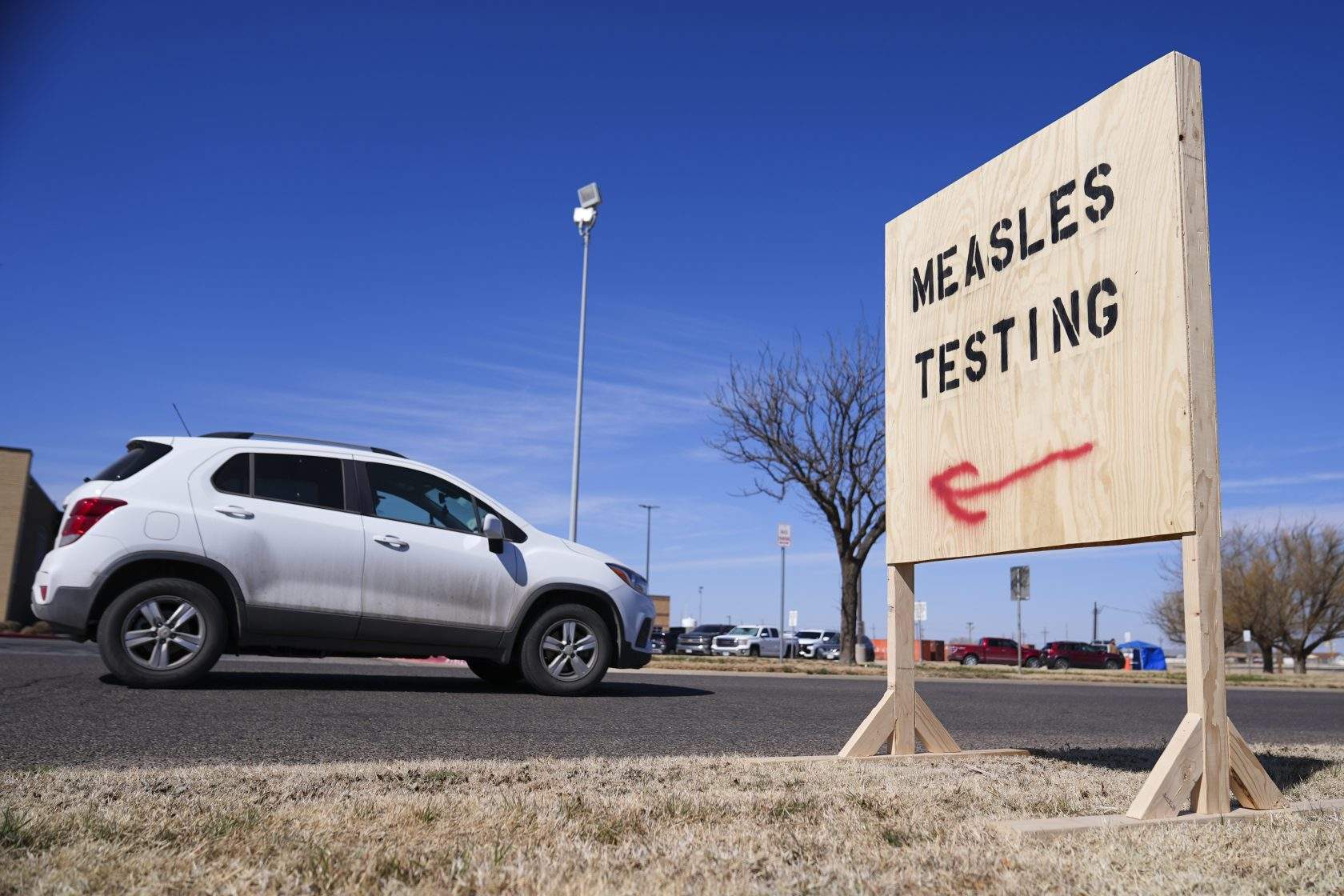
Measles cases in the United States have officially surpassed the entire year-end total recorded in 2025. Public health agencies are tracking transmission chains multiplying across suburban school districts, metropolitan transit hubs, and rural counties alike. What was once declared eliminated in the U.S. back in 2000 is now re-establishing persistent footholds.
This resurgence is not an accident of nature. It is the direct mathematical outcome of declining vaccination coverage among kindergarteners, eroding population-level herd immunity, and systemic delays in local contact tracing. When immunization rates drop below the critical threshold required to stop air-borne transmission, a single imported case can ignite exponential spread.
How Herd Immunity Actually Breaks Down
Measles is one of the most infectious pathogen known to medical science. The basic reproduction number ($R_0$) for measles typically ranges between 12 and 18. This means that in a completely susceptible population, one infected person will spread the virus to an average of 12 to 18 others.
To prevent sustained community transmission, a population must maintain an immunization coverage rate of roughly 95%. When public vaccination rates dip even slightly below this mark, safety margins evaporate.
Measles Transmission Dynamics
+-------------------------------------------------------+
|  Pathogen $R_0$: 12 - 18                              |
|  Threshold for Herd Immunity: 95%                     |
|  Current Kindergartner MMR Rate: ~92%                 |
|  Result: Exponential Cluster Growth in Low-Rate Pockets|
+-------------------------------------------------------+
Across several states, non-medical exemption rates for routine childhood vaccines have steadily climbed over recent years. In localized pockets—specific school districts, private academies, or close-knit communities—coverage has dropped well below 80%. These clusters act as super-dry tinder. Once the virus enters these pockets, it spreads rapidly before health officials can even identify the primary case.
Structural Vulnerabilities in Public Detection
The early symptoms of measles mirror common respiratory illnesses. Fever, cough, runny nose, and red eyes appear first. The classic maculopapular rash does not show up until three to five days later.
Because many practicing physicians have never encountered a clinical case of measles during their medical training, early misdiagnoses are frequent. Patients are routinely sent home with generic viral diagnoses, spending crucial days infecting others in waiting rooms, emergency departments, and grocery stores.
By the time a patient presents with a distinct rash and receives laboratory confirmation, dozens of secondary exposures have already occurred. Local health departments, often operating on constrained budgets, are then forced to reconstruct complex contact chains involving hundreds of individuals across multiple public locations.
The Economic Burden of Containment
Containing a single outbreak demands massive municipal expenditure. Public health teams must identify exposed individuals, verify immunization records, administer post-exposure prophylaxis within tight timeframes, and enforce quarantine protocols for unvaccinated contacts.
| Expense Category | Operational Impact | Typical Resource Requirement |
|---|---|---|
| Contact Tracing | Reconstructing public movements and notifying contacts | Hundreds of staff hours per index case |
| Laboratory Testing | Rapid RT-PCR confirmation and serology | Specialized regional public health labs |
| Post-Exposure Prophylaxis | Administering MMR or immunoglobulin within 72–12 hours | Immediate clinical intervention teams |
| Facility Decontamination | Disinfecting affected medical and public facilities | Specialized protocols for airborne containment |
When dozens of independent clusters erupt simultaneously across multiple states, municipal health budgets are drained in weeks. Resources that should go toward preventive care are swallowed up by emergency containment measures.
Misinformation and the Loss of Institutional Trust
Addressing the resurgence of vaccine-preventable diseases requires confronting the collapse of public trust in institutional health guidance. Social media algorithms reward alarming content over nuanced epidemiological data. Misleading claims regarding vaccine safety spread far faster than clinical trial verifications.
Furthermore, state legislatures across the country have altered public health laws, restricting the authority of local health officers to mandate quarantines or require immunizations for school entry. This statutory fragmentation creates a patchwork of vulnerability where neighboring counties operate under drastically different protective standards.
Without unified policy enforcement and targeted community outreach, routine childhood vaccination rates will continue to drift downward. The current record-breaking caseload is not a temporary spike; it is an early indicator of a long-term structural crisis in public health defense.
Reversing this trend requires restoring rigorous school entry requirements, training frontline clinicians to recognize early diagnostic signs, and funding local epidemiology departments to respond instantly to initial cases. Until community immunity is restored to the mandatory 95% mark, measles will continue to find vulnerable populations and break through regional defenses.