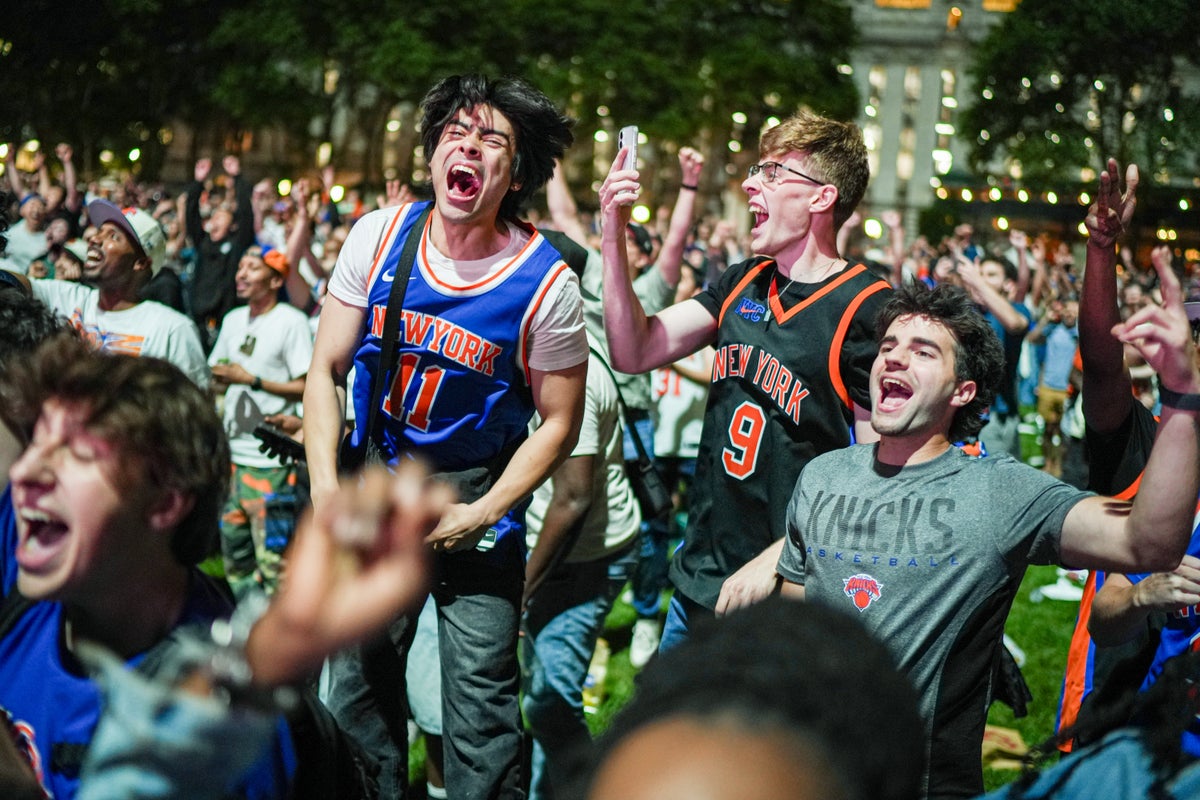
Madison Square Garden officials abruptly canceled the scheduled outdoor playoff watch parties on the Pennsylvania Station plaza, leaving thousands of New York Knicks fans stranded without a communal hub. While team representatives publicly cited logistical complications and safety coordination issues, the abrupt cancellation stems from a deeper conflict involving city agencies, private arena management, and the high-stakes economics of modern sports broadcasting. The decision highlights the growing friction between public fandom and private property administration in the heart of Manhattan.
The Illusion of Public Space
The concrete plaza outside Madison Square Garden operates under a complex web of jurisdictional oversight. While it functions visually as a public square where fans gather to celebrate, the land itself is tightly controlled by the Madison Square Garden Entertainment Corporation. When the Knicks surged into the postseason, the plaza became the natural epicenter for the city’s pent-up basketball energy.
Thousands of ticketless fans gathered during early-round games, creating a security profile that quickly overwhelmed local infrastructure. The New York City Police Department expressed immediate concerns regarding crowd crush dynamics, particularly given the plaza's position directly above North America's busiest transportation hub, Penn Station.
Security sources indicate that the decision to halt the viewings was not a sudden bureaucratic whim. It was the inevitable result of an infrastructure never designed to hold stationary, celebrating crowds for four hours at a time. The entry and exit points for commuter trains sit mere feet from where the giant screens were erected. A bottleneck at street level risks halting the flow of subterranean transit lines, a scenario municipal planners refused to risk as the playoff series intensified.
The Broadcast Rights Battleground
Beyond the immediate safety calculations lies a more quiet, financial calculation. Major sports leagues and their network partners guard their broadcasting exclusivity with aggressive legal teams. When a venue displays a live game to thousands of individuals assembled in an outdoor setting, it skirts the edge of commercial public performance regulations.
The Network Viewership Equation
Television networks pay billions for the rights to air postseason basketball. Their business model relies entirely on measurable home viewership or verified commercial venue traffic, such as sports bars.
- Ratings Tracking: Outdoor public watch parties draw viewers away from traditional metric tracking, diluting the localized television ratings that networks use to justify premium advertising rates.
- Sponsorship Friction: The brands staging activations on the plaza often clash with the official corporate sponsors who paid for airtime during the game broadcast.
Madison Square Garden executives found themselves caught between satisfying a local fanbase and upholding strict compliance with league-wide media agreements. Allowing the plaza gatherings to continue without a ticketed, controlled gate meant giving away a premium product for free in a manner that complicated regional broadcast agreements.
The Sports Bar Economy Fights Back
Local hospitality businesses also leveraged significant pressure on community boards and city representatives. The Midtown Manhattan business district relies heavily on game-night traffic to recover from shifting weekday commuter patterns. When thousands of fans remain outside on the plaza, area taverns lose out on critical food and beverage revenue.
Proprietors argued that the arena was effectively running an unregulated, competing venue right on their doorsteps. The neighborhood correlation between public watch parties and dropped bar receipts created a unified front among local merchants, who utilized zoning laws to question the legality of semi-permanent outdoor broadcast structures.
A Dangerous Precedent for Urban Fandom
The cancellation points to a broader trend across professional sports where the traditional, organic gathering of fans is being systematically monetized or dismantled. Other franchises have successfully built dedicated, team-controlled entertainment districts, such as the Milwaukee Bucks’ Deer District or Toronto’s Jurassic Park. These spaces are engineered from the ground up for crowd control, integrated sponsorship, and digital surveillance.
The plaza at Pennsylvania Station enjoys none of those modern architectural advantages. It is a mid-century transit roof masquerading as a modern fan plaza. Attempting to retrofit this specific piece of Manhattan real estate into a controlled fan zone revealed the stark limitations of New York's aging urban design.
The Logistics of Crowd Containment
Managing twenty thousand ecstatic citizens requires barriers, sanitation facilities, dedicated medical tents, and private security details. The cost of operations falls squarely on the venue operator, yet the outdoor plaza events generated zero direct ticket revenue.
When the liability costs of defending against a potential crowd surge outpace the public relations value of hosting the event, corporate risk aversion wins. The cancellation was a predictable exercise in corporate liability management, disguised as a neighborhood logistical hiccup. Knicks fans looking for community will have to find it inside commercial establishments or within their own living rooms, as the era of free, open-air arena gatherings in midtown faces an indefinite freeze.