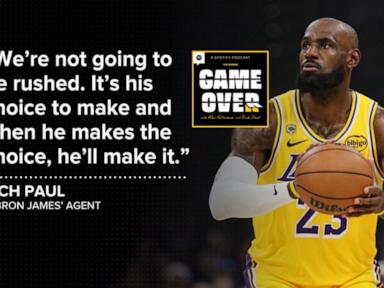
LeBron James remains an unrestricted free agent nearly a month into the summer offseason because the traditional rules of NBA star movement no longer apply to a 41-year-old player entering his 24th season. While media chatter fixates on cap space and geographical preferences, the actual delay stems from a brutal roster construction math problem under the current collective bargaining agreement. After eight seasons in Los Angeles, the Lakers have turned the keys over to Luka Doncic, leaving James to calculate where his remaining physical utility aligns with a team capable of surviving his financial footprint.
Every major free agency decision in modern basketball history followed a clear playbook. In 2010, peak athletic talent sought championship parity. In 2014 and 2018, narrative control and business expansion drove the bus. Today, the operational calculus is far more restrictive.
The Brutal CBA Mechanics Halting the Decision
The second apron of the luxury tax has effectively neutered how contender front offices assemble elite rosters. Under the current rules, teams operating above the secondary tax tier lose trade flexibility, cannot aggregate contracts in trades, and lose access to mid-level exceptions.
This financial gridlock directly impacts a aging superstar. Contenders with championship-caliber foundations are almost universally capped out. They cannot absorb a marquee salary without gutting the exact depth required to win four playoff rounds.
"When an aging icon demands a substantial portion of cap allocation, the surrounding roster degrades instantly," notes one veteran Western Conference executive. "You are trading five reliable rotation players for 30 minutes of brilliant basketball."
If James demands a contract reflecting his historic pedigree, he forces his prospective team into second-apron purgatory. If he accepts a mid-level exception or a veteran minimum, he disrupts the precedent he spent two decades establishing for player empowerment.
Why a Return to Los Angeles Was Never Feasible
The public narrative suggested a quiet negotiation behind closed doors between front office leadership and Klutch Sports. Reality paints a very different picture.
Los Angeles committed its future to Luka Doncic the moment they executed the franchise-altering trade with Dallas. Building around a primary ball-handler in his prime requires specific assets: hyper-athletic wing defenders, rim-protecting big men, and spot-up shooters who do not require high usage rates.
The Fit Problem Beside Doncic
- Both players require high ball-dominance to operate at maximum efficiency.
- Defensive transition performance drops drastically when running two heavy-usage creators.
- Cap space committed to two massive contracts limits flexibility to retain key young talent like Austin Reaves.
The Lakers front office recognized that maintaining two generational orchestrators created tactical redundancy on the floor and financial stiffness in the front office. Moving on was not a personal rift; it was a structural necessity for a team trying to maximize a new era.
The Reality of Potential Landing Spots
Speculation has linked James to several traditional destinations, but each presents glaring structural obstacles when subjected to actual basketball analysis.
Miami Heat
A reunion in South Florida appeals to nostalgic sentiment, but Miami operates in a tight cap bracket. The Heat culture demands rigorous defensive commitment over long regular season stretches. Placing an aging veteran into that system requires load management strategies that clash with team operational standards.
Golden State Warriors
The idea of pairing two defining icons of a generation sounds appealing on paper. However, Golden State faces its own severe second-apron restrictions. Acquiring James would require dismantling what remains of their defensive infrastructure, leaving an exceptionally old roster vulnerable to the high-tempo offenses dominating the Western Conference.
Cleveland Cavaliers
A third homecoming carries emotional weight, yet Cleveland has invested heavily in a young, fast-paced core. Dropping a high-usage veteran into an established offensive flow risks stalling the development of their primary ball-handlers.
The Waiting Game and Historical Context
The current delay is not an indication of lack of interest. It is a tactical stand. James understands that as training camps approach, front offices face mounting pressure from ownership to sell tickets and generate postseason expectations.
By waiting, his camp forces desperate teams to evaluate whether they are willing to breach tax aprons or execute multi-team sign-and-trades to clear space. It is a high-stakes game of financial chicken played against front offices that are increasingly terrified of long-term tax penalties.
The final chapter of this career will not be decided by brand management or Hollywood production deals. It will come down to a hard choice between chasing a fifth ring on a discounted contract or accepting a massive payday on a team with zero realistic path to a championship trophy.