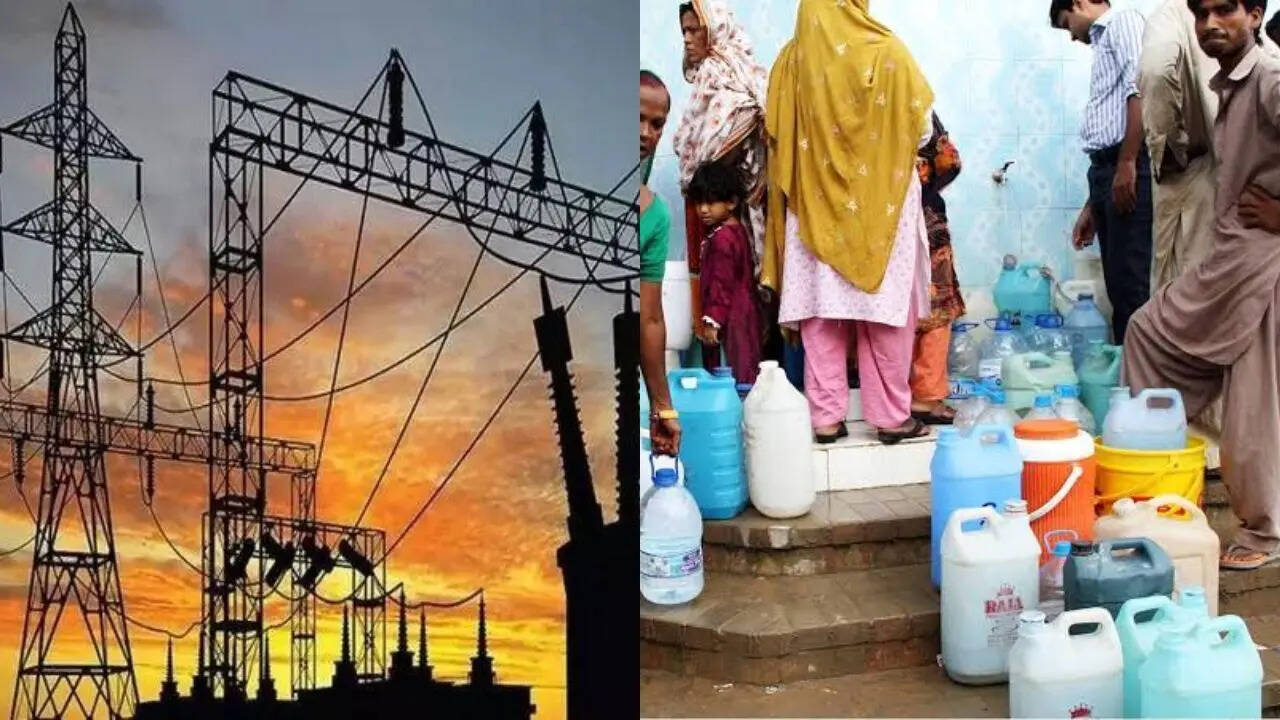
Karachi is a megacity running on empty. During the latest Eid-ul-Adha festivities, the economic engine of Pakistan suffered a simultaneous, systemic breakdown of electricity, gas, and water infrastructure. While municipal agencies and private utility operators issued boilerplate press releases claiming operations were stable, millions of citizens faced dry taps, dead power lines, and nonexistent gas pressure under an intense heatwave.
This was not a temporary glitch caused by holiday demand. It was the predictable outcome of decades of circular debt, structural rot, and an institutional blame game that prioritizes corporate balance sheets over civic survival. Meanwhile, you can explore other events here: The Xinjiang Economic Proxy War and the Failure of Western Sanctions.
The Triad of Institutional Gridlock
The breakdown of Karachi's essential services reveals a deeply entrenched, interdependent failure. No single utility operates in a vacuum, and the collapse of one triggers a domino effect across the others.
[Sui Southern Gas Company (SSGC)] ──(Fuel Shortage)──> [K-Electric (KE Grid)]
                                                               │
                                                       (Power Outages)
                                                               │
                                                               ▼
[Water Supply Lines / Tanker Economy] <──────────────── [Dhabeji Pumping Station]
At the core of the electricity crisis is K-Electric, the city’s sole, privatized power distributor. During the festival, the company claimed no unannounced load-shedding occurred. Yet, extensive residential quarters from Lyari to North Karachi experienced prolonged blackouts. The utility routinely attributes these disruptions to local line losses, power theft, or fuel shortages. Specifically, the supply of natural gas from the Sui Southern Gas Company remains a perpetual flashpoint. To see the full picture, check out the recent report by Associated Press.
SSGC countered complaints by asserting that uninterrupted distribution was maintained, blaming low pressure on the widespread household use of illegal gas suction devices. This circular buck-passing directly impacts the city's water supply.
The Karachi Water and Sewerage Corporation relies entirely on heavy electrical infrastructure to pump water from the Indus River through the Dhabeji pumping station. When the electrical grid flickers or drops voltage, these massive pumps trip.
A sudden power failure at Dhabeji causes a catastrophic hydraulic shock, commonly known as a water hammer, inside the bulk transmission pipelines. These shocks lead to major structural ruptures, such as the repeated bursts along Line Number 5. Consequently, while KWSC asserted that a routine 650 million gallons per day was being dispatched, the physical water never reached municipal taps.
The Economics of Fabricated Scarcity
The failure of the piped network shifts the burden to the informal market, exposing the financial incentives behind the infrastructural decline.
| Metric | Public Piped System | Private Tanker Market |
|---|---|---|
| Daily Cost to Consumer | Nominal Monthly Civic Tariff | PKR 8,000 per single delivery |
| Delivery Reliability | Highly intermittent, weeks of dry taps | Prompt, high-priority fulfillment |
| System Efficiency | 50% deficit against estimated city demand | Highly optimized via parallel logistics |
Karachi’s formal water deficit exceeds 600 million gallons daily. This massive gap is aggressively filled by a lucrative, largely unregulated private water tanker industry. When public infrastructure collapses right before a major cultural festival, the demand for these tankers spikes exponentially.
Residents reported paying upwards of PKR 8,000 for a single tanker to secure basic hygiene during Eid. The infrastructure does not fail simply because it is old. It fails because the systemic inability to maintain the piped network creates a highly profitable captive market for secondary suppliers.
The financial crisis is worsened by the circular debt choking Pakistan's energy sector. SSGC frequently restricts fuel allocation to K-Electric over billions of rupees in outstanding receivables and disputes regarding security deposits. K-Electric, in turn, manages its balance sheet by penalizing high-theft neighborhoods with strategic power cuts, a practice euphemistically termed "load management."
When public utilities are managed through the lens of debt mitigation rather than public service, municipal infrastructure ceases to function as a cohesive network.
The Technical Debt of an Aging Grid
The physical infrastructure of the city is operating well past its engineered lifespan. The transmission lines, substations, and gas pipelines are incapable of handling the rapid, unplanned urbanization characteristic of modern Karachi.
- Distribution Instability: The distribution network uses outdated overhead wiring vulnerable to environmental stress and unauthorized hookups (kundas).
- Substation Overload: Existing transformers frequently overheat during peak summer temperatures, causing localized equipment failures that look like deliberate power cuts to consumers.
- Pipeline Degradation: The underground gas distribution network suffers from severe pressure drops due to corrosion, leaks, and a lack of modern compressor stations.
De-linking the Systemic Failure
Fixing Karachi’s structural decline requires moving past short-term crisis management and temporary repairs. The city cannot afford to treat these utility failures as isolated issues handled by independent, warring entities.
First, the deep operational dependency between water and power must be physically broken. The Dhabeji pumping station and other critical water installations must be completely isolated from the commercial grid. Developing dedicated, on-site solar and heavy-industrial generation plants for the water network would ensure pumping continues even during a total grid collapse. This step would eliminate the destructive water hammers caused by unexpected power cuts, protecting the city's main supply lines from catastrophic failures.
Second, the regulatory hands-off approach governing utility providers must end. The National Electric Power Regulatory Authority and provincial oversight bodies need to enforce strict penalties for operational negligence, regardless of corporate excuses about fuel shortages or outstanding debts. When private distribution models prioritize financial risk management over basic service delivery, the regulatory framework must intervene to protect the public.
Finally, the informal tanker economy must be brought under strict municipal control. Transitioning this parallel supply system into a heavily regulated, publicly accountable transport service would remove the financial incentives that thrive on infrastructure failures.
As long as civic failure remains highly profitable for private syndicates, the motivation to build a modern, functional piped network will remain dangerously compromised.