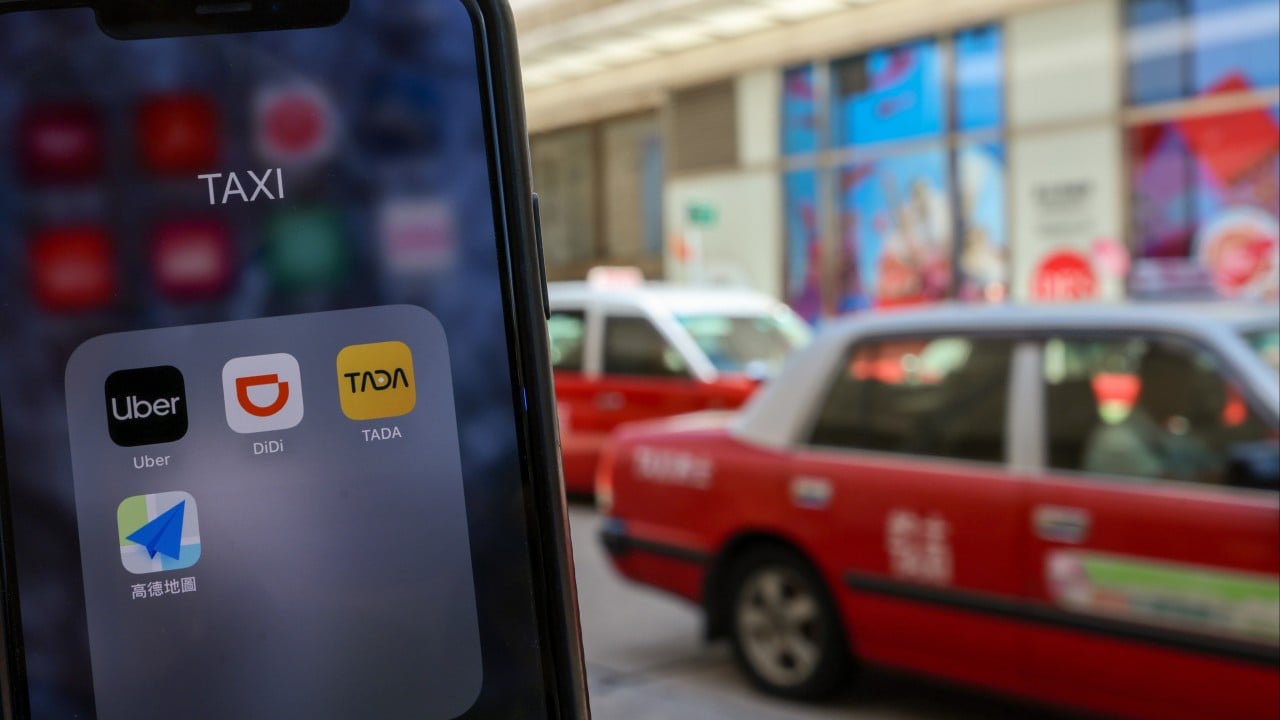
The Hong Kong government plans to regulate its chaotic ride-hailing market by issuing a mere 10,000 licenses to private cars, a move officials style as a prudent starting point. Transport Minister Lam Sai-mung frames this cap as a measured step to balance public demand with transport ecosystem stability. It is not. Instead, this restrictive ceiling represents a desperate bureaucratic attempt to protect a politically powerful taxi monopoly at the expense of commuter choice and urban mobility. By choking the supply of platforms like Uber, the city guarantees longer wait times, higher surge pricing, and a black market for unregulated rides.
The Mathematical Collapse of a Tenth Thousand Limit
Hong Kong operates on a razor-thin margin of transit efficiency. Seven million residents and millions of tourists rely on a tightly wound network of trains, buses, and public light buses. Taxis have historically filled the gaps. Yet, the official proposal to inject exactly 10,000 legal ride-hailing vehicles into this ecosystem ignores basic urban geometry and consumer data.
Market estimates indicate that tens of thousands of active drivers currently utilize ride-hailing applications across the territory to meet daily demand. Shrinking that pool down to a hard ceiling of 10,000 licenses creates an immediate supply deficit.
Consider the arithmetic of peak hours in Central or Tsim Sha Tsui. When a sudden downpour hits or the financial district empties at 6:00 PM, the demand curve spikes vertically. Under a free or flexible market model, algorithmic surge pricing incentivizes more drivers to hit the streets, eventually flattening the demand spike.
When you enforce an arbitrary legislative cap, the algorithm has no room to breathe. The cars simply will not exist. Commuters will look at their screens and confront endless loading icons, or worse, surge multipliers that price out average workers. The minister's "prudent" threshold is a mathematical choke point.
Protecting the Red Cab Monopoly
To understand why the government is pursuing an artificial shortage, one must examine the unique, opaque economics of the Hong Kong taxi license system. Urban taxi licenses, known locally as the "red cabs," are not mere regulatory permits. They are highly speculative financial instruments.
+------------------------------------------+
|  Hong Kong Taxi Premium Economics       |
+------------------------------------------+
|  * Peak License Valuation (Historical):   |
|    HK$7 million+ ($900,000 USD)          |
|                                          |
|  * Current Depreciated Valuation:        |
|    HK$3 million - HK$4 million           |
|                                          |
|  * Total Issued Urban Taxi Licenses:      |
|    ~18,163 fixed permits                 |
+------------------------------------------+
For decades, the government has capped the total number of taxi licenses at roughly 18,163. Because no new licenses are issued, their value skyrocketed. Wealthy investors, clan associations, and corporate fleets bought them up, renting the vehicles to shift drivers for daily fees. At their peak, these individual pieces of paper traded for more than HK$7 million ($900,000 USD) each, making them more lucrative than prime real estate.
The rise of ride-hailing apps shattered this cartel. As commuters shifted to cleaner, more reliable private cars, the valuation of taxi licenses plummeted to around HK$3 million to HK$4 million.
The powerful taxi lobby, which commands significant influence in local advisory bodies, revolted. They demanded aggressive enforcement against "illegal" Uber drivers, staging slow-drive protests that paralyzed major arteries.
The 10,000-license cap is not an enlightened transport strategy. It is a political concession designed to prop up the depreciating assets of politically connected fleet owners. By keeping ride-hailing supply artificially low, the government ensures that citizens are forced back into the passenger seats of the existing taxi fleet, regardless of how poor the service quality remains.
The Fiction of the Complementary System
The Transport and Logistics Bureau repeatedly states that ride-hailing must only serve as a "complement" to traditional public transport, not a replacement. This policy framework views commuter behavior through an outdated, twentieth-century lens.
Modern urban commuters do not view transport modes as rigid silos. They view them as a fluid continuum. A traveler might take the MTR underground railway for the longest leg of their journey, then order a ride-hailing vehicle to navigate the final three kilometers up the steep hills of Mid-Levels or into the deep pockets of the New Territories where buses run infrequently.
By treating ride-hailing as a luxury luxury tier that needs containment, the government weakens the entire multi-modal network.
The Regulatory Double Standard
The proposed framework introduces several operational hurdles that seem engineered to make ride-hailing unviable for part-time workers:
- Mandatory Fleet Management: Drivers may be forced to register under centralized platforms or specific corporate fleets, destroying the flexible schedule model that attracts drivers in the first place.
- Stringent Vehicle Requirements: Strict age and emission standards for cars that will exclude standard mid-range vehicles, pushing operating costs up.
- Stiff Insurance Premiums: Imposing taxi-grade commercial insurance policies on part-time drivers, wiping out their profit margins.
When you strip away the flexibility of the gig economy, you lose the drivers. A retired individual or a parent looking to drive fifteen hours a week to supplement their income cannot justify the overhead costs of these proposed regulations. The pool of 10,000 licenses might not even be fully utilized if the financial entry barriers are set too high, further starving the market of vehicles.
Global Precedents Reveal the Imminent Black Market
Hong Kong is not the first global financial hub to attempt a crackdown on ride-hailing. The outcomes of similar experiments in other dense cities are entirely predictable.
When New York City introduced a vehicle cap on rideshare platforms in 2018, the immediate consequence was a dramatic inflation in the cost of remaining vehicle permits and a sharp drop in service availability outside of Manhattan's core business district. Outer boroughs like Queens and the Bronx saw wait times double.
In London, aggressive regulatory battles and threats of license revocation did not clear the streets; instead, they led to the rapid proliferation of alternative, less-regulated localized dispatch networks operating under the radar.
Hong Kong will experience a similar trajectory, but with sharper consequences due to its extreme density. If 10,000 legal ride-hailing vehicles cannot meet the demand of a city with minimal private car ownership, commuters will not simply wait two hours for a bus. They will turn to unregulated options.
We are already seeing the infrastructure for a massive underground transport market taking shape. Private groups on messaging apps like WhatsApp, WeChat, and Telegram allow users to book unverified, uninsured private car rides directly with drivers.
These transactions occur entirely outside the view of tax authorities and transport regulators. If a passenger is injured in an accident inside one of these rogue vehicles, standard insurance policies are void. By over-regulating the formal ride-hailing sector, the transport ministry is actively steering its citizens into a dangerous regulatory blind spot.
The Failure of the Premium Taxi Experiment
Government officials argue that commuters who want a better experience can simply use the newly proposed "premium taxi fleets." This initiative grants licenses to operators who promise new vehicles, smartphone booking apps, and drivers who undergo customer service training.
This policy ignores twenty years of market evolution. The government cannot legislate good service quality into existence through a committee.
The fundamental flaw of the premium taxi fleets lies in the structural economics of the taxi industry itself. Shift drivers must still pay a fixed daily rent to the fleet owner before making a single dollar of profit. This structural reality forces drivers to work grueling twelve-hour shifts, chasing high-fare trips and avoiding short runs or congested routes.
A smartphone app and a new coat of paint on a vehicle will not change that underlying financial pressure. Ride-hailing platforms succeeded precisely because they abandoned the fixed-rent model in favor of dynamic revenue splits and behavioral incentives that align driver profit with passenger satisfaction.
An Alternative Road Map For Genuine Reform
If the administration truly wanted to create a world-class transport system, it would abandon the arbitrary 10,000-vehicle cap and adopt a dynamic, market-responsive framework.
Instead of a hard ceiling on vehicle numbers, the government should introduce a dynamic congestion management fee. Ride-hailing vehicles operating in heavily congested zones like Central or Causeway Bay during peak hours would pay a variable toll, which could be funneled directly into upgrading public transit infrastructure. This uses price mechanisms, rather than bureaucratic bans, to manage traffic density.
Furthermore, the licensing process should focus exclusively on driver conduct, vehicle safety, and comprehensive third-party insurance, rather than arbitrary quotas. Anyone with a clean driving record and a safe, modern vehicle should be allowed to apply for a ride-hailing permit.
+-----------------------------------------------------------------+
| Proposed Rational Reform vs. Government Cap                     |
+-----------------------------------------------------------------+
| Policy Metric          | Government Plan   | Market Reform      |
+------------------------+-------------------+--------------------+
| Vehicle Limit          | Hard 10,000 Cap   | Dynamic / Demand   |
| Consumer Pricing       | High Surges Expected| Algorithmic Equilibrium|
| Driver Access          | Fleet-Controlled  | Independent Open    |
| Congestion Management  | Arbitrary Bans    | Variable Toll Zone |
+-----------------------------------------------------------------+
This approach would legitimize the sector, protect consumers through strict safety oversight, and maintain the economic flexibility that makes the platform economy viable. It would also force the traditional taxi cartel to modernize through genuine competition, rather than surviving on government life support.
The transport ministry's current plan is a step backward for a city that prides itself on being a beacon of free-market capitalism. By choosing to suppress innovation to shield an obsolete monopoly, Hong Kong is planning for a future of transport scarcity, systemic inefficiency, and systemic commuter frustration.