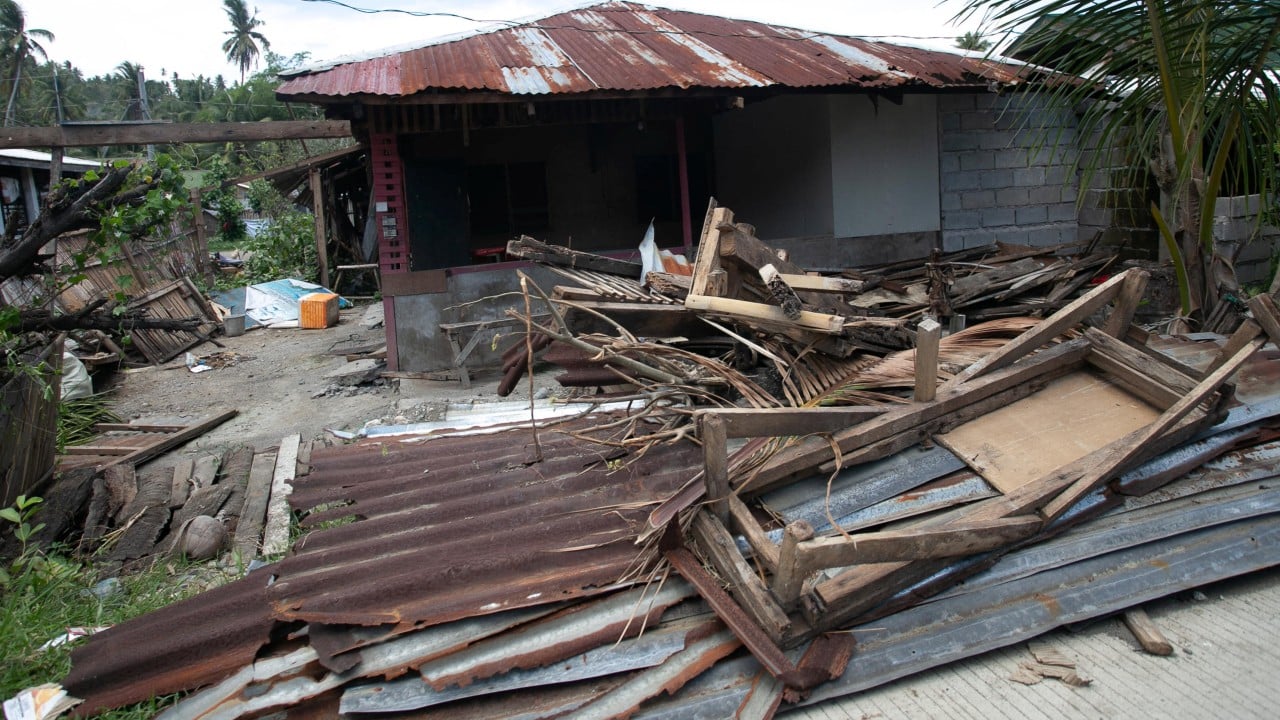
When a major earthquake tears through the mountainous interior of a Philippine province, the immediate media narrative follows a predictable script. Heart-wrenching photos of cracked highways emerge, followed quickly by reports of local officials begging Manila for helicopters to fly food to very hungry quake survivors. This desperate plea is usually treated as a localized tragedy, a sudden and unfortunate byproduct of nature’s unpredictable wrath.
That narrative is wrong. The desperation of isolated communities in the wake of a natural disaster is not an unavoidable act of God, but a systemic logistical failure.
When a municipality is cut off from the national grid and food supply chains, the scramble for aviation assets reveals a deeper structural rot in how disaster response is funded, organized, and executed. The crisis is not just that the ground shook; it is that the entire mechanism for keeping citizens alive in rural provinces relies on a centralized infrastructure that is guaranteed to fail when the big one hits.
The Bottleneck of Centralized Air Power
The immediate reaction of a provincial town mayor facing blocked roads is to look to the skies. It makes perfect sense on paper. When landslides swallow mountain passes, a helicopter is the only vehicle capable of bypassing the debris to drop rice and clean water.
Yet, the actual availability of these assets is shockingly low. The Philippine military and national emergency agencies possess a limited fleet of functional utility helicopters at any given time. When a disaster strikes, these few assets must be partitioned among reconnaissance missions, medical evacuations, and VIP transport for politicians conducting damage assessments.
The arithmetic of air logistics is brutal. A standard utility helicopter, such as a Bell 412 or an older UH-1H Huey, has a strict payload capacity. When factored against the fuel required to fly deep into mountainous terrain, the actual amount of food a single chopper can transport is remarkably small.
To feed a isolated population of ten thousand people requires tons of supplies daily. A handful of military aircraft operating out of a distant airbase cannot logistically meet that demand. The mayor begging for a helicopter is usually unaware that even if a chopper is dispatched, it is a drop in the bucket compared to the actual caloric deficit on the ground.
The Myth of the Sudden Food Crisis
International reporting frequently treats the hunger of earthquake survivors as a problem that begins the moment the ground stops shaking. In reality, the vulnerability of these communities is baked into the economic structure of rural provinces long before the tectonic plates shift.
Most isolated municipalities in the archipelago rely on a just-in-time supply chain for basic goods. Local merchants maintain thin inventories of rice, canned goods, and medicine, relying on weekly or bi-weekly truck deliveries from major urban hubs.
- Subsistence Vulnerability: Rural households rarely have deep financial reserves or massive food stockpiles.
- Infrastructure Fragility: A single bridge or mountain highway often serves as the sole economic artery for entire sub-regions.
- Market Collapse: When that artery is severed, local markets empty within forty-eight hours, instantly transforming a localized infrastructure problem into an acute humanitarian crisis.
The underlying issue is a profound lack of localized, climate-resilient storage infrastructure. National disaster agencies frequently boast about their massive central warehouses in metropolitan areas, filled with tens of thousands of family food packs. However, a food pack sitting in a climate-controlled warehouse near Manila is completely useless to a family huddled under a plastic tarp in a remote mountain village three hundred miles away.
Why Local Governments are Left Stranded
The decentralization of governance in the Philippines was supposed to empower local government units to manage their own affairs. The Local Government Code mandates that municipalities set aside five percent of their estimated revenue as a Local Disaster Risk Reduction and Management Fund.
It sounds adequate. It rarely is.
For a low-income municipality in a mountainous province, five percent of the annual budget is a pittance. It is barely enough to buy a few chainsaws, fund a volunteer rescue squad, and purchase a modest supply of relief goods. When a catastrophic earthquake hits, these local funds are depleted within the first twenty-four hours of the response.
+-----------------------------------------------------------------------+
|                 The Disaster Response Resource Gap                    |
+-----------------------------------------------------------------------+
| National Level:                             Provincial Level:         |
| • Deep financial reserves                   • Depleted within 24 hours|
| • Centralized supply warehouses             • Stranded by road drops  |
| • Controls aviation assets                  • Begging for air support |
+-----------------------------------------------------------------------+
Once the local budget is gone, the mayor must navigate a bureaucratic labyrinth to access national emergency funds. This process requires damage assessments, formal resolutions, and paperwork that is incredibly difficult to compile when the electricity is out and the internet is down. The resulting delay leaves local leaders with no option but to use the media to beg for national intervention.
The Hidden Perils of Helicopter Drops
Even when air assets arrive, the logistical nightmare is far from over. Dropping food from the air into a desperate, hungry crowd is an incredibly hazardous operation that requires precise ground control.
When an uncoordinated helicopter attempts to land or hover near a disaster zone, the downwash from the rotors can tear apart damaged roofs and blow away temporary shelters. More critically, the sight of a descending relief aircraft can trigger a panic among desperate survivors.
Without a disciplined, trained local distribution team on the ground to manage the perimeter, helicopter arrivals can quickly devolve into chaotic stampedes. The strongest individuals fight their way to the front to claim the food packs, while the elderly, the injured, and children are pushed to the periphery. Air drops can inadvertently break down social cohesion in a community precisely when cooperation is needed most.
Decentralizing the Lifeline
The solution to this recurring tragedy is not to buy more helicopters for the central government. The answer lies in structural decentralization and pre-positioning.
Instead of keeping relief supplies in centralized urban warehouses, the national strategy must pivot toward building small, hardened, solar-powered supply depots in every high-risk municipality. These structures must be engineered to withstand severe seismic activity and stocked with non-perishable food, water purification units, and satellite communication gear before the disaster occurs.
If a remote town has a guaranteed two-week supply of food and clean water stored securely within its own borders, the immediate survival of its citizens no longer depends on whether a military helicopter can fly through bad weather to reach them. The local government transitions from a desperate beggar into an empowered first responder.
Relying on the air force to save starving citizens after the roads crumble is a strategy built on hope, not logistics. True resilience is built on the ground, long before the earth begins to move.