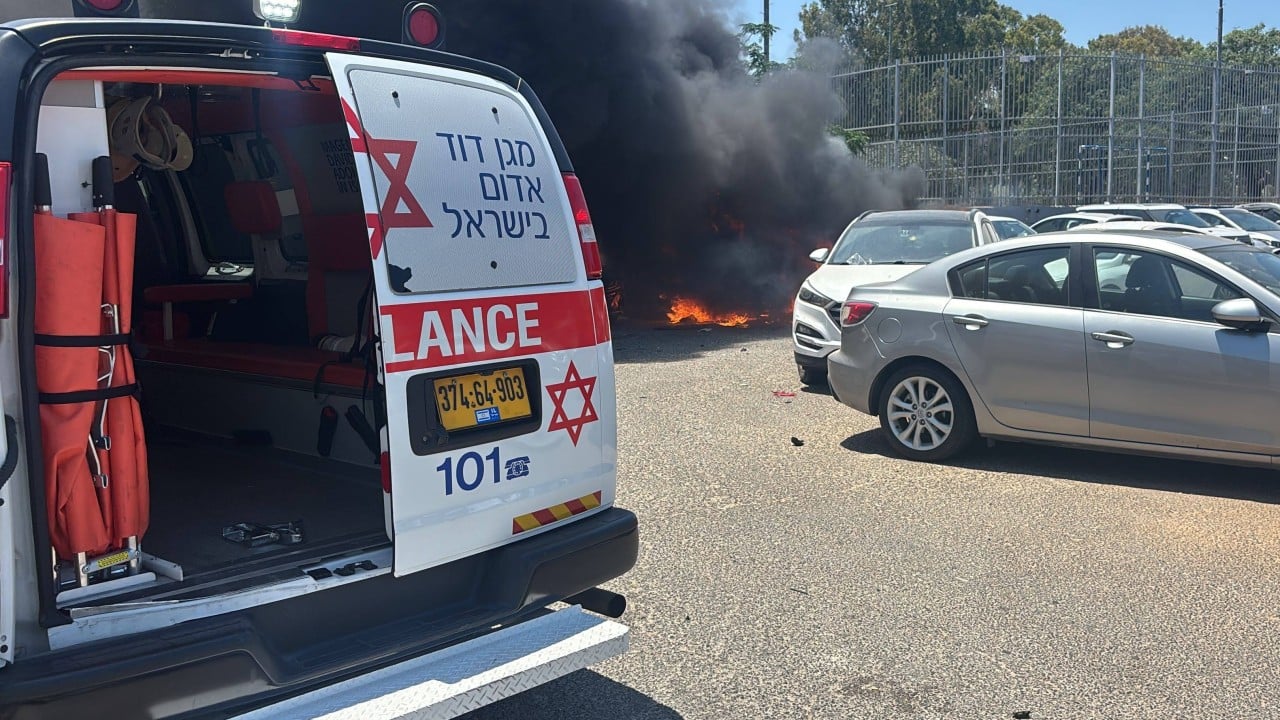
You can look at the data, or you can look at the coffins. Five more lives were wiped out in less than twenty-four hours across Israel’s Arab towns. A twenty-two-year-old in Rahat. A forty-two-year-old in Yarka. A middle-aged man in Lod. Another in Segev Shalom, and a fifth dying of his wounds in Fureidis.
This isn't a string of bad luck. It's an entire segment of a country’s population being left to bleed out while the government looks the other way.
When news breaks about another mass shooting or a targeted hit in an Arab-Israeli community, mainstream reporting usually sticks to a safe, sanitised script. They call it a "suspected crime spree" or blame it on "family feuds." That is lazy journalism. It completely misses the institutional rot beneath the surface. The bloody surge that brought forty-three homicides in just the first few months of the year isn't just about bad guys with guns. It is about a structural failure of national security.
The Wild West of the Galilee and the Negev
If five Jewish Israelis were murdered in different towns within a single day, the state would freeze. Counter-terrorism units would deploy, neighborhoods would close down, and the prime minister would hold emergency cabinet meetings. When it happens to Arab citizens, it becomes a local police ledger item.
Look at the case of Mokhtar Ata Abu Madiam, the young man killed in Rahat. He was the son of the town's former mayor. He had already survived an assassination attempt just four months earlier. His family knew the threat. The police knew the threat. Yet, his father had to go on public radio after his son's death to scream into the void that law enforcement ignored explicit warnings.
This is the reality of personal safety for a fifth of Israel's population. Decades of underfunding, overcrowded planning, and deliberate neglect have turned Arab municipal areas into hunting grounds for organized crime syndicates. These gangs operate protection rackets, run black-market loan networks, and traffic weapons with terrifying freedom.
The state has the tools to crush these syndicates. It chooses not to use them.
The Minister of Chaos
You can't talk about this crisis without talking about the political figures steering the ship. National Security Minister Itamar Ben-Gvir took office promising safety, but his tenure has overseen a record-shattering spike in domestic violence. Arab mayors and local leaders refuse to work with him. Honestly, who can blame them? This is a man with past convictions for supporting a terrorist group and inciting anti-Arab racism.
Instead of deploying standard, effective community policing, the political leadership pivots to heavy-handed rhetoric. They demand the involvement of the Shin Bet, the domestic security agency usually reserved for counter-terrorism in the West Bank and Gaza. Or they demand a new "national guard" militia under direct political control.
It is a classic diversion tactic. It frames the problem as an existential nationalist threat rather than what it actually is: a basic failure to protect citizens from street crime.
Why the Current Approach is a Dead End
The state likes to blame the lack of cooperation from within Arab communities. They claim people won't talk to investigators. But let's look at this logically. If you live in a town where the local gang boss has more firepower than the local police precinct, and you know the police rarely solve these murders anyway, why would you risk your life to testify? Trust is built on results, and right now, the results are nonexistent.
- Illicit weapons flooding the streets: Experts estimate tens of thousands of illegal firearms are circulating in Arab towns, many stolen from military bases or smuggled across borders.
- Systemic financial exclusion: It is incredibly difficult for Arab citizens to get commercial bank loans, driving business owners straight into the arms of mafia loan sharks who enforce debts with automatic weapons.
- A broken judicial pipeline: The conviction rate for homicides in the Arab sector is a tiny fraction of what it is in the Jewish sector. Killers know they can get away with it.
Flipping the Script on Community Safety
Stopping the bleeding requires moving past the empty press releases and photo ops. Real safety doesn't come from a militarized police state; it comes from treating Arab towns like actual parts of the country.
First, the flow of money needs to be choked out. The state needs to provide legitimate financial infrastructure and small-business support so people don't have to borrow from criminals. Second, there must be an aggressive, sustained federal task force dedicated to tracing and seizing illegal weapons at the source, rather than just reacting after a car wash or a family home gets sprayed with bullets. Finally, the national government needs to bypass partisan ministers and work directly with the High Follow-Up Committee and Arab municipal leaders to fund local violence prevention programs.
Until the lives of Arab citizens carry the same political weight as the lives of Jewish citizens, the bodies will keep piling up, and the headlines will keep calling it a crime spree.
If you want a deeper look at the raw frustration on the ground, check out this broadcast covering the mass protests in northern Israel where thousands marched against the ongoing wave of violence. It gives a visceral sense of how abandoned these communities feel by the people running the state.