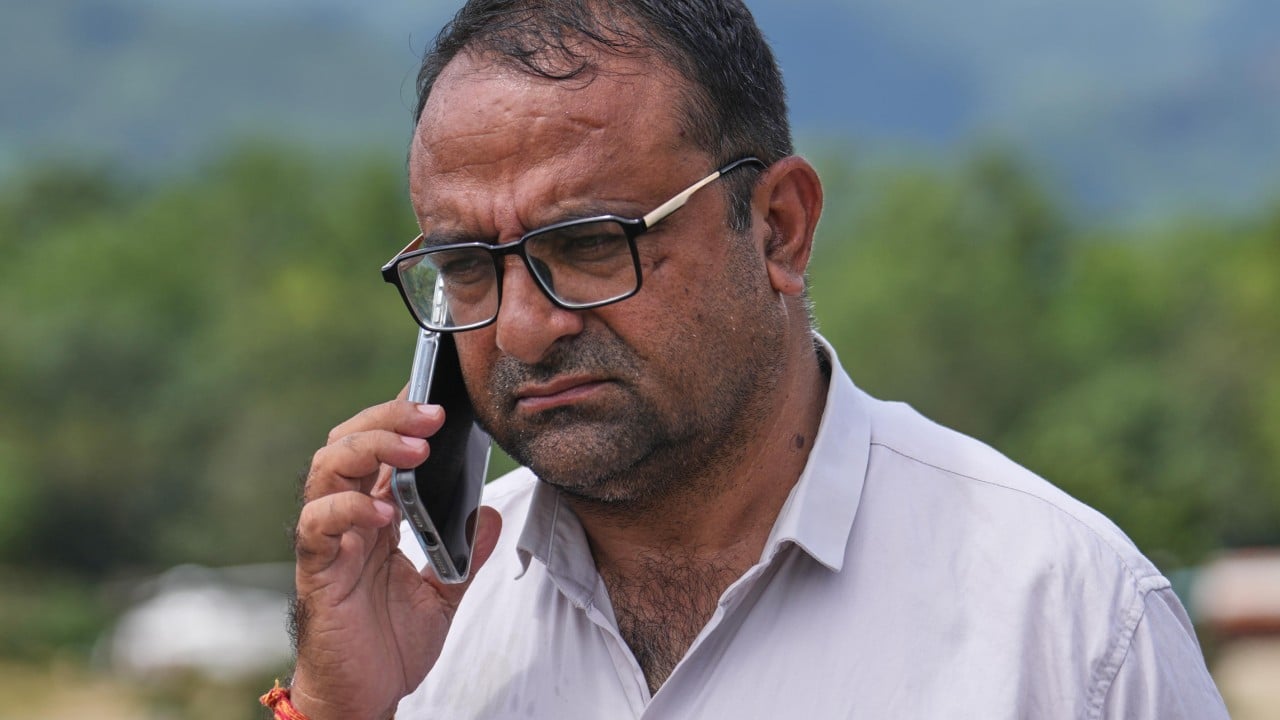
You have seconds to make a choice that dictates whether hundreds of children live or die. What do you do? For Rajendra Dawadi, principal of Tribhuvan Trishuli Secondary School in Nepal's Nuwakot district, that nightmare scenario became a reality. When a colossal flash flood fueled by a glacial collapse tore through the Trishuli Valley, Dawadi didn't wait for official confirmation. He trusted a frantic phone warning, grabbed the school bell, and sounded an alarm that saved at least 900 students on campus from absolute devastation.
Most people assume disaster management is all about government response plans and automated early warning systems. On the ground, it usually comes down to individual grit and split-second human judgment. Dawadi's story cuts through the noise of bureaucratic red tape and exposes how vulnerable mountain communities really are when climate-driven disasters strike. Meanwhile, you can read related developments here: When Paranoia Overrides Logic: Inside Taiwan’s Laptop Spy Panic.
The Morning the Valley Disappeared
The warning signs arrived in fragments. It started at 9:20 am when a friend called Dawadi with a stark message: the upstream village was gone, swallowed by the river, and he needed to run. Moments later, a colleague rushed into his classroom, and a parent showed up frantically trying to pull her child out early.
At the time, Tribhuvan Trishuli Secondary School had 1,643 students enrolled, with roughly 900 already present on the grounds. The concrete buildings stood about 60 meters above the river level, sharing an elevation with the local steel bridge. It felt safe. It looked secure. To explore the full picture, check out the excellent report by The Guardian.
Dawadi didn't care about statistics or structural reassurances. He rang the school bell immediately, ordering teachers and students to drop everything and sprint for the hills. He also threw himself into managing logistics on the fly, calling incoming school bus drivers to halt their routes before they drove into a trap. One bus had just managed to cross a newly built bridge when the older bridge right beside it collapsed into the roiling mud.
Minutes after the last students scrambled up the slopes, the three-story school building vanished beneath a wall of water, boulders, and glacial debris.
Understanding the Scale of the Himalayan Crisis
The disaster that wiped out Dawadi's school wasn't a standard seasonal monsoon overflow. Geomorphologists and disaster authorities traced the catastrophe to a massive glacial collapse at Langtang Lirung peak. A massive chunk of ice and rock—roughly 50 acres in size—plunged 1,200 meters into the upper gorge of the Lhende Khola river.
The resulting torrent triggered an unstoppable chain reaction across mountain river systems. Official tallies show the death toll climbing past 900 across Nepal and neighboring Tibet, with thousands more missing. Charity organizations like Save the Children reported that at least 69 schools in northern Nepal were completely destroyed, threatening the education of nearly 19,000 students.
dawadi refuses to wear the badge of a hero, viewing his actions as basic human duty. Yet the human cost still hits home hard. While 900 students and almost all staff members made it to safety, two school employees—social history teacher Santosh Pariyar and janitor Sultan Lama—lost their lives after returning briefly to nearby residential quarters.
What Most Media Coverage Misses
Headlines love a clean, inspiring survival arc. They celebrate the bell ringing, the dash up the hill, and the tearful reunions with parents. But they gloss over what happens the morning after.
Thousands of children across the Trishuli Valley are now left without classrooms, textbooks, or routine. Trauma runs deep. Students like 14-year-old Suvina Tamang escaped with their lives, but their educational foundation has been swept downstream.
Rebuilding requires more than dropping prefabricated tents or shipping bottled water. Schools in regions vulnerable to glacial lake outburst floods need relocations to genuinely safe, high-altitude plateaus rather than reconstructed floodplains. Communities require localized, low-tech communication networks that don't rely solely on cellular signals that fail the moment power grids snap.
Dawadi's immediate focus is straightforward: getting psychological counseling for his students and setting up temporary learning spaces so children don't lose an entire year of school.
If you want to support recovery efforts in regions hit by these glacial floods, look directly toward grassroots humanitarian organizations focused on educational continuity and infrastructure rebuilding in remote Himalayan districts, ensuring local leaders have the resources to keep children safe when the next warning bell rings.