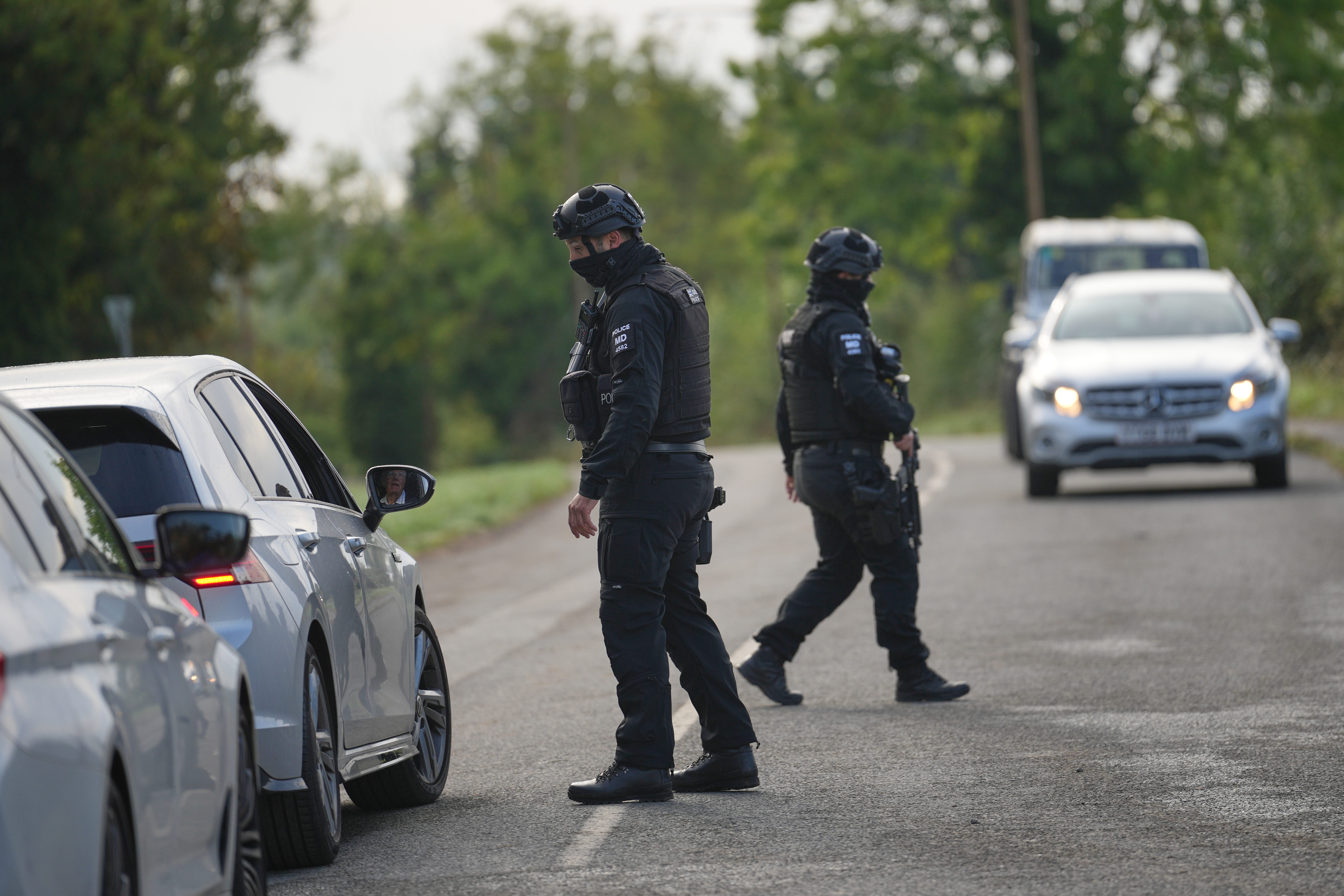
Geopolitical conflicts don't stay neatly contained inside Middle Eastern borders anymore. When British authorities intercepted three suspicious vans rolling toward Royal Air Force Base Fairford in Gloucestershire, they didn't just stop a localized threat. They uncovered a direct line between foreign proxy networks and quiet English country lanes.
Let's look at what actually happened. Early in the morning, police intercepted vehicles heading toward the strategic base—a facility heavily utilized by United States bombers participating in operations related to Iran. Five men were initially arrested, sparking immediate evacuations of roughly 85 local households and a massive response from bomb disposal units.
The Anatomy of a Modern Proxy Threat
Security analysts have warned for months that state-backed proxies are shifting tactics. Instead of high-profile cyber operations alone, hostile intelligence services are leaning into low-tech, high-impact sabotage on Western soil.
The vehicles heading toward RAF Fairford weren't armed with futuristic gadgets. They carried makeshift setups, drums of fuel, and materials meant to cause massive disruption. Court indictments and subsequent counterterrorism investigations revealed an eerie operational style. Handlers sitting thousands of miles away coordinate local operatives in real-time, treating physical sabotage like a remote-controlled video game.
Intelligence agencies point out a disturbing trend. Iranian-linked networks have spent months testing security perimeters, funding local recruits, and outsourcing dirty work to avoid direct state attribution.
Why RAF Fairford Matters
Strategic air bases are prized targets. RAF Fairford isn't just a sleepy strip of runway in the British countryside; it serves as a crucial staging ground for long-range U.S. aircraft, including B-1 Lancers.
When Washington uses British infrastructure to project power across multiple theaters, the UK instantly becomes a secondary theater of war. Tehran explicitly warned that any nation hosting assets used against its territory would face consequences. The arrests near Fairford brought those abstract threats straight to Britain's doorstep.
Following the incident, the strategic calculus shifted overnight. The United States quietly pulled its long-range bombers out of the base, illustrating how physical security breaches on allied soil can force immediate military redeployments.
The Broader European Security Picture
You can't view the Fairford incident in isolation. Over the past year, European security services have tracked a sharp uptick in hostile state activity, spanning arson, surveillance of sensitive military sites, and targeted attacks against community centers.
Governments are scrambling to adapt. Traditional counterterrorism was built to stop ideological extremists operating in cells. It's poorly equipped for mercenary networks hired via encrypted messaging apps, paid in crypto or cash, and told to film perimeter fences or dump fuel containers near hangars.
Prime Minister Andy Burnham convened emergency response meetings as the details unspooled, noting clear indications of foreign state orchestration. Meanwhile, federal prosecutors across the Atlantic unsealed major indictments tying the cell back to regional militant commanders.
The illusion that European nations remain safe spectators to distant conflicts is officially dead. Security perimeters aren't just guarded by high fences and armed patrols anymore—they rely on intelligence services catching digital breadcrumbs before the vans ever leave the driveway.