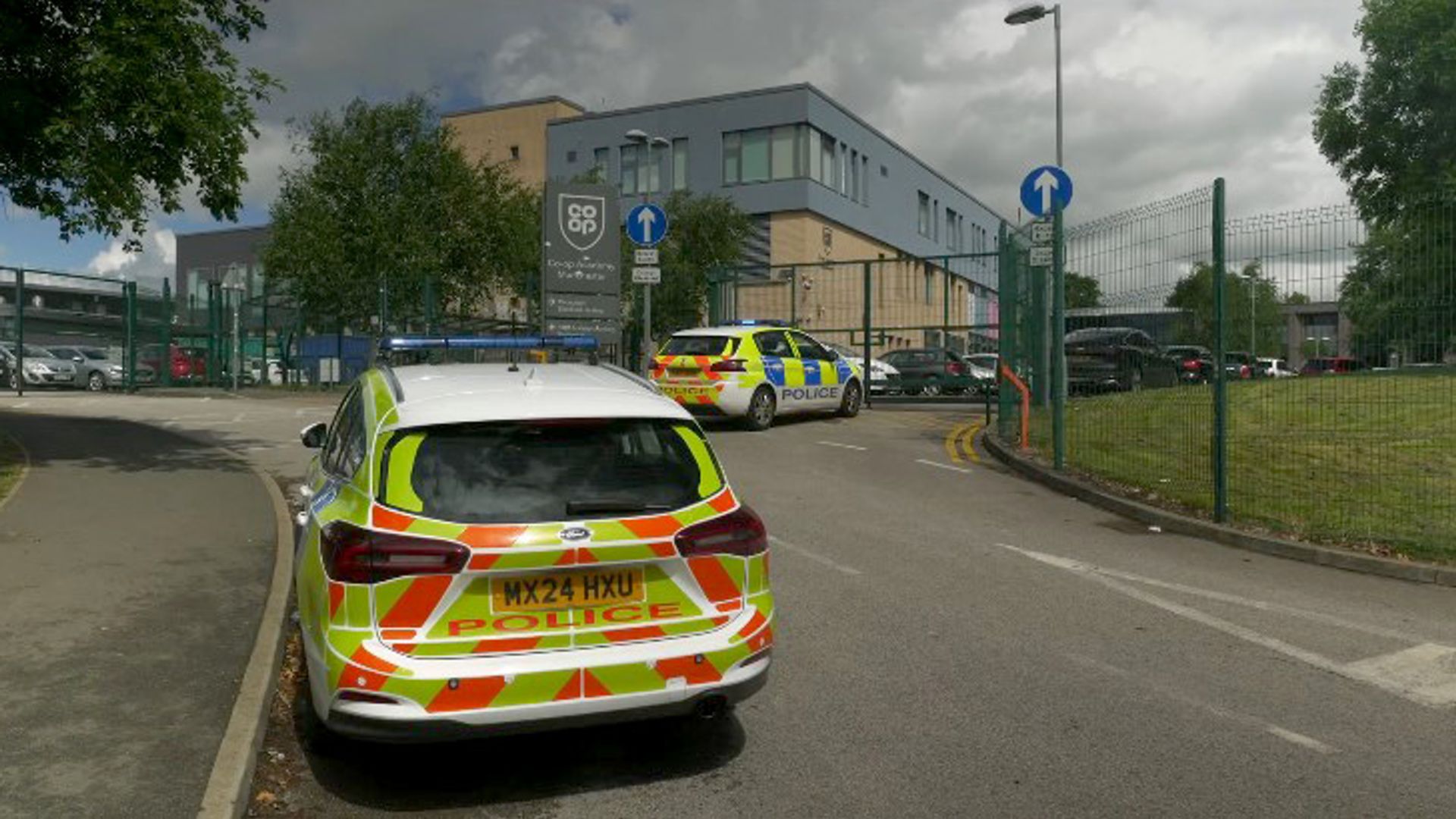
Counter-terrorism detectives are leading the investigation into a Welsh school stabbing where a 14-year-old girl faces attempted murder charges. The intervention of specialized counter-terrorism units in a school violence case signals a profound shift in how state apparatus views youth radicalization and extreme violence. While standard policing handles typical classroom assaults, the deployment of specialist officers indicates the discovery of ideological or extremist indicators that elevate the incident beyond standard criminal behavior. This structural pivot reveals a growing vulnerability within the education system, where online influence pipelines intersect directly with vulnerable adolescents.
The incident occurred at Ysgol Dyffryn Aman in Ammanford, southwest Wales, resulting in injuries to two teachers and a pupil. The immediate charging of a teenager with multiple counts of attempted murder pushed the event into the national spotlight. However, the critical turning point was the formal assumption of control by Counter Terrorism Policing Wales.
Security officials do not deploy these specialized resources for standard disciplinary failures or localized teenage disputes. Their presence confirms that investigators detected specific markers of concern, potentially involving digital footprints, ideological literature, or targeted intent that aligns with national security frameworks rather than routine youth offending.
The Mechanics of Classroom Intervention
When counter-terrorism units take the lead in a school-based criminal investigation, the entire operational framework shifts. Routine police work focuses on the immediate physical evidence, eyewitness testimony from pupils, and the immediate chain of custody for the weapon used. Specialized units look past the immediate scene to map the broader network of influence.
Detectives from these units immediately secure digital assets, focusing heavily on encrypted messaging platforms, closed forum communities, and algorithmic feeds that shape the suspect's worldview. They examine the transition from passive consumption of extreme material to active, violent manifestation. This process requires a specialized understanding of modern extremist subcultures, which frequently mutate to blend political, religious, or misanthropic ideologies into a cohesive justification for violence.
The legal threshold for this intervention relies on the Terrorism Act frameworks, which allow specialized units to coordinate national intelligence assets. By stepping in early, these units aim to determine whether the act was an isolated grievance or part of a wider, systemic radicalization pattern affecting other minors across different regions.
The Digital Pipeline and the Vulnerability of Youth
Modern youth radicalization rarely occurs in physical spaces. The isolation of contemporary digital life creates a distinct environment where extreme rhetoric becomes normalized through constant exposure. Adolescents, possessing underdeveloped cognitive frameworks for risk assessment, are particularly susceptible to targeted grooming or aggressive algorithmic loops.
Online spaces have weaponized grievances, turning normal adolescent alienation into structured hostility. Specialist investigators frequently encounter material that relies on dark humor, memes, and gamified violence to lower the psychological barrier to entry for serious crimes. A young person can move from mainstream content to deeply radicalized spaces within weeks, guided entirely by recommendation engines designed to maximize engagement through shock value.
Schools find themselves on the front lines of this digital convergence. Teachers are trained to spot traditional signs of neglect or standard behavioral issues, but they are rarely equipped to decode the subtle linguistic shifts and symbolic markers of online extremism. By the time an ideological fixation manifests as physical aggression, the internal transformation of the student is often complete.
Structural Failures in Early Detection Frameworks
The reliance on counter-terrorism units after a crisis highlights a deeper breakdown in preventive state infrastructure. The UK’s long-standing Prevent strategy was designed to catch these vulnerabilities before they escalated into violence. Yet, the system faces immense pressure from the sheer volume of digital content and the changing nature of modern extremism.
- Algorithmic Speed Outpacing Policy: Traditional safeguarding reviews move at an institutional pace, while online radicalization operates in real time.
- Resource Misallocation: Local authorities often lack the technical expertise to monitor closed digital ecosystems, leaving schools isolated until a major incident occurs.
- The Blur of Ideologies: Modern extremists often do not adhere to a single, traditional doctrine, making them harder to categorize under existing threat definitions.
This blurring of lines complicates the response of educators. A student might mix far-right symbols with eco-extremism or violent nihilism, creating a bespoke ideology that defies the standard checkboxes of safeguarding forms. When the system fails to identify these hybrid threats, the responsibility inevitably falls to counter-terrorism detectives after the damage is done.
The Reality of Managing School Security
Securing an educational institution without turning it into a prison remains a difficult challenge for policymakers. Introducing metal detectors, armed guards, or invasive surveillance alters the educational environment fundamentally, yet doing nothing leaves staff and students exposed to unpredictable risks.
The true solution relies on data integration and aggressive community intelligence, rather than physical barriers. Police forces and school boards must create tighter loops of information sharing that allow for the immediate flagged review of digital threats. When a minor displays severe behavioral shifts or accesses flagged networks, the intervention must be immediate, clinical, and detached from standard disciplinary bureaucracy.
The Ammanford incident serves as a stark warning that the boundaries between national security and local safeguarding have dissolved completely. As specialized detectives continue their work in southwest Wales, the broader focus must turn to the systemic gaps that allowed a classroom to become a counter-terrorism crime scene.


