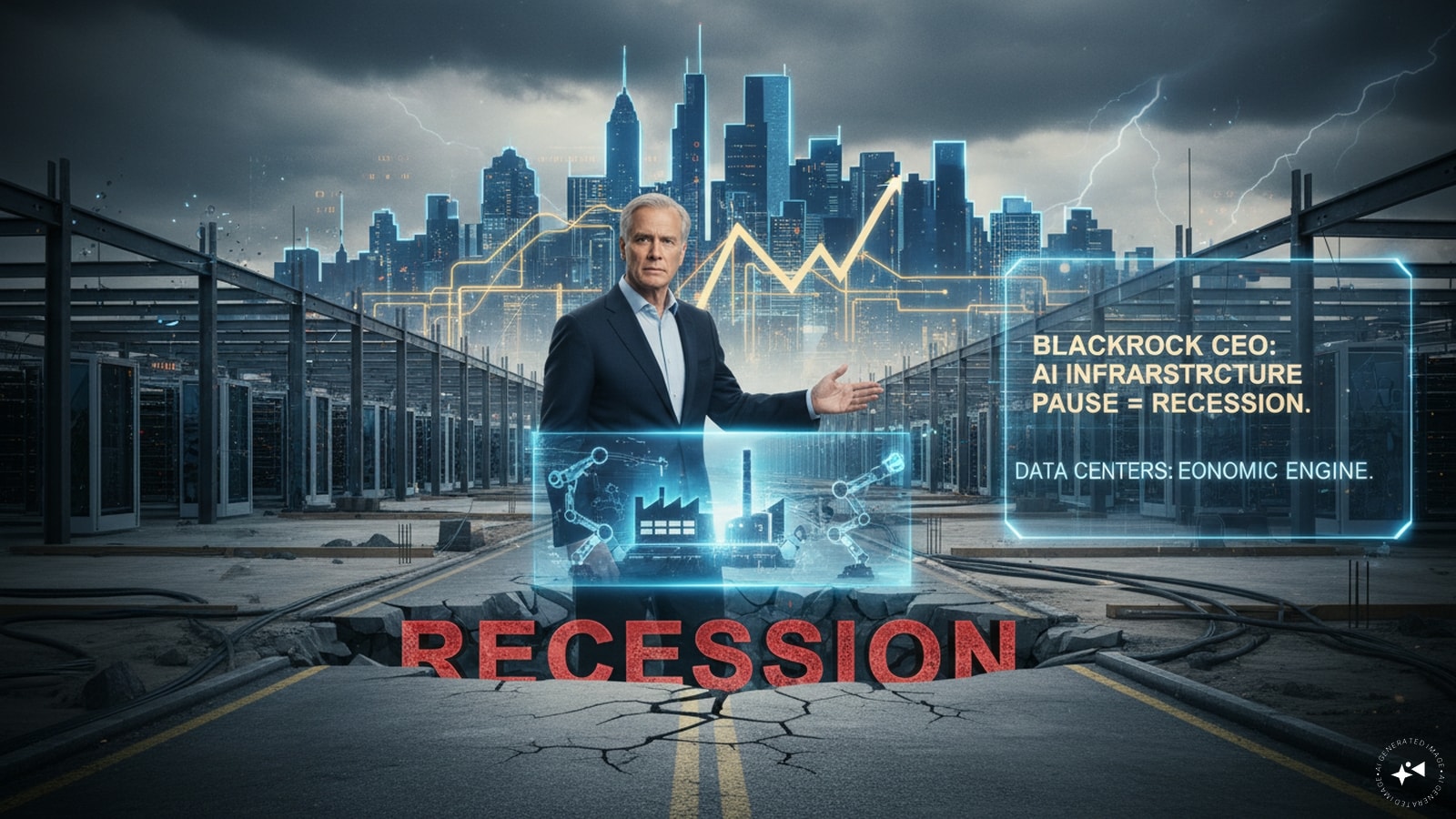
Listen. That hum you hear through the floorboards isn't just your refrigerator kicking on. It is the sound of a civilization trying to feed a machine that never sleeps, while wondering whether the floor beneath its feet can hold the weight.
For years, when people spoke of the digital age, they reached for weightless words. The cloud. The ether. Virtual. Everything floated, drifted, hovered somewhere above our heads like morning fog. I used to believe it, too, sitting in coffee shops with a laptop on my knees, watching a document sync across continents in the blink of an eye and feeling as though the physical world had stepped aside to let pure thought take over.
Then I stood beside a construction site outside a quiet Midwestern town and felt the ground vibrate through the soles of my boots.
Dump trucks groaned up gravel inclines. Cranes swung steel beams against a pale winter sky. Transformers the size of suburban houses sat on concrete pads, waiting to swallow enough electricity to power small cities. Nothing about it was weightless. It was heavy, loud, expensive, and unmistakably real. And when Larry Fink, the chief executive of BlackRock, warned that a stall in data centre construction could tip the United States into recession, he wasn't talking about server racks in a vacuum. He was talking about concrete mixers stopping mid-pour. He was talking about paychecks, interest rates, electric bills, and whether the engine carrying modern American growth has quietly become the whole engine.
I'll admit something right up front: macroeconomics has a way of making smart people feel numb. You read a headline about capital expenditure, power grid bottlenecks, and recession risk, and your brain puts up a shield. Those words belong to suits in glass towers and anchors with color-coded charts behind their shoulders. They don't feel like your mortgage, your grocery bill, or your kid's summer job.
Even I catch myself glazing over when numbers get too large to picture. A billion used to sound astronomical; now people toss it around like loose change in a cup holder. Yet when a warning like Fink's lands, the math stops being abstract. It turns into a question about livelihoods.
When Virtual Growth Needs Real Dirt
To understand why halting data centre builds could rattle the broader economy, we have to strip away the jargon and look at what actually drives growth. Economists talk about gross domestic product as if it were a mystical score kept by judges on Mount Olympus. Really, it is just the sum of things being made, bought, built, and moved from one hand to another.
When massive capital flows into building data centres, money moves in ripples. Steel mills run hotter. Copper wire gets pulled through factories. Excavators burn diesel. Local diners fill up at noon with crews wearing high-visibility vests who order double bacon and black coffee before heading back into the wind. Engineers draw blueprints. Utility workers reinforce substations.
Now imagine—and this is a hypothetical scenario to make the chain reaction visible—what happens if those projects suddenly freeze. Not slow down gently, not get politely postponed until next spring, but hit a hard wall because power grids can't supply the megawatts, permitting drags on endlessly, or financing tightens faster than expected.
The crane stops swinging. The subcontractor doesn't get the next draw on the contract. The electrical supply house cuts its order from the distributor. The server hardware manufacturer trims shifts. None of those people work in artificial intelligence or Wall Street asset management, yet their paychecks are tied to the same physical buildout.
Consider what happens next: when construction slows in a sector that has become one of the loudest locomotives of physical investment, the shock doesn't stay trapped inside tech. It bleeds outward into jobs, local tax bases, and consumer confidence. When people start worrying that the boom has hit a brick wall, they pull back. They delay buying a car. They skip a weekend trip. A slowdown becomes self-reinforcing, and suddenly the word recession isn't a theoretical box on a risk committee slide anymore. It is a mood in the air.
A Town Between Two Futures
Let's bring in a character—clearly hypothetical, though drawn from conversations I've had in towns across the country—to see how this plays out on the ground.
Call her Maya. Maya runs a small electrical contracting firm in Ohio with fourteen employees. Five years ago, her business was steady, predictable, and occasionally thin during winter months. She wired commercial warehouses, updated school lighting, handled emergency calls when storms knocked lines down.
Then the big tech buildouts arrived in the region. Suddenly, projects required heavy-duty switchgear, high-voltage work, long hours, and strict schedules. Maya hired three more journeymen. She bought a used bucket truck and paid it off faster than she expected. For the first time in a decade, she wasn't lying awake at three in the morning wondering how she'd make payroll in February.
One afternoon, over lukewarm coffee in her cluttered office, she told me how strange the boom felt. Neighbors argued at town hall meetings about water use and power strain. Farmers worried about land values and noise. Maya understood both sides—she had lived in that county her whole life—yet she also knew what the work meant for the young guys on her crew who were saving for houses.
If data centre construction halts abruptly, Maya doesn't just lose a lucrative contract. She faces the brutal math of fixed costs, equipment loans, and loyal workers she doesn't want to let go. That is the human reality behind an executive's warning. Behind every macroeconomic forecast are people like Maya trying to read the weather before stepping out the door.
The Power Bottleneck Nobody Can Hand-Wave Away
Here is the irony that makes this whole story sting: we often picture technology as something that frees us from physical limits, when in truth it is slamming straight into them.
Building a modern data centre isn't like setting up a lemonade stand where you just need lemons, sugar, and a folding table. It is an energy hunger of historic proportions. Servers running nonstop computations generate intense heat and demand steady, reliable electricity twenty-four hours a day. You can't run them on wishful thinking or intermittent power when precision matters.
Think of the electrical grid like a set of highways built for a smaller population. A metaphor will help here: if you widen a four-lane road into a twelve-lane highway in one spot, traffic still bottlenecks where it merges back into two lanes. You can pour billions into building sleek new data halls, but if the transmission lines, substations, and power generation around them aren't ready, the whole system chokes.
Utilities move on years, sometimes decades, of planning. Regulatory approvals take time. Transformer lead times stretch out. Local communities push back when power lines cut near homes or when strain on the grid threatens residential reliability.
When Fink warns about a halt in construction, he is pointing directly at these friction points. Capital wants to move fast. Physics, permitting, and power infrastructure move at their own stubborn pace. When an unstoppable wave of investment meets an immovable wall of physical constraints, something has to give.
Why One Voice on Wall Street Matters
Some readers might roll their eyes at a warning coming from the head of BlackRock. Fair enough. A major asset manager lives and breathes capital flows, institutional risk, and market cycles. Skepticism is healthy when powerful voices talk about the economy.
Still, you don't have to agree with every angle of a Wall Street chief's worldview to pay attention to what he sees from his perch. BlackRock sits at the crossroads of massive global capital—pensions, endowments, sovereign funds, corporate balance sheets. When someone in that seat flags the risk that stalling data centre construction could push the US into recession, it signals how central this buildout has become to current economic momentum.
We have seen episodes before where a single dominant theme carries more weight than people realize until it wobbles. Think back to how housing construction once anchored so much adjacent economic activity, or how industrial cycles rippled through manufacturing belts. Whenever one engine pulls an outsized share of the load, any sudden sputter feels sharper.
What makes today's moment especially tense is uncertainty. Nobody has a crystal ball that shows the exact line between a healthy breather and a true contraction. Maybe construction doesn't halt completely; maybe it paces itself unevenly, surging in one region while stalling in another. Maybe power solutions arrive faster than skeptics expect, or maybe bottlenecks drag on longer than boards of directors budgeted for.
I find that uncertainty unsettling. Anyone who claims to know with total certainty how this will unfold is selling confidence they haven't earned. The honest answer is that the stakes are high precisely because so many moving pieces—interest rates, energy supply, policy, labor, and market sentiment—are tangled together.
The Quiet Tension in Everyday Life
You might wonder why this matters if you don't work in construction, utilities, or finance.
Look at your monthly bills. Look at the stability of the job market in your city. Look at how retirement accounts behave when markets get jittery over growth scares. A recession doesn't arrive with a siren; it arrives through tighter budgets, slower hiring, cautious banks, and a general tightening of shoulders across households.
At the same time, there is a real human debate happening in communities hosting these facilities. Families want affordable electricity and quiet neighborhoods. Local leaders want tax revenue and modern infrastructure without getting stuck holding the bag if plans change. Ignoring that friction doesn't make it go away—it just turns a solvable planning challenge into a bitter fight.
The real test isn't choosing blind hype on one side or knee-jerk panic on the other. It is recognizing that digital ambition and physical reality have collided, and how we handle that collision will shape the economic ground beneath all of us.
What Happens When the Cranes Pause
Picture a field at dusk after the crew packs up. A half-finished steel skeleton rises against the orange streak of sunset, quiet except for the wind brushing through dry grass. Somewhere inside a distant server room, tiny sparks of light blink across rows of machines while out here, on the dirt, everything waits on power, permits, and nerve.
If that quiet stretches into a long freeze, the echo won't stay in the field. It will travel down the highway, into small shops, across kitchen tables, and right into the pulse of the economy.
The machine doesn't run on air. It runs on steel, wire, sweat, and trust—and right now, every single one of those is being tested.