The rain in Cox’s Bazar does not fall; it erases.
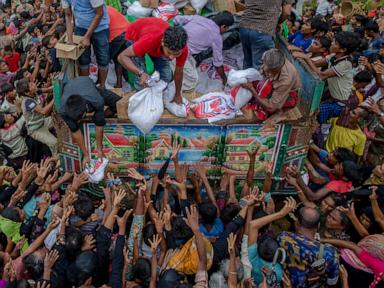
Every monsoon, the hills of southern Bangladesh liquefy into rivers of ochre mud, swallowing bamboo shelters, washing away footsteps, and turning the world’s largest refugee settlement into a maze of slick, treacherous ridges. If you have ever walked those narrow mud paths with your boots caked heavy as iron, smelling the sharp, wet tang of woodsmoke and stagnant drainage, you understand how easily human history can be dissolved by water and time.
To understand what happened inside the wood-paneled Peace Palace in The Hague, you have to start in that mud.
Imagine, for a moment, a hypothetical archivist named Tariq—not a real individual, though he is built from the composite lives of dozens of Rohingya community documentarians I have met over the years. Picture Tariq sitting inside a dim tarpaulin tent in Kutupalong, holding a waterproof plastic sleeve. Inside that sleeve is a laminated identity card issued in Rakhine State before 2017, a faded photograph of a concrete house with a blue veranda that no longer exists, and a thumb-smudged notebook containing the names of forty-two neighbors from his village who vanished during the military "clearance operations" of August 2017.
For seven years, Tariq’s plastic sleeve has been the only proof that his village ever stood on the earth.
When the International Court of Justice (ICJ)—the highest judicial body of the United Nations—handed down its historic ruling affirming that Myanmar had committed genocide against the Rohingya, Tariq’s plastic sleeve suddenly became more than a relic of grief. It became evidence in the highest court of human accountability.
And almost immediately, two powerful governments stepped forward to tell the world that the court had overstepped its bounds.
The Architecture of Denial
To read the diplomatic cables and state media dispatches coming out of Naypyidaw and Beijing following the ICJ decision, you would think the ruling was a minor procedural dispute over maritime boundaries or trade tariffs.
Myanmar’s military junta—the Tatmadaw, which seized absolute power in the 2021 coup—rejected the court's findings outright. Their objection was predictable, dressed in the familiar, starched vocabulary of national sovereignty and internal security. According to the generals in Naypyidaw, the 2017 operations that drove more than 740,000 Rohingya across the Naf River into Bangladesh were legitimate counter-insurgency measures against militants. To call it genocide, they argued, was a distortion of law and a violation of Myanmar's sovereign right to defend its borders.
Then came China.
Beijing’s objection was quieter, smoother, and infinitely more consequential. While stopping short of endorsing the atrocities, Chinese diplomatic channels and state-aligned commentators framed the ICJ ruling as an unhelpful intrusion into domestic affairs—a Western-backed judicial overreach that threatens regional stability and complicates delicate mediation efforts in Southeast Asia.
Wait.
Stop and ask yourself why a superpower like China would expend diplomatic capital to push back against a court ruling concerning a stateless, impoverished minority group living in mud huts thousands of miles from Beijing.
The answer has nothing to do with the Rohingya. And it has everything to do with a pipeline, a deep-sea port, and a terrifying precedent.
The Pipeline Beneath the Ashes
If you trace a line from the blood-soaked soil of Rakhine State straight northeast across the rugged mountains of Myanmar, you arrive in Kunming, the capital of China’s Yunnan province.
Along that exact line runs the China-Myanmar Economic Corridor—a multibillion-dollar centerpiece of Beijing’s Belt and Road Initiative. At the southern tip of that corridor sits Kyaukphyu, a coastal town in Rakhine State where Chinese state-owned enterprises have poured billions into constructing a deep-water port and dual oil-and-gas pipelines. Those pipelines allow China to import crude oil from the Middle East and Africa without sending tankers through the narrow, U.S.-patrolled Strait of Malacca.
For Beijing, Rakhine State is not a graveyard. It is a strategic jugular vein.
When you view the ICJ ruling through that lens, China’s discomfort snaps into sharp, cold focus. An international legal judgment declaring that genocide occurred on the exact ground where your strategic infrastructure sits creates a toxic liability. It invites sanctions, complicates international financing, and empowers global watchdogs to scrutinize every hectare of land cleared for port expansion or railway construction.
Even deeper than economics lies an existential anxiety shared by authoritarian capitals from Naypyidaw to Beijing: the fear of universal jurisdiction.
Think of the Genocide Convention of 1948—the treaty at the heart of the ICJ case—as a fire alarm wired into the global neighborhood. Normally, international law operates like a gated community where whatever happens behind a neighbor's closed doors is their own business. Sovereignty is the lock on the front door. The Genocide Convention is the one legal agreement where every nation signed a pledge saying: If we smell smoke inside that house, we have the legal right and duty to kick the door down, even if the homeowner objects.
The Gambia, a tiny West African nation with no border shared with Myanmar and no direct economic stake in Southeast Asia, pulled that fire alarm in 2019. By bringing the case to the ICJ on behalf of the Organisation of Islamic Cooperation, The Gambia proved that a small state could drag a military regime before the bar of world justice simply because both nations had ratified the 1948 treaty.
If that precedent holds—if international courts can pierce the armor of national sovereignty to prosecute state-sponsored mass violence—then no regime that relies on internal repression, mass detention, or forced assimilation is ever truly safe behind its borders.
Beijing understands this. Naypyidaw understands this. Their objections are not merely legal arguments; they are an attempt to rip the batteries out of the fire alarm before it rings again.
What the Judges Actually Saw
I have spent years reporting on international tribunals, and I will confess something that legal scholars rarely admit in public: international law often feels painfully slow, abstract, and disconnected from the smell of burning thatch.
When you sit in a gallery watching lawyers in black robes argue for three hours over the precise Latin interpretation of dolus specialis—the "specific intent" required to prove genocide—it is easy to feel cynical. You wonder what any of this matters to a mother in Cox's Bazar whose children have grown from toddlers to teenagers behind barbed wire.
Yet, when you actually read the factual record compiled by the UN Independent Investigative Mechanism for Myanmar and presented to the ICJ, the abstraction evaporates.
Genocide is rarely an impulsive riot. It is an administrative project.
Before a single village was burned in August 2017, the state systematically stripped the Rohingya of citizenship under the 1982 Citizenship Law, turning an entire population into illegal trespassers in the land of their birth. Movement was restricted. Marriages required state permission. Births went unregistered. Hospitals refused treatment.
Then came the clearance operations.
The judges in The Hague did not rely on rumors. They examined satellite imagery showing hundreds of villages reduced to ash in systematic, grid-like patterns while neighboring non-Rohingya settlements stood untouched. They reviewed verified testimony of mass executions at Tula Toli, where men were separated from women, shot along the riverbank, and buried in mass graves; where women and girls were subjected to systematic sexual violence used explicitly as a weapon to destroy the community's social fabric; where infants were torn from mothers' arms and thrown into fires or the river.
To prove genocide in a court of law, prosecutors must clear the highest evidentiary bar in human jurisprudence. War crimes prove that soldiers killed civilians unlawfully. Crimes against humanity prove that the attacks were widespread and systematic. Genocide requires proving something much darker: that the perpetrators acted with the specific intent to destroy, in whole or in part, a national, ethnical, racial, or religious group as such.
The ICJ’s landmark ruling affirmed that the pattern of conduct—the decades of legal erasure followed by coordinated, merciless eradication—could only point to one conclusion.
The Myth of "Stability Over Justice"
Whenever Myanmar and China object to the ICJ ruling, they rely on a seductive, seemingly pragmatic counter-argument. It goes like this: Publicly branding Myanmar's leadership with the stain of genocide will only corner the generals, harden their resistance, and derail fragile peace negotiations. If you want the refugees to go home safely, you need quiet diplomacy, not courtroom humiliation.
It sounds reasonable. Sophisticated, even.
And history shows it is a lie.
Consider what happened when the world chose "quiet stability" over accountability in Myanmar for thirty years. In 1978, roughly 200,000 Rohingya fled military violence into Bangladesh; most were pushed back under bilateral agreements without a single perpetrator held accountable. In 1991, another 250,000 fled; again, quiet diplomacy prevailed, and the underlying legal apartheid remained untouched. In 2012, waves of communal violence displaced 140,000 people into squalid internment camps in Rakhine State, where many remain trapped today; the international community praised Myanmar’s "democratic transition" and lifted sanctions.
Every time the world prioritized short-term diplomatic comfort over structural justice, the Tatmadaw learned a simple lesson: There is no price for ethnic cleansing.
Impunity is not a neutral state. It is an accelerant. The exact same military units—such as the notorious 33rd and 99th Light Infantry Divisions—that burned Rohingya villages in 2017 without facing international consequences went on to turn their guns on peaceful protesters, teachers, doctors, and ethnic minorities across the rest of Myanmar after the 2021 coup.
When China argues that the ICJ ruling undermines regional peace, it confuses silence with stability. You cannot build a stable port, a secure pipeline, or a lasting peace on top of an unacknowledged mass grave. You can only build a pause between explosions.
The Weight of a Piece of Paper
So what does an ICJ ruling actually change if the court has no army to march into Naypyidaw and arrest the generals?
This is the question that haunts everyone who follows international justice, and if I told you that the gavel strike in The Hague instantly unlocked the gates of the refugee camps, I would be lying to you. The ICJ cannot send peacekeepers to Rakhine State. China holds a permanent veto on the UN Security Council, ensuring that enforcement resolutions remain blocked at the highest diplomatic tier.
Yet, to dismiss the ruling as toothless is to misunderstand how power works over decades rather than news cycles.
First, an ICJ judgment creates an indestructible historical record. Authoritarian regimes survive by controlling memory. In Myanmar, school textbooks erased the Rohingya long before soldiers burned their homes. State media scrubbed their names from maps. By issuing a binding judicial determination at the World Court, the judges placed the truth beyond the reach of junta censors or revisionist diplomats. Future generations of Burmese citizens, historians, and lawmakers will never be able to pretend it did not happen.
Second, the ruling triggers concrete legal obligations for every other nation on earth. Under the Genocide Convention, third-party states are legally barred from aiding or assisting in the commission of genocide or shielding its perpetrators from accountability. It sharpens the legal tools available for targeted financial sanctions, arms embargoes, and universal jurisdiction prosecutions in national courts from Argentina to Germany.
Third—and perhaps most profoundly—it restores moral agency to the survivors.
Back in the Rain
Let us return to Tariq, our composite archivist sitting in the mud of Cox’s Bazar, holding his laminated ID card and his thumb-smudged notebook.
For years, the cruelest weapon wielded against the Rohingya was not the machete or the rifle; it was the gaslighting of the international community. When you are told for decades that you do not exist, that your ancestors never lived in the valley where your grandfather is buried, that your burned village was an "anti-terrorist clearance zone," the mind begins to fracture under the weight of unshared reality.
When the news of the ICJ ruling crackled over cheap smartphones and battery-powered radios across the bamboo hills of Kutupalong, people did not dance in the mud because they thought they were going home tomorrow. They are not naive. They know the generals still hold the guns in Naypyidaw, and they know powerful neighbors still shield the junta from the full weight of global consequences.
They wept because, for the first time in their lives, the highest court on earth looked at their laminated cards, listened to their voices, and said: We see you. What happened to you has a name. And the lie is over.
Diplomats in Beijing and generals in Naypyidaw can file all the formal objections they want. They can issue statements condemning judicial overreach, invoke the sacred shield of sovereignty, and draw neat lines on maps showing pipelines and ports.
But ink on a diplomatic protest fades fast.
Inside a waterproof plastic sleeve in the rain of Cox’s Bazar, forty-two names remain written in ballpoint pen—and now, carved into the permanent stone of human law.