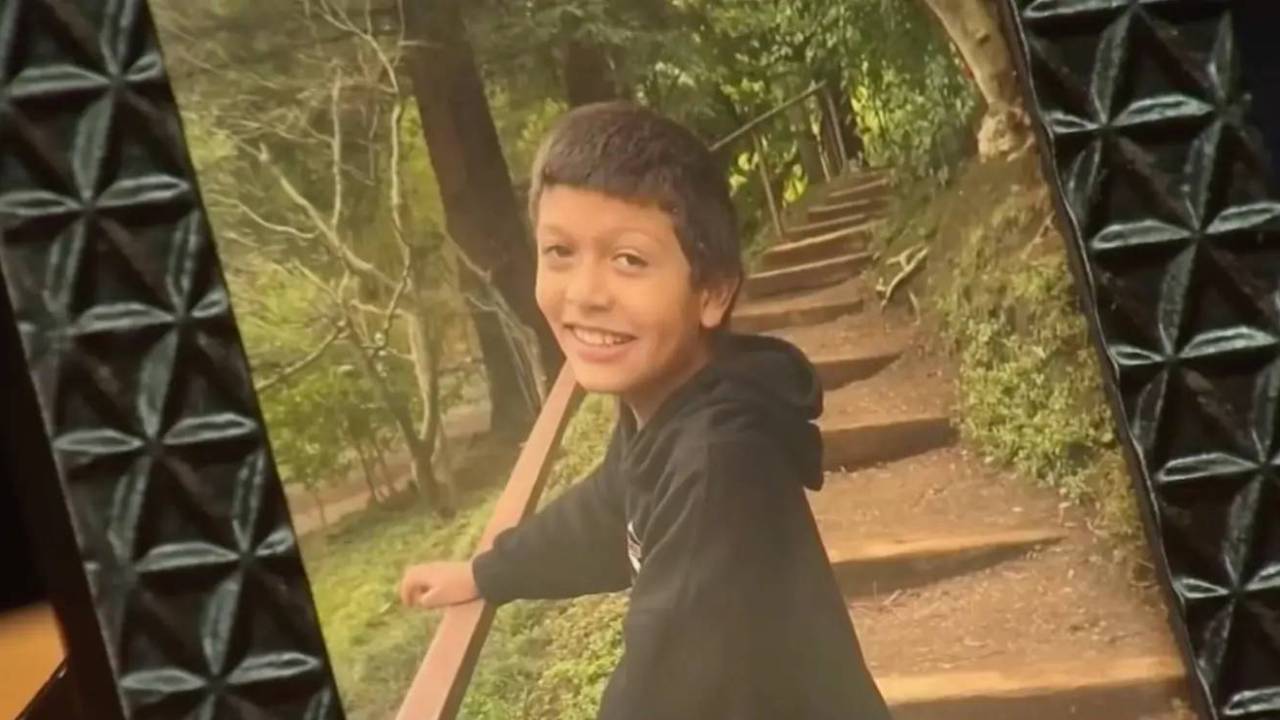
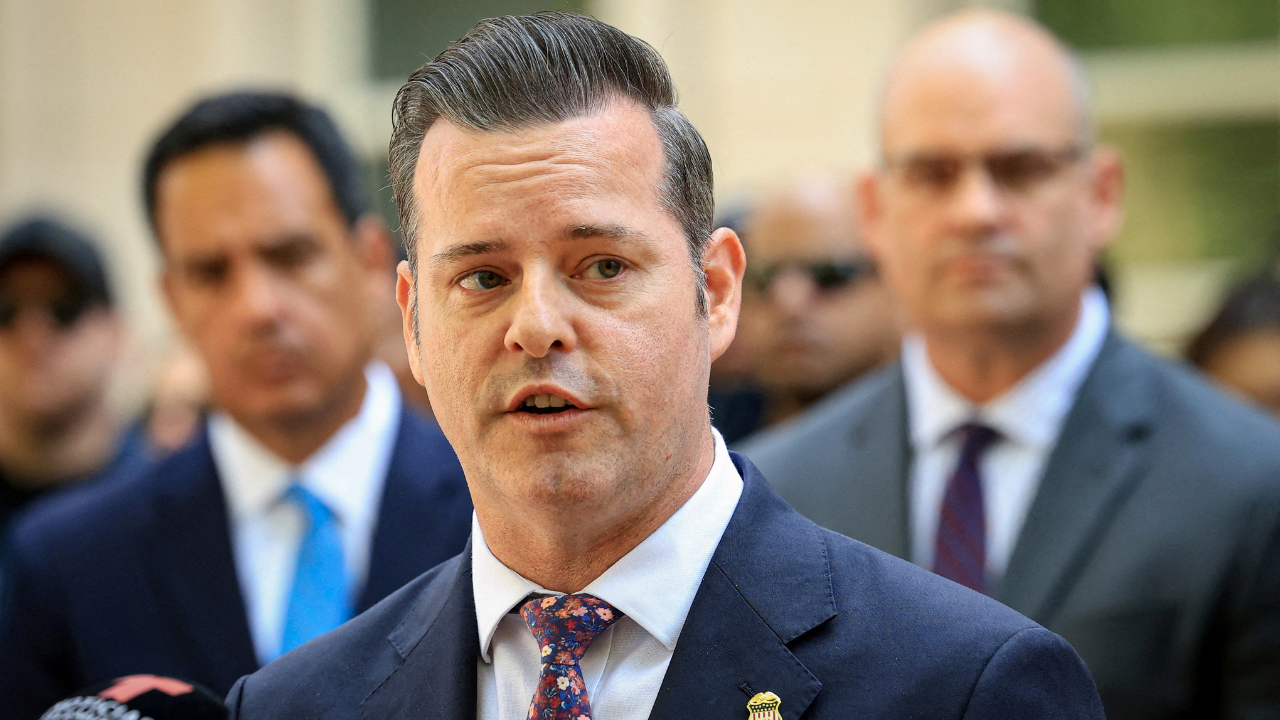
The fluorescent hum of a corporate lobby at nine in the morning is the sound of absolute predictability. You know the cadence before you even swipe your badge. The faint hiss of the espresso machine near the elevator bank, the rhythmic clack of dress shoes against polished stone, the muted rustle of someone unfolding a damp umbrella just inside the revolving doors. In places like Tampa, Florida, where the humidity clings to your collar before you even cross the parking lot, stepping into the air-conditioned chill of a major financial center feels like entering a fortress of routine. You check your phone. You nod to the person standing behind the reception desk. You assume, with the quiet arrogance of modern life, that the walls around you are thick enough to keep the volatility of the outside world at bay.
Then a glass door shatters. Learn more on a connected subject: this related article.
Silence.
Not the peaceful silence of an early morning before the emails start arriving, but the vacuum-sealed stillness that happens when the human brain refuses to process an impossible sound. In an instant, the mundane geography of a workplace—the potted ficus, the marble counter, the hallway leading to the cubicles—transforms into a landscape of pure geometry: angles of cover, lines of fire, and the agonizing distance between where you are standing and the nearest heavy door. Additional journalism by TIME explores comparable perspectives on this issue.
When news broke of the shooting at a Citibank facility in Tampa, the headlines did what headlines always do when confronted with sudden public violence. They compressed a sprawling, terrifying human event into a punchy, sensationalist equation: one dead, four injured, an armed security guard neutralizing a shirtless, heavy-set gunman. It is a neat little box of information. You read it over your morning coffee, shake your head at the absurdity of the visual details, feel a brief spike of adrenaline, and scroll down to the weather forecast.
Look closer at what actually happened in that lobby, though, and the tabloid phrasing dissolves into something far heavier, far more intimate, and infinitely more urgent.
The Architecture of a Normal Day
To understand the weight of those few minutes in Tampa, you have to strip away the hindsight we enjoy from the safety of our screens. Consider a hypothetical composite of the people walking through those doors that morning—let us call her Elena, a mid-level compliance analyst whose biggest worry at 8:55 a.m. was whether she had remembered to attach the updated spreadsheet to her director’s calendar invite.
Elena’s reality is built on implicit contracts. When you clock into a corporate office, you trade your time for a paycheck, and in return, the institution provides a controlled environment. There are badges to scan, turnstiles to pass, and policies drafted by human resources departments to ensure everything runs smoothly. In that ecosystem, the security guard standing near the entrance is largely invisible. We treat them like living furniture—a polite nod on the way in, a murmured "have a good evening" on the way out. We rarely ask ourselves what that person is actually paid to do if the contract of civil society suddenly tears in half.
The gunman who approached the Tampa facility did not arrive looking like a cinematic villain. Witnesses and police reports described an obese, shirtless man carrying a firearm—an image that, in the cold print of a newspaper, almost invites a dark, surreal detachment. Yet in the flesh, stripped of the distance of a news feed, that exact unpredictability is what makes an active threat so paralyzing. Violence rarely announces itself with cinematic grace. It arrives erratic, disheveled, and completely indifferent to the rules of the room it enters.
When the first shots rang out, the illusion of the corporate fortress vanished. One person was killed. Four others were wounded, their lives split cleanly into a before and an after in the span of a few heartbeats. Imagine the sensory overload of that moment: the sharp, metallic tang of cordite overpowering the smell of morning coffee; the high-pitched ringing in your ears that turns coworkers’ screams into muffled underwater echoes; the sudden, visceral realization that drywall and glass offer zero protection against lead moving at a thousand feet per second.
I have spent years studying crisis response and walking through the aftermath of public emergencies, and there is one truth that survivors always mention first, long before they talk about policy or motive. They talk about time. Time does not flow linearly when someone starts shooting in an enclosed space. Ten seconds stretches into an eternity where your legs feel like wet concrete and your hands lose the fine motor skills required to unlock a smartphone. In that stretched-out purgatory, every single person in the building is suddenly waiting for someone else to bridge the gap between chaos and order.
The Myth of the Instant Rescue
We have been conditioned by decades of television and film to believe that when disaster strikes, sirens are already wailing down the block, ready to burst through the doors just as the tension peaks.
Reality is much quieter, and much slower.
Even the finest, fastest municipal police department in the country—and law enforcement in Tampa responded to the Citibank scene with immense speed—is bound by the laws of physics and urban traffic. A dispatcher has to answer the call. An operator has to parse panicked, breathless descriptions into an address and a threat level. Units have to navigate intersections, red lights, and multi-lane highways. On a good day, in a major American city, that sequence takes anywhere from four to seven minutes.
Four minutes.
Sit in a quiet room right now and watch the second hand on a clock sweep around the dial four times. Now imagine spending those two hundred and forty seconds pressed flat beneath a desk while someone with a gun walks down the corridor outside your cubicle.
This is the invisible math of modern public safety, a calculus most of us prefer to ignore until the exact second it becomes the only thing that matters. Between the moment a threat materializes and the moment the cavalry arrives at the curb, there exists a lethal vacuum. Who occupies that space? Usually, nobody. Just ordinary people armed with staplers, office chairs, and sheer terror.
Except at the Tampa Citibank, that vacuum was not empty.
Standing between the gunman and a lobby full of trapped civilians was an armed security guard. While the rest of the building obeyed the most primal, justified biological imperative on earth—run, hide, survive—that guard had to override every self-preserving instinct wired into the human nervous system and move toward the gunfire.
What Courage Actually Looks Like Under Fluorescent Lights
People often ask how someone trains for a moment like that, or what separates the person who freezes from the person who steps forward. The easiest way to understand it is to picture a circuit breaker inside a house. When a massive surge of electricity hits the wires—far more voltage than the system was ever designed to carry—standard appliances fry instantly. Panic is that electrical surge in the human brain. The amygdala floods the body with adrenaline and cortisol, shutting down higher-order reasoning and locking the muscles into fight, flight, or freeze.
A trained protector acts like a heavy-duty surge protector. They feel the exact same jolt of terror. Their heart hammers against their ribs at two hundred beats a minute; their peripheral vision collapses into a narrow tunnel. The difference is not the absence of fear. It is the ability to channel that terrifying voltage down a single, practiced pathway without melting down.
Think about the sheer cognitive load required in that hallway in Tampa. The guard did not have the benefit of an omniscient camera angle or a slow-motion replay. He had to identify a lethal threat in a chaotic environment, account for bystanders scattering in every direction, calculate his backdrop so a missed shot wouldn't strike an innocent employee behind a partition, and engage an armed suspect who had already demonstrated a willingness to kill.
And he did it. He engaged the gunman and stopped the threat before the body count could climb into the dozens.
When the smoke cleared and the perimeter was finally secured by arriving officers, the arithmetic of that intervention became undeniably clear. One life was tragically lost—a grief that will echo through a family’s holidays, birthdays, and quiet Sunday mornings for the rest of their lives. Four people were rushed to hospitals with injuries that will require months, perhaps years, of physical and psychological reconstruction. It is a heavy, sickening toll.
Yet consider what happens next if that guard is unarmed, or absent, or hesitates for five fatal seconds.
In a high-density corporate environment with limited exits, an unopposed shooter with a modern firearm does not stop at five victims. History has shown us, from office parks in California to municipal buildings in Virginia, that an unchecked gunman in a closed building routinely inflicts catastrophic casualties before law enforcement can even breach the front doors. The difference between a localized tragedy and a mass casualty event frequently comes down to a single individual willing to stand in the doorway.
The Uncomfortable Truth About Who Protects Us
There is a strange cultural schizophrenia in how we talk about security in America. On one hand, we demand absolute safety in our workplaces, our banks, our schools, and our shopping centers. On the other, we often look down our noses at the people hired to provide it, treating security personnel as background characters until the exact moment bullets start flying.
Even in the aftermath of the Tampa shooting, notice how quickly the public narrative defaults to spectacle. The detail that the gunman was shirtless and obese becomes the hook—a bizarre, almost cartoonish detail that allows readers to treat the event as an isolated freak show rather than a mirror of a deeper societal vulnerability. We laugh nervously at the oddity of the headline because confronting the alternative is too unsettling.
What is the alternative? It is admitting that mental health crises, sudden grievances, and easy access to firearms have turned every public threshold into a potential fault line. It is admitting that corporate security policies—often treated by executives as a line-item expense to be minimized, outsourced to the lowest bidder, or downgraded to "observe and report" only—are frequently the only real membrane separating employees from catastrophe.
Look at the distinction between an unarmed guard and an armed, properly vetted professional in a high-stakes environment. An "observe and report" guard is essentially a human security camera with a walkie-talkie. When violence erupts, their official protocol is often to retreat and dial 911—doing the exact same thing every terrified accountant and receptionist is already doing under their desks. They are a deterrent only to the rational actor, the shoplifter or the trespasser who weighs risk against reward.
A man walking into a bank lobby shirtless with a loaded gun is not performing a rational cost-benefit analysis. You cannot deter him with a stern look, a clipboard, or a company policy manual. Force, when unleashed indiscriminately against innocent people, only stops when it meets an equal and opposite force.
I am not naive enough to pretend that putting an armed guard at every door is a magic wand that solves the root causes of violence. It isn't. As someone who has watched communities struggle to rebuild after shootings, I know that armed intervention is the absolute last line of defense—a tourniquet applied after the artery has already been severed. It does not heal the sickness that drove a man to pick up a gun and walk into a Citibank in the first place. It does not bring back the person who never made it home from work that day, nor does it erase the trauma etched into the minds of the four survivors who had to listen to gunfire echoing off marble walls.
We have to be honest about that limitation. Treating heroics as a substitute for prevention is a dangerous trap.
The Weight Carried After the Sirens Fade
Yet honesty also demands that we look directly at the human being who pulled the trigger to save strangers' lives, and recognize what that act actually costs.
In the movies, the hero holsters their weapon, wipes a smudge of dirt off their cheek, and walks off into the sunset while orchestral music swells. In real life, taking a human life—even in the most legally justified, morally undeniable defense of innocent people—leaves a permanent mark on the soul.
Think about that security guard in Tampa tonight, or a month from now, or five years down the road. When the news trucks pack up their satellite dishes and move on to the next outrage, when the Citibank lobby is cleaned, repaired, and reopened for business, that guard still has to live inside the memory of those thirty seconds. He has to replay the sights, the smells, the split-second decision to end one life so that dozens of others could keep theirs. He has to navigate the sterile, exhaustive grind of police investigations, grand jury reviews, and internal audits, all while his own nervous system tries to recalibrate after surviving a gunfight.
We owe these quiet sentinels far more than a passing mention in a sensationalist headline. We owe them rigorous training, proper compensation, psychological support, and a culture that refuses to treat their presence as mere window dressing.
Next time you walk into an office building, a bank, or a hospital, pause for just a second at the front desk. Look past the badge, the uniform, and the routine nod you give before heading toward the elevators. Notice the posture of the person standing near the glass doors, scanning the parking lot while you check your notifications.
Everything in that lobby feels utterly permanent, solid, and safe—until the exact second a glass door shatters, and the entire weight of the room falls onto the shoulders of the one person who promised not to run.