Keys.
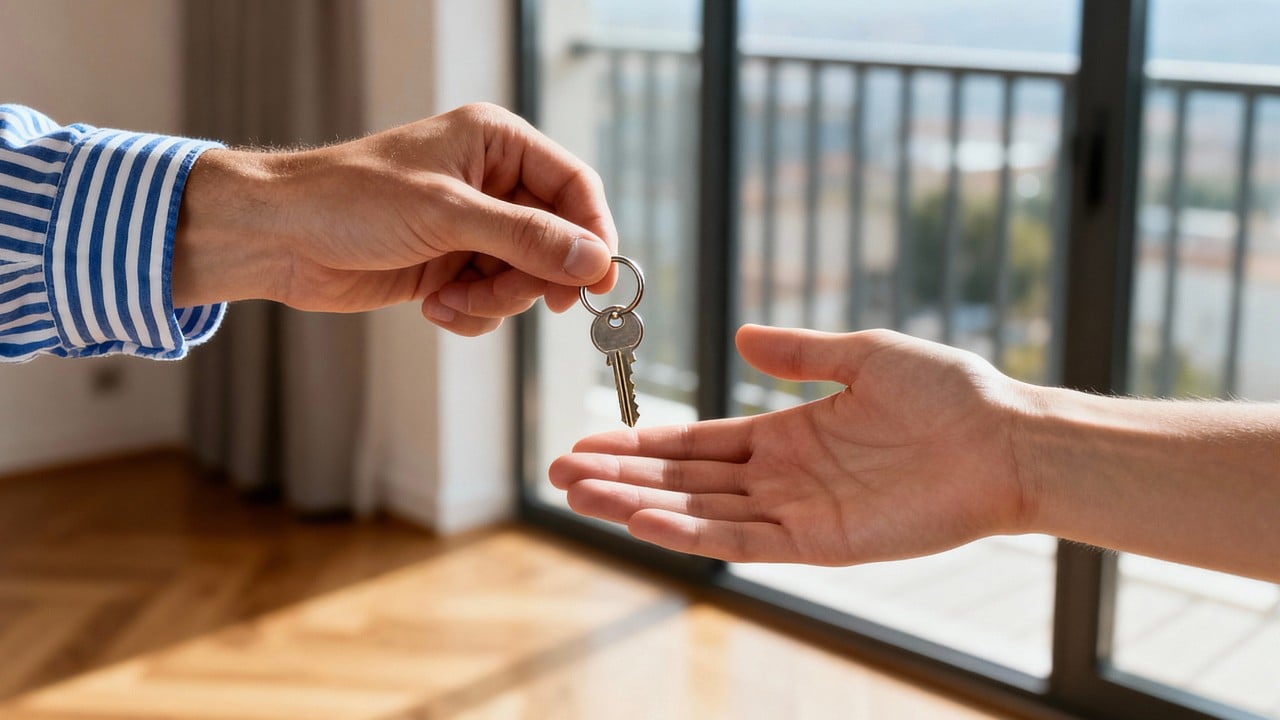
On a humid Tuesday morning in Shanghai, sixty-four-year-old Lin Mei placed a brass key onto a marble café table and slid it toward a woman she had met only three times on a video call. Across the table, sixty-two-year-old Zhang Wei slid back a heavy iron key attached to a faded red tassel, the lock to a third-floor walk-up overlooking the misty limestone peaks of Guilin. There were no lawyers present. No deposits changed hands. No cleaning fees, surge pricing, or algorithmic service charges stood between them. Just two women, two sets of houseplants requiring weekly watering, and a quiet, radical pact to trade lives for the autumn.
For decades, the script written for China’s aging population was predictable and painfully narrow. You worked until fifty-five or sixty. You collected a modest pension. You stayed in your concrete apartment block, watched your grandchildren while your children worked twelve-hour days, and saved every fen for hospital bills that might never come. Travel, if it happened at all, meant being herded onto a diesel-chugging tour bus at dawn, clutching a matching neon baseball cap, listening to a megaphone-wielding guide rush you past a landmark in twelve minutes flat before dropping you at a jade shop.
That script is burning.
Across China’s megacities and provincial capitals, a silent, grassroots movement is reshaping how hundreds of millions of older adults experience freedom, money, and human connection. They call it huanfang—home-swapping. Driven by a collision of demographic shifts, economic pragmatism, and a deep, unspoken hunger for genuine companionship, Chinese retirees are bypassing the commercial tourism industry entirely. They are trading keys on Xiaohongshu, WeChat groups, and specialized senior forums, turning their biggest fixed asset—their paid-off apartments—into a passport to see the country without draining their life savings.
To understand why this matters, you first have to understand the math of modern Chinese retirement.
The Arithmetic of a Shrinking World
Consider a hypothetical retiree—let us call him Uncle Chen—living in Beijing on a typical urban pension of roughly 4,500 yuan (about $620) a month. In a city where a decent hotel room during peak travel season easily swallows 500 to 800 yuan a night, a ten-day trip to coastal Qingdao or tropical Sanya isn’t a vacation; it is a financial amputation. Even budget chains quickly consume an entire month’s pension before Uncle Chen has bought a single bowl of noodles or a train ticket.
Yet Uncle Chen sits on an asset worth millions of yuan. Like roughly 90 percent of urban Chinese households, he owns his home outright, the result of housing reforms in the late 1990s that turned state-allocated apartments into private property. His apartment is paid for. His utilities are pennies. When he travels, that apartment sits empty, gathering dust, while he pays exorbitant rates to sleep in an identical concrete box five hundred miles away.
Home-swapping obliterates that equation.
When you trade your Beijing two-bedroom for a retiree’s seaside flat in Xiamen, accommodation costs drop to zero. Not discounted. Zero. You cook your own breakfast using the host’s rice cooker and local market vegetables instead of paying tourist-trap restaurant markups. You take the municipal bus using your senior transit pass—which grants free or half-price rides to seniors across most Chinese cities—instead of hailing expensive taxis. Suddenly, a month-long escape across the country costs no more than staying home.
I watched this dynamic play out firsthand last spring while staying with relatives in Chengdu. My aunt, a retired middle-school chemistry teacher who once agonized over spending 30 yuan on imported fruit, spent six weeks living in a sunlit apartment in Dali, Yunnan. She paid nothing for lodging. Her biggest expense was high-speed rail tickets and fresh pu-erh tea from the morning market. When she returned, her pension account hadn't shrunk; it had actually grown, because Yunnan’s produce was cheaper than Chengdu’s.
But reducing this phenomenon to a clever budget hack misses the beating heart of why it is exploding right now. Money is the excuse. Loneliness is the fuel.
Beyond the Concrete Box
China is aging at a velocity rarely seen in human history. By 2035, more than 400 million people in China will be over sixty—a population larger than the entire United States. Many belong to the one-child generation’s parents. Their single adult children have often migrated to first-tier cities for work, leaving behind millions of "empty-nest" elders (kongchao laoren) rattling around silent apartments.
In urban high-rises, you can live three inches of drywall away from a neighbor for twenty years and never learn their surname. Commercial hotels amplify that isolation. You check in, swipe a plastic keycard, eat alone in a sterile lobby, and leave without leaving a trace.
Home-swapping works like an old-fashioned village barn-raising transplanted into the digital age. Think of it as the antithesis of the modern platform economy. Where commercial short-term rentals rely on anonymous transactions, corporate insurance, and cold ratings, senior home-swapping runs on radical, old-school vulnerability.
Before a single key is mailed or handed over, weeks of courtship unfold over WeChat. The prospective swappers tour each other’s homes via live video calls. They inspect the water pressure in the shower. They check whether the mattress is firm enough for an aging lumbar spine. They negotiate the care of orchids, stray courtyard cats, and finicky washing machines. By the time the swap begins, they aren't host and guest. They are pen pals who have seen the inside of each other's medicine cabinets.
Look at what happens next: Zhang Wei doesn't just give Lin Mei an address in Guilin. She leaves a handwritten notebook on the dining table. Inside are instructions on which stall at the wet market sells river fish caught that morning, the phone number of a trustworthy plumber, the exact hour the afternoon sun hits the balcony, and an introduction to her mahjong group downstairs.
"Tell Sister Liu at the gate that you're my cousin from Shanghai," Zhang Wei says on the phone. "She’ll make sure nobody overcharges you at the fruit stand."
Within forty-eight hours, Lin Mei isn't a tourist gawking at Guilin’s karst hills from behind a camera lens. She is arguing playfully over vegetable prices at dawn, practicing tai chi in the neighborhood square with strangers who treat her like family, and drinking jasmine tea on a balcony that smells like someone else’s life.
The Invisible Friction of Trust
Of course, stepping across a stranger's threshold carries real risk, and pretending otherwise would be dishonest. When I first heard about retirees trading keys with strangers met on social media, my immediate instinct was skepticism. What happens when someone breaks an expensive induction stove? What if a swapper exaggerates the cleanliness of their flat, or cancels three days before a booked train departs?
Those fears are entirely warranted. Unlike Western home-exchange networks that charge annual membership fees and bundle property damage insurance, China’s senior home-swapping boom operates largely in a regulatory gray zone. Most arrangements happen peer-to-peer on general social platforms like Xiaohongshu (Little Red Book) or Douyin, where search terms for huanfang luyou (home-swap travel) have surged into the tens of millions of views.
There is no corporate customer service desk to call at midnight if the hot water heater dies. Legal frameworks around private home swaps remain murky, and local residential property management companies occasionally bristle at unfamiliar faces entering gated compounds.
Yet this very lack of institutional safety nets has forced participants to invent their own meticulous social vetting rituals. Retirees rarely swap with anyone who cannot produce a property ownership certificate (fangchanzheng) and national ID during video verification. Many insist on signing simple, handwritten mutual liability agreements outlining utility splits and appliance care. Some even form small, trusted circles—six or eight retired couples across different climate zones who rotate apartments seasonally like migratory birds, spending winters in warm Hainan and summers in cool Harbin.
Trust, it turns out, isn't built when risk is eliminated. It is built when two people voluntarily share the same vulnerability. When you sleep in someone’s bed and water their ferns, you treat their home with a reverence no paying hotel customer ever could, because you know they are sleeping in yours.
Reclaiming the Second Act
There is a quiet defiance embedded in every key dropped into a courier envelope.
For generations, older Chinese adults were conditioned to practice radical self-denial. They endured scarcity in their youth, poured their prime working years into the economic miracle that built modern China, and routinely sacrificed their own desires to fund their children’s weddings, down payments, and tutoring fees. Asking for pleasure—pure, unhurried, self-directed pleasure—felt almost indulgent.
Home-swapping gives them permission to want things again.
Consider what happens when a retired factory worker from industrial Shenyang spends November in a quiet courtyard near Suzhou’s canals. For the first time in forty years, her days aren't dictated by a factory whistle, a school pickup schedule, or a tour guide’s megaphone. She wakes up when the light hits the paper lanterns outside. She spends three hours reading a novel she never had time to finish. She learns to make Suzhou-style sweet lotus root from the neighbor across the hall.
This isn't merely leisure; it is identity reconstruction. In their home cities, retirees are often reduced to their former job titles or their domestic utility as grandparents. In a swapped home, they become explorers again—competent, curious adults navigating a new city on their own terms. Even the logistical hurdles of planning a swap—learning to edit short videos of their apartments, negotiating terms online, mastering unfamiliar transit apps—act as a powerful cognitive antidote to the stagnation of retirement.
Critics sometimes dismiss the trend as a niche fad limited to urban retirees who own desirable property in tourist-friendly cities. Certainly, a homeowner in coastal Xiamen or historic Xi'an holds a far stronger hand in the swap market than someone living in a remote industrial town. Inequality in housing stock inevitably shapes who gets to participate most easily.
Yet even that barrier is bending. Retirees in less famous cities are pairing up with others simply seeking a change of scenery, a cooler summer, or proximity to relatives. The currency isn't always beachfront views; sometimes the currency is simply a quiet street, a reliable kitchen, and an honest neighbor.
The Key on the Table
Last month, Lin Mei returned to Shanghai from her autumn in Guilin. Her suitcase was heavier by four jars of homemade chili sauce, a bundle of dried osmanthus flowers gifted by Zhang Wei’s downstairs neighbor, and a stack of photographs taken at a neighborhood Moon Festival dinner where she had been the guest of honor.
When she unlocked her own front door, the air inside smelled faintly of lemon floor cleaner. Her orchids were blooming on the windowsill, healthy and green. On the kitchen counter sat a freshly steamed box of Guilin rice noodles and a handwritten note propped against the kettle: Your afternoon light is the best in the city. Let’s trade again next spring.
Lin Mei picked up the note, smiled, and walked over to her bookshelf to pull down a map of China. Her finger traced a line west, toward the mountains of Sichuan, wondering whose front door might open next.