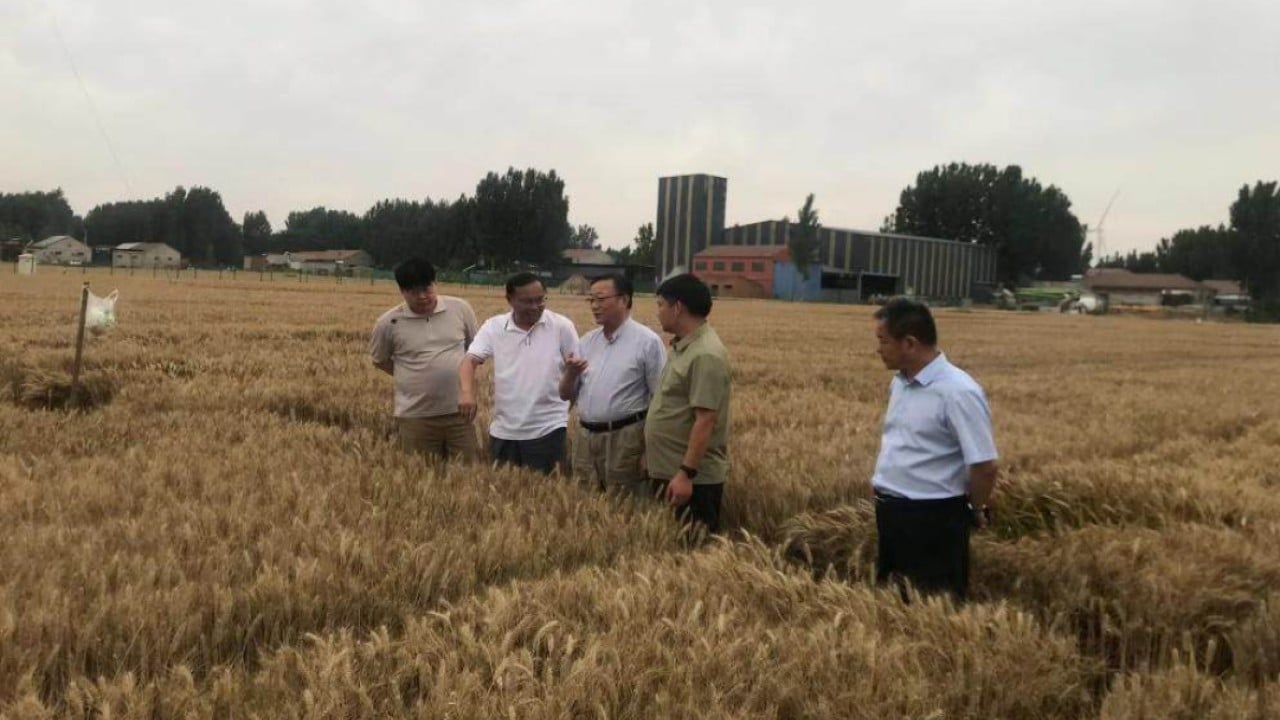
The soil remembers every dry season. It retains the memory of cracked earth, of farmers standing at the edge of withered fields, watching their livelihood turn to dust under an unsparing sun. For generations, agriculture was a gamble played against the sky. You planted seeds, you prayed for rain, and you accepted whatever the weather decided to grant you.
Then, something shifted in the quiet experimental stations of China.
Scientists stepped into the fields not to fight nature, but to rewrite the rules of engagement. What started as a sprawling agricultural experiment—a meticulous, large-scale reimagining of how crops interact with nutrients, water, and space—has yielded results that sound almost impossible on paper. Crop outputs surged by up to one hundred percent in test regions. Double the food from the same stretch of dirt.
To understand what that number actually means, you have to step away from the spreadsheets and look at the hands holding the soil.
Picture a grower named Li. For thirty years, Li farmed the way his father did, relying on intuition and a heavy hand with fertilizers, hoping more chemical input automatically meant a better harvest. Most of the time, that heavy hand backwashed into the water table while leaving the crops hungry at the root. It was an inefficient dance of trial and error.
Then the researchers arrived with their sensors, their soil profiles, and their insistence on precision. They didn't bring magic. They brought measurement.
By analyzing the exact chemistry of the earth down to the millimeter, mapping root density, and tailoring nutrient delivery to the precise biological clock of the plant, they eliminated the guesswork. Every drop of water mattered. Every gram of fertilizer had a destination.
The results were not incremental. They were revolutionary.
Double the yield does not simply mean a heavier cart at the market. It means breathing room for a family that has spent decades balancing on the knife-edge of debt. It means land that is less poisoned by runoff, because efficiency replaced excess. It means a fundamental recalibration of what a single acre of earth is capable of producing when treated with surgical intelligence rather than blunt force.
Critics often look at technological leaps in farming with suspicion, whispering about unnatural interventions. But look closer at what is actually happening. This is not about pushing plants past their limits with synthetic stimulants. It is about removing the obstacles that human error and crude techniques have placed in nature's way. Plants want to grow. Roots want to stretch. Photosynthesis is an ancient, relentless engine. We were simply starving it with bad habits.
When crop outputs double, the ripple effect moves outward with terrifying speed. Food security ceases to be a distant geopolitical talking point and becomes a quiet certainty on the dinner table. Local economies stabilize. The pressure on fragile, virgin ecosystems eases because we no longer need to clear more forests to feed more mouths; we simply need to farm smarter on the land we already occupy.
Yet, this success carries its own heavy questions.
Can these hyper-optimized methods scale beyond controlled test zones and state-backed initiatives? Can an ordinary farmer in a remote province afford the telemetry and soil diagnostics required to run a high-precision operation? The gap between scientific breakthrough and widespread adoption is often wider than any river. If the tools remain locked behind prohibitive costs or complex technical barriers, the revolution stays confined to the laboratory.
Furthermore, we must confront the reality of data-driven agriculture. When farming becomes an exercise in algorithmic management, what happens to the generational wisdom passed down through calloused palms? There is a subtle grief in watching intuition bow to a computer screen. We risk losing the intimate, sensory connection to the land—the smell of rain on clay, the intuitive read of a leaf's color—trading it all for cold metrics.
The challenge ahead is not inventing better sensors. It is translating the cold data back into a language that honors the grower.
Consider what happens next. As these practices bleed outward from China's massive agricultural trials into global farming communities, the pressure mounts on every other nation to adapt or fall behind. Food production is no longer just about weather and muscle; it is an intellectual arms race against scarcity.
We stand at a strange threshold. Behind us lies millennia of desperate dependence on the whims of the climate. Ahead lies a future where the earth can be coaxed into unprecedented abundance, provided we have the discipline to listen to what the data is whispering beneath our boots.
The soil is speaking. For the first time in human history, we are finally learning how to answer back.


