The humidity in Manila does not just sit on your skin; it presses against your lungs like a warm, damp wool blanket. Even inside the air-conditioned corridors of Malacañang Palace, where mahogany panels absorb the tropical glare and ceiling fans turn with hypnotic slowness, you can feel the weight of the Pacific outside. For hours, motorcades had snarled the avenues along Manila Bay, sirens bouncing off concrete overpasses while security details swept rooftops and harbor patrol boats cut white wakes across the gray water. Then, almost as quickly as the diplomatic choreography began, the wheels were up again. Air Force One banked north over the South China Sea, leaving behind the warmth of a treaty ally and climbing toward the cold, high-stakes calculus of Beijing.
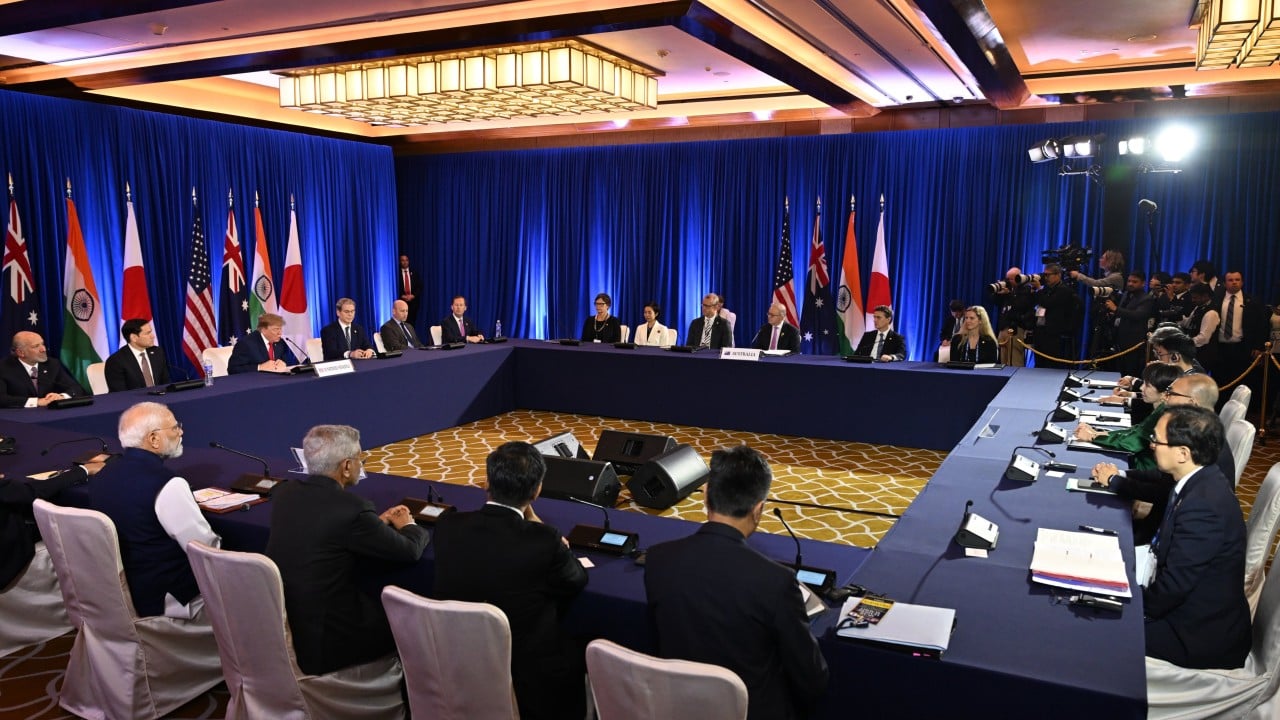
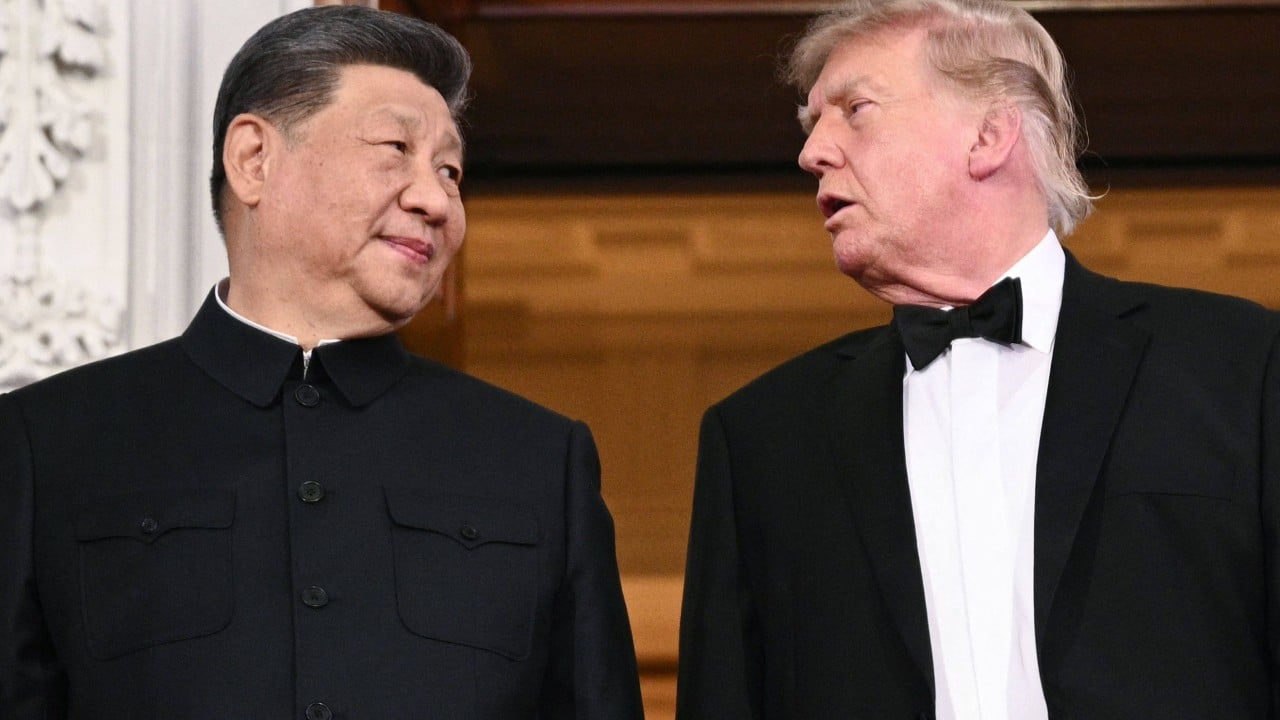
Diplomatic dispatches and international wire reports framed the itinerary in clipped, predictable terms: President Donald Trump had concluded a brief stop in Manila and was turning his attention toward China, hoping to rekindle personal chemistry with Chinese President Xi Jinping even as fresh friction over artificial intelligence threatened to derail the relationship. On paper, it reads like standard statecraft—a leaders' summit, a bilateral handshake, a list of talking points tucked into leather briefing binders.
Look closer, though, and the story shifts entirely.
To understand what actually hangs in the balance on that flight path between Manila and Beijing, forget the motorcades for a moment. Picture instead a hypothetical engineer—let us call her Maya—sitting under the fluorescent hum of a cleanroom laboratory in Hsinchu or San Jose at two in the morning. Maya does not write foreign policy memos, and she has never shaken hands with a head of state. Her world is measured in nanometers, ultraviolet light wavelengths, and the fragile yield rates of silicon wafers no wider than a dinner plate. Yet every time two presidents test their personal rapport across a polished conference table, the rules governing Maya’s work—which tools she can buy, which datasets she can train on, which colleagues across the ocean she is allowed to email—can change overnight.
That is the invisible architecture of modern diplomacy. We still cover summits like nineteenth-century royal court visits, watching body language, counting the seconds of a handshake, and parsing banquet toasts for warmth or frost. Meanwhile, the real contest is happening inside server farms, semiconductor foundries, and neural network weights that no camera crew will ever film.
The Illusion of the Room
There is an old, seductive belief in international politics that if you just put two powerful men in the same room, strip away the bureaucrats, and let them read each other’s eyes, history will bend toward a deal.
History offers plenty of seductive examples to feed that instinct. In February 1972, when Richard Nixon stepped off the Spirit of '76 onto the tarmac in Beijing and extended his hand to Zhou Enlai, the gesture itself rewrote Cold War alignments before a single communique was signed. Decades later, summits at Camp David, Reykjavik, and Mar-a-Lago reinforced the idea that personal rapport—what diplomats politely call "leader-level chemistry"—can slice through years of institutional gridlock.
Trump has long built his political identity around that exact conviction. Throughout his first term and into his return to the global stage, his approach to Xi Jinping oscillated between sharp tariff salvos and warm praise for their personal relationship. According to White House aides and diplomatic observers quoted across news coverage of the trip, the administration’s bet remains consistent: structural rivalries between Washington and Beijing are deep, messy, and slow to resolve through lower-level working groups, so direct engagement at the top is the only mechanism strong enough to break a stalemate.
Wait.
Can personal warmth actually cool down a machine that runs on code, compute, and national security paranoia?
Think of the relationship between the United States and China right now like two high-speed trains sharing a single stretch of track through a mountain pass. In the dining car, the conductors might share a pot of tea, laugh over old stories, and genuinely wish each other a safe journey. Underneath their feet, however, the steel wheels are locked onto rails pointing straight at one another. Without someone physically throwing a switch outside the train, the conversation inside the dining car does not change the physics of the track.
And right now, the track is laid with silicon.
Why Artificial Intelligence Changed the Rules of Diplomacy
In earlier eras of trade disputes, negotiators argued over tangible goods. Soybeans, steel coils, washing machines, solar panels—these were things you could count on a manifest, tax at a port, and easily dial up or down. If Washington raised tariffs on aluminum in March, it could lower them in October as part of a truce, and factories on both sides would adjust their shipping schedules accordingly.
Artificial intelligence does not behave like soybeans.
To see why, consider an intuitive analogy. Imagine two rival nations racing to build the world's first industrial electricity grid, except the power plants can also design better power plants on their own, write military encryption, discover new pathogens, and automate entire economies. Once you hand over the blueprints—or sell the specialized turbines required to generate that power—you cannot simply ask for them back six months later if the diplomatic mood sours.
Over the past several years, Washington has constructed an intricate web of export controls designed to restrict China’s access to advanced semiconductors, extreme ultraviolet lithography equipment, and the high-bandwidth memory chips required to train frontier AI models. Policy analysts and trade officials point out that these restrictions were built around a concept known as the "small yard, high fence"—the idea that the United States should keep normal trade flowing in everyday consumer goods while erecting an impenetrable barrier around a narrow set of dual-use technologies with military applications.
The problem is that the yard keeps growing, and the fence keeps leaking.
Whenever Washington tightens rules on top-tier graphics processing units, chip designers create modified versions that fall just below the technical thresholds, prompting another round of regulatory updates. Cloud computing workarounds emerge, allowing researchers to rent computing power remotely rather than importing physical hardware. At the same time, Chinese technology firms and state-backed laboratories have poured billions of dollars into domestic alternatives, open-weight AI models, and algorithmic efficiency—proving that scarcity often breeds fierce ingenuity rather than compliance.
This is where the fresh AI strains enter the room alongside Trump and Xi. For Beijing, American chip restrictions look less like targeted security precautions and more like a deliberate effort to cap China’s technological rise and lock it permanently into a subordinate tier of the global economy. For Washington, allowing cutting-edge AI hardware or model weights to flow unchecked into China looks like handing a strategic competitor the tools to outpace American defense and economic capabilities.
How do you solve that with a handshake? You do not. At best, you buy time.
The View From Manila
Before turning toward China, Trump’s brief stop in Manila served as a quiet reminder of the geography surrounding the technology race.
Stand on the seawall along Roxas Boulevard in Manila at dusk, watching cargo ships blink on the horizon while street vendors sell roasted peanuts and cold water through car windows, and geopolitics stops feeling abstract. The Philippines sits at the strategic hinge of the First Island Chain—the arc of islands stretching from Japan through Taiwan down to Borneo that separates the Chinese mainland from the open Pacific.
For decades, Manila has lived inside the pull of two competing gravities: its long-standing mutual defense treaty with the United States on one side, and its massive trade ties and geographic proximity to China on the other. Maritime standoffs in the South China Sea, water cannon incidents near contested shoals, and joint military exercises have turned Philippine waters into a daily barometer of U.S.-China tension.
When an American president stops in Manila on the way to engaging Beijing, the message is unmistakable, even when spoken in the polite cadences of diplomatic readouts. Washington wants its allies in the Indo-Pacific to know they are not bargaining chips to be traded away in a grand bilateral deal. Simultaneously, Beijing watches every stop along that itinerary as evidence of an American effort to hem China in along its maritime periphery.
For ordinary people living along those coastlines—fishermen in Zambales watching coast guard vessels shadow their wooden boats, or semiconductor assembly workers in Cavite whose factory shifts depend on global supply chains remaining intact—the anxiety is visceral. A diplomatic miscalculation between Washington and Beijing does not stay neatly confined to op-ed pages. It shows up in shipping insurance premiums, delayed factory orders, and the quiet calculation every parent makes about whether their children’s future will be shaped by trade or by conflict.
What Everyone Gets Wrong About "Chemistry"
It is easy to mock the obsession with personal chemistry between world leaders as superficial theater, especially when compared to the hard math of teraflops and trade deficits. I used to view it that way myself—assuming that structural forces always swallow individual personalities whole.
Watching successive administrations wrestle with Beijing, however, forces a more uncomfortable admission. Personal rapport is not a cure, and it certainly cannot erase competing national interests. Yet in a system bristling with autonomous weapons, cyber capabilities, and hair-trigger alerts, the absence of trust at the top is terrifyingly dangerous.
Think about what happens during a crisis when two leaders have zero personal baseline. Suppose an algorithmic trading glitch, a naval collision in the South China Sea, or a suspected cyber intrusion into a power grid triggers alarms at three in the morning. Without an established channel of direct, candid communication, intelligence agencies on both sides are trained to assume the worst-case scenario. Deterrence spirals into escalation because nobody wants to look weak by picking up the phone first.
In that narrow, vital sense, chemistry matters enormously. Not because it turns rivals into friends, but because it creates a circuit breaker. When Trump seeks face-to-face engagement with Xi, critics often frame it as either naive optimism or a prelude to unilateral concessions, while supporters portray it as master-level dealmaking. Both readings miss the quieter reality: diplomacy at this level is often about preventing a catastrophic short circuit while both sides continue competing fiercely underneath.
Inside the Invisible Supply Chain
To appreciate just how fragile that balance has become, trace the journey of a single advanced AI server from raw earth to data center.
It begins with quartz mined from specific veins, refined into ultra-pure polysilicon, and melted into cylindrical ingots. Those ingots are sliced into mirror-smooth wafers and shipped to fabrication plants where extreme ultraviolet machines—built from hundreds of thousands of precision components sourced across Europe, North America, and Japan—etch circuits thinner than a strand of human DNA. From there, the chips travel to packaging facilities in Southeast Asia, get mounted onto boards alongside memory modules from South Korea, and finally land inside humming server racks in Virginia, Inner Mongolia, or Singapore.
No single country owns that entire chain from start to finish. Not the United States. Not China. Not anyone.
For thirty years, economists celebrated this interdependence as the ultimate guarantee of peace—the idea that nations woven so tightly into a single manufacturing tapestry would never dare pull the threads. What we are witnessing today is the painful unwinding of that assumption. Governments now view the very same supply chains as single points of failure.
Every export license denied, every retaliatory restriction on critical minerals like gallium or germanium, and every new rule governing cross-border AI research adds another layer of friction to a system built for speed. Businesses caught in the middle spend millions hiring compliance lawyers to map out dual supply chains—one designed for Western markets, another scrubbed of restricted components for China. Innovation slows down not because engineers ran out of ideas, but because they spend half their week navigating geopolitical borders drawn inside software code.
And here is the part few officials like to admit publicly: nobody knows where the red lines actually sit anymore.
In nuclear arms control during the Cold War, inspectors could count missile silos from satellites and verify warhead reductions on the ground. How do you inspect an AI training run? How do you verify whether a frontier model being trained behind closed doors is designed for protein folding and climate modeling, or for autonomous drone swarms and offensive cyber operations? The same mathematical weights that help a hospital spot early-stage cancer can, with different fine-tuning, optimize logistics for an amphibious landing.
Dual-use technology has erased the neat boundary between civilian commerce and military power. That ambiguity is what makes the current moment so disorienting—not just for diplomats drafting communiques, but for anyone trying to understand where competition ends and confrontation begins.
The Weight of an Unwritten Deal
As the diplomatic focus shifts from Manila toward Beijing, expectations remain cautiously calibrated on both sides. Seasoned China watchers and foreign policy analysts note that dramatic breakthroughs on core structural disputes—whether over industrial subsidies, Taiwan, South China Sea claims, or semiconductor export controls—are unlikely to materialize from a single summit. The domestic political pressures in both capitals are simply too rigid. In Washington, toughness on China remains one of the few positions capable of commanding broad consensus across a divided Congress. In Beijing, technological self-reliance has been elevated to a foundational pillar of national rejuvenation that cannot be bargained away under foreign pressure.
Yet diplomacy rarely moves in straight lines or grand, cinematic treaties. More often, it advances through small, unglamorous calibrations: an agreement to reopen a military-to-military hotline, a working group to establish basic safety guardrails against rogue AI systems, a temporary pause on new tariff escalations while agricultural and energy purchases resume, or a quiet understanding that neither side will surprise the other right before a major domestic milestone.
These steps will not make triumphant headlines. They will not satisfy hawks who want total decoupling, nor will they reassure idealists hoping for a return to the cooperative globalization of the early 2000s.
Instead, they represent something harder and far more human: the slow, imperfect work of managing a rivalry that neither side can afford to let spiral out of control.
Back in that hypothetical cleanroom in Hsinchu, Maya finishes checking the latest batch of wafers before her shift ends. Outside, the pre-dawn sky over the Pacific is beginning to bruise from black to deep violet. Somewhere above that same ocean, encrypted cables carry briefing notes, draft communiques, and intelligence assessments between capitals, all trying to translate human ambition and fear into words two leaders can agree to read aloud.
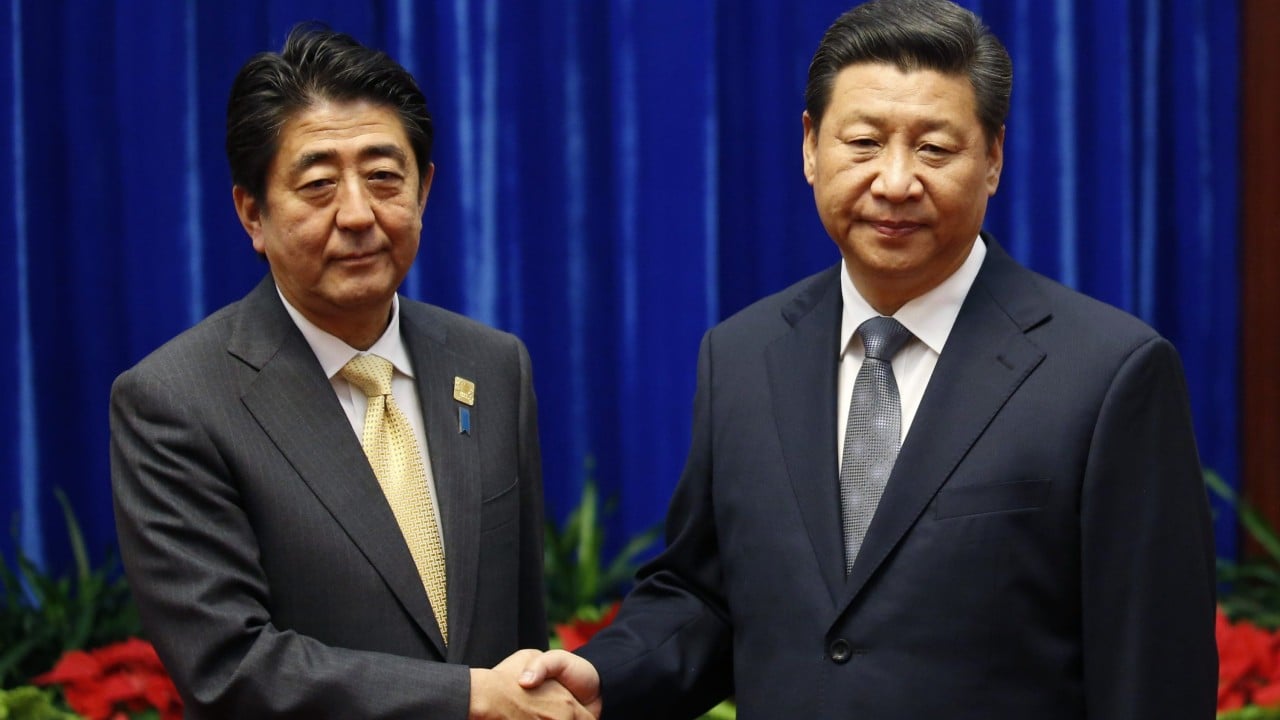
When the cameras finally flash and the two men step forward to shake hands, watch closely—not for the warmth of the smile, nor the firmness of the grip, but for the silence that follows once the doors swing shut and the machines keep humming in the dark.