The coffee in a municipal convention hall always tastes slightly burnt.
If you have ever sat in the back row of a regional government summit in British Columbia, you know the exact sensory texture of the room. Fluorescent lights hum overhead. Hundreds of mayors, city councillors, and regional district directors—people who spend their Tuesday nights arguing over sewer upgrades, zoning variances, and snowplow budgets—lean forward in stiff banquet chairs. Outside, autumn rain streaks the glass. Inside, the air smells of damp wool, printer toner, and quiet exhaustion.
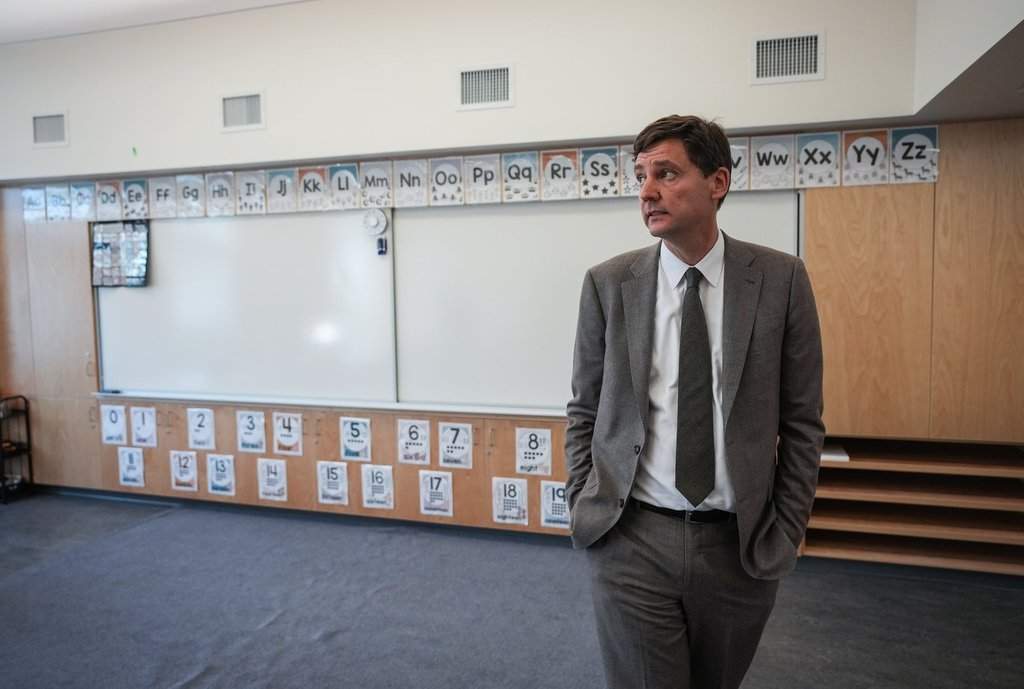
Into this room walks Premier David Eby.
On paper, his appearance before the Union of B.C. Municipalities (UBCM) is a routine entry on a political calendar. Every premier speaks to the UBCM. Every year, local leaders bring stacks of resolutions pleading for provincial money, infrastructure grants, and relief from downloading costs onto property taxpayers.
Yet this time, the room hums with a different frequency. Whispered conversations cluster near the exits. Phones buzz with text messages from party organizers in Victoria and Vancouver. Across the province, political observers are watching every micro-expression, every pause at the podium, and every carefully worded promise for a single hidden signal: is British Columbia about to be plunged into a snap election?
To understand why a speech to local councillors carries the weight of a province-wide reckoning, you have to step away from the podium and look at what is actually happening on the ground. Politics in Victoria often feels like a chess match played behind frosted glass, but the pieces on that board are real people trying to survive an era of relentless economic pressure.
The Anatomy of a Political Ambush
Let us build a hypothetical scenario to see the mechanics clearly—call her Elena.
Elena is a two-term city councillor in a mid-sized interior community like Kamloops or Prince George. She is not a career partisan; she runs a small accounting practice and ran for council because the local recreation center roof was leaking and nobody seemed to be fixing it. Over the past three years, Elena has watched her town change in ways her municipal budget was never designed to handle. Property taxes have climbed just to keep basic services running. Emergency rooms face periodic weekend closures. Housing prices, once the saving grace of moving away from the Lower Mainland, have surged beyond what local nurses and teachers can afford.
When Elena sits in that convention hall listening to David Eby, she is not thinking about polling averages or legislative calendars. She is wondering whether the provincial government standing at the microphone will still exist in six weeks—or if every infrastructure grant she has spent eighteen months negotiating is about to freeze in the bureaucratic purgatory of an election campaign.
That tension is the invisible engine driving snap election speculation.
In a parliamentary democracy, timing is the sharpest weapon a sitting premier holds. Under British Columbia's fixed-date election laws, voters already know when the scheduled trip to the ballot box is supposed to happen. Yet fixed dates have always carried an asterisk. A premier retains the constitutional authority to visit the Lieutenant Governor at Government House, ask for the dissolution of the legislature, and force an early campaign whenever the political winds look favorable—or before they turn into a gale.
Why would a leader risk the public anger that often greets an unnecessary early vote?
Think of it like a sailor watching a barometer drop. When the sky is still clear, you know a storm is coming, even if the people on the beach are still sunbathing. If you wait until the gale hits, your boat takes on water. If you set sail early, while you still have the wind at your back and your opponents are still patching their sails, you might make harbor before the waves crest.
What Happens When the Clock Stops
To grasp the stakes of a snap election call, you have to understand what happens the exact moment the writ drops.
Governance stops.
It does not slow down; it halts. Cabinet ministers become candidates. Civil servants enter a strict caretaker mode, barred from launching new initiatives, signing major discretionary funding agreements, or rolling out policy shifts that could be seen as partisan campaigning on the public dime. Bills sitting on the order paper—legislation covering everything from housing density mandates to healthcare recruitment and environmental permitting—vanish into thin air, forced to start from scratch if and when a new legislature convenes.
For a province wrestling with overlapping crises, pressing pause is not a neutral act.
Consider the reality facing British Columbia right now. Housing affordability remains an acute daily emergency for renters and young families across Metro Vancouver, Vancouver Island, and the Okanagan. The toxic drug crisis continues to claim lives at a staggering rate, straining paramedics, municipal bylaw officers, and hospital wards alike. Meanwhile, municipal leaders at the UBCM have spent the past several years navigating an unprecedented wave of provincial housing legislation—rules that forced cities to allow multiplexes, eliminate parking minimums near transit, and meet strict housing targets or face direct provincial intervention.
Many mayors in that convention hall are furious about losing local zoning control. Others quietly appreciate that Victoria finally took the political heat for densification that local councils were too terrified to approve themselves.
Now place David Eby at the podium in front of those exact mayors.
If he is preparing to call a snap election, his speech becomes something entirely different from a policy update. Every sentence is a test balloon. Every funding announcement—whether for transit expansion, water treatment plants, or mental health beds—doubles as an opening salvo in a campaign stump speech. You can hear it in the cadence of the prose: less bureaucratic nuance, sharper contrasts with opposition parties, and a sudden urgency to frame the government's record as unfinished business that only voters can authorize him to complete.
The Gamble Every Premier Fears
History offers a sobering warning to leaders who reach for the early-election lever too eagerly.
Voters are intuitive creatures. You do not need a political science degree to recognize when a politician calls an election purely to save their own skin or crush a disorganized opponent before they can fundraise. Across Canadian political history, snap elections have a habit of detonating in the hands of the people who light the fuse.
In 1990, Ontario Premier David Peterson called an election barely three years into a massive majority government, hoping to lock in another mandate before an economic recession bit deeper. Voters punished the perceived arrogance so severely that they handed power to the NDP for the first time in provincial history. In 2020, during the height of the pandemic, B.C. Premier John Horgan called an early election that succeeded in turning a fragile minority into a comfortable majority—yet even that victory left a lingering cynicism among voters who felt dragged to the polls during a public health emergency.
David Eby knows this history intimately. He is a former human rights lawyer and pivot-point strategist who built his reputation on methodical, relentless policy execution rather than charisma alone. Since taking over the premiership, his governing style has been defined by rapid-fire legislative intervention: rewriting housing rules, overhauling doctor payment models, tweaking involuntary care policies, and picking high-profile fights over the cost of living.
That speed creates a specific political vulnerability.
When you move fast, you break things, and you make enemies. Small business owners complain about rising payroll taxes and crime downtown. Resource communities worry about permitting delays and land-use negotiations. Suburban commuters watch bridge tolls, gas prices, and mortgage renewals eat their paychecks alive. Meanwhile, opposition parties—whether restructuring, merging, or sharpening their populist attacks—spend every waking hour trying to channel that quiet household anxiety into anger at the government in Victoria.
So the calculation sitting on Eby's desk is brutal in its simplicity.
Does he wait, hoping that interest rate cuts, new housing completions, and healthcare hiring finally show tangible results in people's bank accounts and local clinics before the scheduled election date? Or does he look at the opposition benches, see an opponent still struggling to define its platform or vet its candidates, and decide that right now—imperfect as it is—represents the highest ground he will ever hold?
Inside the Room Where Local Pain Meets Provincial Power
Step back into that UBCM convention hall for a moment, because the real story is not happening behind closed doors in Victoria. It is happening in the friction between two levels of government that desperately need each other and deeply resent each other at the exact same time.
Municipalities in British Columbia collect roughly eight to ten cents of every tax dollar paid by citizens. The remaining ninety cents flows to Victoria and Ottawa. Yet when a water main bursts, when an encampment forms in a public park, when a bridge needs seismic upgrading, or when a library becomes a de facto warming shelter, residents do not call the Prime Minister or the Premier.
They call their local councillor. They corner their mayor in the grocery store produce aisle.
I have watched local councillors break down in frustration after evening public hearings, caught between residents screaming about property tax hikes and provincial mandates requiring infrastructure they cannot afford to build. There is a profound loneliness to municipal politics. You hold all the visibility and almost none of the revenue tools.
When the Premier takes the stage at UBCM, that power imbalance sits in the center of the room like an uninvited guest.
Watch how the dynamic shifts when snap election rumors swirl. Suddenly, the Premier needs those mayors far more than usual. In a tight provincial race—especially in battleground ridings across Surrey, Langley, the Tri-Cities, Vancouver Island, and the Interior—the quiet endorsement or public hostility of a popular local mayor can swing thousands of undecided votes. If mayors walk out of the UBCM convention telling local reporters that Victoria is ignoring their communities, that narrative becomes campaign poison overnight.
Conversely, if the Premier delivers tangible relief—a new infrastructure fund, a concession on housing timelines, a commitment to bolster regional policing and mental health crisis teams—he neutralizes a potent source of local rebellion right before the starting gun fires.
How to Read the Signals Like an Insider
If you are watching the news coverage of David Eby's UBCM address and trying to separate genuine smoke from routine political theater, ignore the pundits arguing on television panels and look instead at four concrete indicators.
First, watch the money. Governments preparing for a snap election do not announce ten-year feasibility studies; they announce shovel-ready grants with immediate disbursements. Look for targeted funding aimed squarely at swing regions—transit money for suburban corridors, hospital upgrades in contested interior ridings, and municipal infrastructure funds that let local mayors cut ribbons within weeks.
Second, listen to the framing of blame. In normal governance, a premier speaks about partnership, collaboration, and long-term structural reform. When a campaign is imminent, the language hardens into binary choices. Notice whether Eby frames current challenges as problems his government is actively fixing versus threats that an opposition government would supposedly make catastrophic.
Third, watch candidate nominations and party infrastructure behind the scenes. You cannot launch a snap campaign without names on ballots in all ninety-three ridings. If the governing party suddenly accelerates acclamation meetings, rushes vetting approvals, and locks down campaign office leases in suburban strip malls, the decision has already been made, regardless of what is said at the podium.
Fourth, pay attention to the opposition's reaction in the hallways immediately after the speech. Opposition leaders attend UBCM too, working the same hotel lobbies and coffee stations. When opposition critics sound genuinely rattled—attacking the premier for "campaigning on the taxpayer's dime" rather than critiquing specific policy clauses—they are smelling the same ozone in the air.
The Quiet Weight of an Unwritten Ballot
It is easy to treat election speculation as a spectator sport. Political junkies track riding projections the way sports fans track playoff standings, trading rumors over lunch and dissecting speech transcripts like box scores.
Yet outside the bubble of campaign strategists and legislative press galleries, there is a weariness that rarely makes it into headlines.
People across British Columbia are tired. They are tired of calculating whether they can afford both dental work and groceries in the same month. They are tired of watching storefronts board up on main streets they have walked down since childhood. They are tired of feeling like every major institution—healthcare, housing, education, justice—is stretched to the absolute limit of its elasticity.
A snap election asks those exhausted citizens to pause everything, absorb weeks of attack ads and competing promises, and render a verdict on who deserves to steer the ship through rough water. If voters sense that the call was driven by genuine democratic necessity—a deadlock that prevents governing, or a fundamental shift in mandate requiring public consent—they will engage with seriousness and grace. If they sense it was merely a tactical ambush designed to catch rivals off guard, that quiet exhaustion can curdle into something cold and unforgiving at the ballot box.
For now, the convention hall lights stay bright. The coffee pots keep brewing. Mayors and councillors take their seats, notebooks open, waiting to hear whether the man stepping up to the microphone is speaking to them as their partner in governing—or speaking past them, directly into the cameras, to a province already standing at the edge of a campaign.
Outside the hall, the autumn rain keeps falling on the glass, indifferent to political calendars, pooling in storm drains that somebody, regardless of who wins, will still have to fix on Tuesday morning.