The salt arrives first.
Long before the first horizontal sheet of rain lashes against the corrugated tin roofs of coastal Odisha, and hours before the wind begins to howl with the low, mechanical register of a freight train that never passes, the air thickens into something heavy and metallic that coats the back of your throat. Anyone who has spent a lifetime along the Bay of Bengal knows that smell. It is the scent of churned seabed, of deep ocean water dragged violently upward from the abyssal plain by a dropping barometer, announcing that the sea is no longer content to stay behind the dunes.
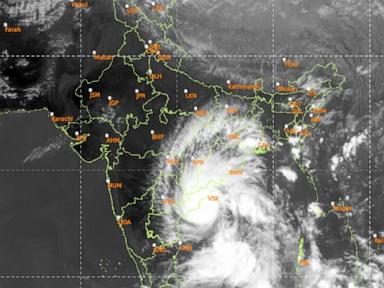
Yesterday, tens of thousands of people along India’s eastern coastline packed their lives into plastic sacks, locked wooden doors that will likely splinter by midnight, and walked away from everything they own. On wire services and news tickers across the globe, the story was compressed into a sterile, familiar headline: India evacuates tens of thousands as Cyclone Arnab nears eastern coast.
Read that sentence again. Notice how effortlessly the mind glides over the words tens of thousands. Numbers of that magnitude have a strange anesthetic effect on human empathy; they turn flesh-and-blood terror into a logistical statistic, a line item in a meteorological bulletin. We see a satellite loop of a swirling white comma over warm blue water, we note the wind speeds in knots or kilometers per hour, and we scroll onward.
We miss the miracle happening in the mud. And we completely misunderstand the invisible war being waged between human memory and an ocean that is rewriting its own rules.
The Architecture of Leaving
To understand what is happening right now in the districts of Ganjam, Puri, and Balasore, you have to step out of the satellite view and stand in the doorway of a two-room brick house three hundred meters from the surf.
Consider a hypothetical fisherman—let us call him Biswajit, though his exact life is currently playing out in ten thousand variations from Andhra Pradesh to West Bengal. Biswajit is fifty-four years old. His skin has the cured, dark-mahogany sheen of a man who has spent forty years hauling nylon nets out of the surf before dawn. In the corner of his front room sits a fiberglass boat motor he spent six years paying off, wrapped in three layers of tarpaulin and lashed to a concrete pillar with thick hemp rope. Beside it is a tin trunk containing his daughter’s school certificates, a laminated land deed, three kilograms of parboiled rice, and a small brass idol wrapped in a yellow cloth.
Everything else—the clay stove, the woven charpoy beds, the neat rows of dried fish hanging under the eaves, the papaya trees he planted when his youngest son was born—must be left behind to negotiate its own survival with a twelve-foot storm surge.
Leaving is not a single decision. It is a slow, agonizing arithmetic of loss.
When the sirens on the concrete cyclone shelters begin to wail—an eerie, rising-and-falling electronic cry mounted on tall poles above the casuarina groves—Biswajit faces a calculation that no urban emergency planner can ever fully quantify. If he leaves too early and the storm curves north toward Bangladesh, he loses three days of peak fishing wages and risks looters picking through his unlocked shed. If he waits until the coconut palms begin to snap like dry twigs, the coastal road becomes a flooded trap of downed power lines and flying corrugated iron.
Every evacuee along that coast is performing that exact mental calculus in the pouring rain. They are not merely fleeing bad weather; they are surrendering their livelihoods to preserve their pulses.
The Ghost of 1999
There is a reason tens of thousands of people actually listened when the loudspeakers crackled to life yesterday morning. That reason is not blind obedience to authority. It is scar tissue.
Ask anyone over the age of thirty-five in coastal Odisha about October 1999, and watch their posture change. Back then, a super cyclone slammed into the Paradip coast with winds exceeding 260 kilometers per hour. There were no high-resolution Doppler radar networks tracking every wobble of the eyewall. There were no automated bulk SMS alerts pinging cheap feature phones in Odia and Telugu. There were barely a few dozen reinforced concrete shelters along hundreds of kilometers of vulnerable coastline.
The ocean simply walked inland for twenty kilometers and stayed there.
More than ten thousand people died in a single night. Whole villages vanished without a single survivor left to identify the dead. For weeks afterward, bloated carcasses of cattle and human beings floated tangled in the branches of uprooted banyan trees, and the survivors drank brackish, contaminated water out of puddles because every freshwater well had been poisoned by the sea.
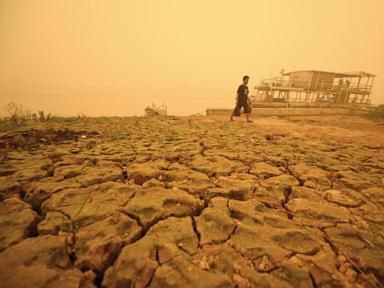
I remember walking through the aftermath of a major Bay of Bengal cyclone years later, long after the international camera crews had packed their tripods and flown home. What stays with you is not the dramatic wreckage—the overturned trucks or the sheared-off concrete roofs. It is the silence of the soil. Saltwater kills everything green it touches. For three monsoons after a major surge, rice paddies turn into gray, cracked deserts where not even weeds will grow. A single night of wind steals half a decade of harvests.
That collective trauma transformed India’s eastern coast into the most battle-hardened disaster-response machine on earth. When people wonder how a developing nation with densely packed coastal slums manages to move hundreds of thousands of citizens out of harm's way in forty-eight hours—a feat that has repeatedly humbled far wealthier nations—the answer lies in that 1999 graveyard.
Odisha and its neighboring states made a silent, ironclad vow never to be caught blind again.
Inside the Engine of a Monster
Why does the Bay of Bengal breed these monsters with such relentless frequency, and why has Cyclone Arnab forced such a massive, rapid mobilization?
Think of the Bay of Bengal as a giant, shallow skillet sitting over a burner that never turns off. Unlike the open Pacific or the wider Atlantic, the Bay is semi-enclosed, fed continuously by massive freshwater rivers—the Ganges, the Brahmaputra, the Mahanadi—pouring warm, low-salinity water onto the surface. That fresh water acts like a lid, preventing the warm surface layer from mixing with the colder, denser water below.
When a low-pressure disturbance drifts over that warm lid, it feeds on latent heat like dry kindling meeting a match. Moisture evaporates rapidly, rises, condenses into towering cumulonimbus clouds, and releases staggering amounts of energy that spins the air column faster and faster. Because the coastline curves inward like a funnel, any storm moving northwest gets squeezed into a tightening corner, piling ocean water ahead of it into a lethal dome known as storm surge.
Meteorologists call this rapid intensification, and it is the nightmare scenario for emergency managers. A storm that looks like a disorganized cluster of squalls on Tuesday afternoon can explode into a severe cyclonic storm by Wednesday night, erasing the safety margins that coastal communities rely on to prepare.
When Cyclone Arnab began organizing and accelerating toward the eastern seaboard, the India Meteorological Department saw the telltale signatures: high sea-surface temperatures, low vertical wind shear, and an outflow pattern that allowed the storm to vent heat efficiently into the upper atmosphere. The warning flags went up at every port from Gopalpur to Haldia. Fishing trawlers were ordered back to harbor, though for the small wooden boats pulled up onto open beaches, there is no harbor to hide in—only higher sand dunes and prayer.
The Concrete Sanctuaries
Follow the muddy tracks inland from the beach, past the flooded shrimp farms and the swaying bamboo groves, and you will eventually see them rising above the treeline like brutalist lighthouses: the multipurpose cyclone shelters.
Built on thick reinforced-concrete stilts so that a fifteen-foot wall of seawater can rush harmlessly underneath the ground floor, these two-story buildings are the physical backbone of India’s evacuation strategy. During calm months, they serve as village schools, wedding halls, and community clinics. The moment a cyclone warning flashes red, the desks are stacked against the walls, the diesel generators are primed, and the doors are thrown open.
Step inside one of these shelters at dusk as Cyclone Arnab’s outer bands begin to rake the coast, and the sensory overload hits you immediately.
The air inside is thick with the smell of wet wool, kerosene, damp earth, and humanity packed shoulder to shoulder. Hundreds of villagers sit on woven plastic mats laid across the cold cement floor. Old women clutch cloth bundles against their chests, murmuring prayers. Toddlers cry from hunger and confusion while teenage boys huddle near the narrow shuttered windows, peering through cracks in the wooden louvers to watch the banana trees shred in the rising gale.
In one corner, a local ASHA health worker—a woman from the same village wearing a bright pink cotton sari over a rain-drenched shawl—checks the blood pressure of a pregnant woman who went into early labor just as the first squall hit. Across the hall, volunteers from the National Disaster Response Force, clad in bright orange jumpsuits, stack sacks of flattened rice, jaggery, and clean water canisters next to inflatable rubber rescue boats and chainsaws.
Those chainsaws are perhaps the most critical tools in the room. Once the eye of the storm passes and the wind dies down, the real race against death begins. Fallen eucalyptus and banyan trees block every arterial road, trapping ambulances and cutting off villages from medical aid. Before the last gusts have even faded, teams of young men will march out into the mud with chainsaws and crowbars to hack open the lifelines, centimeter by centimeter.
The Invisible Casualties
Even when the death toll stays miraculously low—a testament to early warnings and sheer logistical grit—a cyclone never leaves a coast intact. The headlines tomorrow will count fatalities, collapsed huts, and uprooted utility poles. They will rarely count the slow, quiet devastation that unfolds over the next six months.
Consider the math of a coastal farming family. To plant two acres of winter paddy, a smallholder farmer borrows forty thousand rupees from a local moneylender at predatory interest rates, betting everything on the harvest. When Cyclone Arnab’s saltwater surge breaches the earthen embankments and drowns those fields in brine, the debt does not wash away with the tide. The creditor still arrives at the door in January.
Consider the saltwater intrusion into the shallow aquifers that supply drinking water to millions of coastal residents. Once seawater seeps into the freshwater lens beneath the sand, every hand pump in the district begins spewing bitter, saline water. Women must walk three times farther each morning to fetch potable water from distant tankers, while waterborne illnesses—cholera, dysentery, skin infections—quietly stalk the relief camps.
And consider the children whose textbooks dissolved into gray pulp inside flooded brick rooms, who will spend the next three months helping their parents rebuild mud walls instead of sitting in classrooms.
We tend to think of disasters as singular explosions—a violent climax followed by a neat return to normal. Along the Bay of Bengal, a cyclone is not an explosion. It is a heavy, wet blanket thrown over an entire regional economy, smothering recovery for years while the rest of the world moves on to the next breaking news alert.
Why This Matters Far Beyond the Bay
It is tempting, from a comfortable distance behind a dry glass window thousands of miles away, to view Cyclone Arnab as a local tragedy—an unfortunate byproduct of geography in a part of the world accustomed to monsoons and tempests.
That comfort is an illusion.
What is unfolding along India’s eastern shore tonight is a live dress rehearsal for the twenty-first century. Over forty percent of the human race lives within one hundred kilometers of a coastline. From the low-lying deltas of South Asia to the barrier islands of the American Gulf Coast and the reclaimed seawalls of Northern Europe, warming oceans are supercharging tropical storms, slowing their forward speed so they dump catastrophic volumes of rain, and driving higher surges onto increasingly crowded shores.
India’s coastal communities are standing on the front lines of a planetary shift they did almost nothing to cause. Their per-capita carbon emissions are a tiny fraction of those in the industrialized West, yet they pay the climate tax in ruined harvests, salted wells, and midnight evacuations every single autumn.
Yet they are also teaching the rest of humanity how to survive it.
While wealthy cities still argue over zoning laws and seawall budgets, rural districts in Odisha and West Bengal have built a hyper-local culture of preparedness where village volunteers know every elderly resident, every pregnant woman, and every disabled neighbor by name—and know exactly who is responsible for carrying them to the concrete shelter before the bridge washes out.
The Night Watch
Right now, as the outer spiral bands of Cyclone Arnab whip the Bay of Bengal into a froth of dirty foam and flying spray, the power grid across dozens of coastal blocks has already been deliberately shut down to prevent electrocutions from snapping wires.
Darkness has fallen early over the delta.
Inside the concrete shelters, battery-powered emergency lanterns cast long, flickering shadows across walls covered in faded primary-school alphabet charts. Outside, the casuarina trees bend nearly double, screaming as the wind strips their needles away. The ocean, swollen and unrecognizable, climbs steadily up the beach, swallowing the fishing boats, swallowing the sand dunes, pressing its heavy, relentless weight against the mud embankments that separate survival from ruin.
In the corner of a crowded shelter near Puri, a fisherman sits with his back against the cold cement, his hand resting lightly on a tin trunk containing his daughter’s future, listening to the roar of the water outside and waiting for dawn.