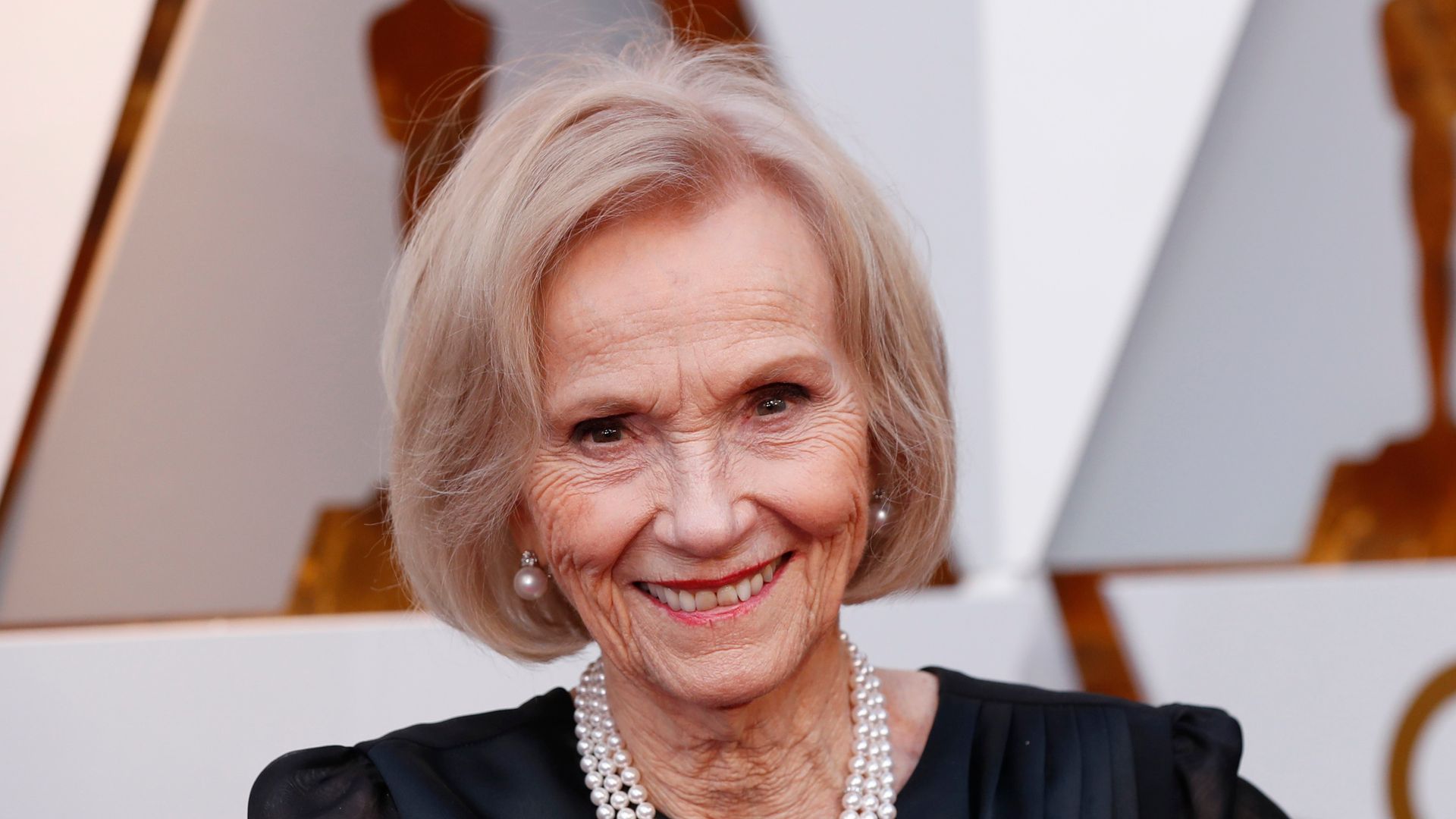
Academy Award-winning actress Eva Marie Saint died at her home in Los Angeles at the age of 102, marking the final chapter for one of the last true surviving legends of Hollywood's golden era. Best known for her unforgettable work opposite Marlon Brando in On the Waterfront and Cary Grant in Alfred Hitchcock's North by Northwest, Saint did not achieve longevity merely by outliving her peers. She survived and triumphed because she systematically refused to play the studio system's cynical game.
Most conventional obituaries will catalog her century-spanning milestones, noting that she was born on the Fourth of July in 1924 in Newark, New Jersey, and that she won an Academy Award for best supporting actress for her very first major film role. That surface narrative misses the sharper, more compelling truth of her career. In an era when major studios treated young starlets like interchangeable commodities bound by ironclad, multi-picture contracts, Saint asserted an extraordinary degree of autonomy. She turned down prestigious scripts, avoided long-term studio commitments, and prioritized her marriage to director-producer Jeffrey Hayden over the relentless pursuit of box-office dominance.
The Cost of Saying No to the Machine
Consider the trajectory of her filmography immediately following her 1954 triumph in On the Waterfront. Most newcomers who captured an Oscar straight out of the gate would have signed away the next decade to maintain momentum. Saint took the opposite path. When agents and studio executives pushed her to capitalize on her heat by packing her schedule, she pushed back.
She famously declined major parts in high-profile productions such as The Man in the Gray Flannel Suit alongside Gregory Peck. Her reasoning was starkly un-Hollywood. She wanted a family, she wanted stability, and she recognized that the frantic machinery of the studio system was designed to burn talent out before they turned thirty.
This selective approach could easily have derailed a lesser career. Instead, it consecrated her mystique. When Alfred Hitchcock cast her as the sophisticated, coolly dangerous Eve Kendall in North by Northwest, he was not hiring a factory-line ingenue. He was hiring an actress who brought theatrical depth from her early days in live television drama and an intrinsic intelligence that matched Cary Grant's razor-sharp timing. The train scene at the climax of that 1959 thriller works precisely because Saint played Kendall not as a disposable cartoon spy, but as a woman with agency, wit, and quiet steel.
Navigating the Studio Era on Her Own Terms
The myth of the Golden Age of Hollywood often portrays actors as helpless victims of tyrannical moguls like Jack Warner or Louis B. Mayer. While that power dynamic certainly existed, performers like Saint demonstrated that an iron spine could carve out a protected space.
Her partnership with Hayden, whom she married in 1951 and remained with for sixty-five years until his death in 2016, served as her anchor. When weighing major career choices, she routinely consulted him, famously retreating to quiet corners to re-read scripts while he managed domestic life. In a town notorious for marital wreckage driven by professional insecurity, their union was an anomaly built on mutual respect and a shared refusal to let the industry dictate their personal values.
Even the famous anecdote surrounding her Academy Award win highlights her unflappable composure. Heavily pregnant during the ceremony, she accepted her statuette with the deadpan warning, "I may have the baby right here!" Her son, Darrell, arrived two days later. She treated Hollywood royalty as a day job rather than an identity, a perspective that allowed her to transition gracefully into television, stage work, and later-career character turns, including playing Superman's adoptive mother, Martha Kent, in 2006.
The Legacy of a Reluctant Icon
As the decades progressed, Saint's presence in projects like television's Moonlighting or feature films like Because of Winn-Dixie proved that her appeal was never dependent on youth or studio-manufactured glamour. She possessed a grounded authenticity that age only refined.
When actors today express frustration with the transient nature of modern fame or the algorithmic pressures of social media-driven casting, the trajectory of Eva Marie Saint offers a timeless blueprint. She proved that longevity in the arts belongs to those who know when to walk away from the spotlight to live a real life. The curtain has finally fallen on a remarkable century, but the standard of artistic independence she quietly established remains entirely intact.