Silence.
In the basements beneath the United States Capitol, beneath the marble statues of forgotten generals and the echoing footsteps of tourists, silence is rarely peaceful—it is usually the sound of someone counting. Meanwhile, you can find similar developments here: Inside Brussels' €45 Billion Gambit to Make Moscow Pay for Ukraine.
If you have ever stood in the narrow, fluorescent-lit corridors of the Rayburn House Office Building late on a Tuesday evening, you know the smell of burnt coffee, stale wool suits, and quiet anxiety. It is a specific kind of tension. It does not look like the grand theatrical speeches broadcast on C-SPAN, where lawmakers point fingers at cameras and speak in thunderous absolutes. Down here, power is whispered. It is traded in half-sentences outside elevators, measured in handshakes that linger a fraction of a second too long, and decided long before a single clerk calls the roll on the House floor.
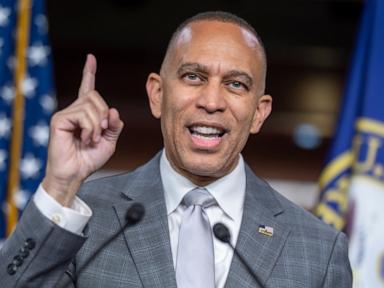
According to congressional reporting on House leadership elections, Representative Hakeem Jeffries of New York has repeatedly navigated this exact high-wire act—the delicate, unforgiving math required to secure party leadership and position himself for the Speaker’s gavel. On paper, leadership elections look like bureaucratic formality. A caucus meets behind closed doors, ballots are cast, and a press release announces unity. To see the complete picture, we recommend the detailed article by The New York Times.
In reality, those closed-door votes are a grueling stress test of trust, coalition management, and political survival.
The Architecture of a Fragile Majority
To understand why a leadership election in the House of Representatives carries such existential weight, consider a hypothetical lawmaker—let us call her Representative Elena Vance, a second-term Democrat from a suburban district in the Midwest that swung by fewer than three thousand votes in the last cycle.
Elena does not wake up thinking about parliamentary procedure. She wakes up thinking about the auto parts plant on the edge of her district, the rising cost of prescription insulin for retirees in her county, and the fact that one poorly worded national headline can end her career before she finishes unpacking her boxes in Washington. Every vote she casts is a tightrope walk between the progressive activists who knocked on doors for her in the primary and the moderate independents who carried her across the finish line in November.
Now multiply Elena by two hundred.
Every member of the House Democratic Caucus arrives in Washington carrying a different set of promises, a different geographic reality, and a different threshold for risk. A progressive representative from a safe urban seat in Brooklyn or Seattle faces an entirely different set of pressures than a centrist Blue Dog Democrat representing a rural agricultural district. Yet when the doors of the caucus room swing shut for leadership elections, all of those competing survival instincts are compressed into a single room.
This is the invisible arena where Hakeem Jeffries operates.
Political observers and congressional analysts frequently note that leading the House Democratic Caucus in the modern era is less like commanding an army and more like conducting an orchestra where half the musicians are reading from different sheet music—and every single one of them is an independent contractor who can walk off the stage at any moment.
The Weight of the Gavel
Why does the path to becoming Speaker of the House depend so heavily on these internal leadership tests? Because in the United States House of Representatives, the Speaker is not merely a ceremonial moderator. The Speaker is second in the presidential line of succession, the chief architect of the legislative calendar, and the ultimate gatekeeper of which bills live or die.
Yet the gavel itself grants zero inherent authority without the consent of the caucus.
History offers brutal reminders of what happens when a leader miscalculates that math. Over the past decade, congressional historians have documented a recurring pattern of razor-thin majorities turning internal party factions into kingmakers. When a party holds a cushion of thirty or forty seats, a leader can afford to lose a handful of dissenters on a procedural vote or a leadership ballot. When the margin shrinks to a handful of seats—or when a minority party is fighting to reclaim control—every single member possesses an effective veto.
In recent election cycles, coverage of House leadership contests has underscored how Jeffries worked to consolidate support after succeeding Nancy Pelosi, who held the Democratic reins for two decades. Stepping into the shadow of a historic legislative tactician presented an immediate, unspoken question across Capitol Hill: could a new generation of leadership hold together an increasingly diverse ideological coalition without the institutional muscle memory that defined the Pelosi era?
The challenge is rarely about whether a leader is liked. Capitol Hill is full of likable people who never make it past subcommittee chairmanships. The real test is whether members believe the leader can protect them when the storm hits.
The Unseen Currency of Trust
If you ask veteran congressional aides how leadership elections are actually won, they will not talk about television appearances or viral floor speeches. They will talk about listening.
Think of a leadership campaign as an intense, accelerated version of a family business succession. Before the vote happens, the candidate for Speaker or Minority Leader spends hundreds of hours in one-on-one conversations. Some happen in quiet corners of the Capitol; others happen over late-night phone calls while members are driving back from airport terminals in their home districts.
In those conversations, the questions are blunt. Will you campaign in my district even if it puts you in hostile media territory? Will you ensure our committee gets a seat at the table when major spending bills are drafted? When a controversial resolution hits the floor, will you give me the space to vote my district without punishing me behind closed doors?
According to political analysts tracking the Democratic caucus, Jeffries built his rise through the ranks—from chair of the Democratic Caucus to Minority Leader—by methodically cultivating relationships across the party’s ideological spectrum. Born in Brooklyn, trained as a corporate litigator before entering the New York State Assembly, he developed a reputation for disciplined messaging and unhurried, methodical preparation.
Critics from the Republican side of the aisle have frequently characterized his approach as overly partisan and tightly scripted, arguing that his leadership reflects progressive priorities out of step with swing voters. Meanwhile, some voices on the progressive left of his own party have periodically pressed for more aggressive legislative tactics and stronger commitments on economic and foreign policy issues.
Both pressures exist simultaneously. Every concession made to satisfy one wing risks alienating the other.
The Anatomy of a Leadership Test
Let us return to our hypothetical lawmaker, Representative Elena Vance, on the morning of the leadership election.
She walks into the caucus room where smartphones are collected at the door—a routine security measure designed to prevent leaks, though leaks almost always happen anyway. The room hums with low conversation. Senior committee chairs, some of whom have served in Congress longer than the youngest members have been alive, cluster near the front. Newly elected freshmen, still learning the quickest underground tunnels between their offices and the House chamber, stand near the back, taking in the sheer weight of the institution.
On the surface, an uncontested or heavily favored leadership vote can look like a foregone conclusion. Pundits on cable news often dismiss such contests as rubber-stamp exercises.
That view misses the point entirely.
In congressional politics, the margin of victory is the message. If a leader wins unanimous or near-unanimous backing inside the caucus, it signals to the opposing party, the Senate, and the White House that the caucus is unified and capable of delivering votes when legislative gridlock threatens a government shutdown or a debt ceiling crisis. Conversely, if a handful of members abstain, cast protest ballots, or demand side deals in exchange for their support, that fracture becomes visible to every adversary in Washington.
During the high-profile Speaker battles of the 118th Congress, the nation watched in real time as the Republican majority endured fifteen rounds of public voting on the House floor before Kevin McCarthy secured the gavel—only to see him ousted months later through a motion to vacate. Throughout those fifteen rounds, every single Democrat voted in lockstep for Hakeem Jeffries.
That display of unbroken unity became a defining talking point for Democratic strategists. Yet maintaining that discipline over time is vastly harder when a party moves from unified opposition into the messy reality of governing—or preparing to govern—where actual policy trade-offs must be made.
The Trap of the Echo Chamber
There is a moment every observer of Washington eventually confronts, usually late at night when the television panels repeat the same talking points and the legislative calendar stalls: the nagging doubt about whether any of this institutional choreography actually changes life outside the Beltway.
It is an honest question. When voters in Ohio, Arizona, or Pennsylvania look at Congress, they rarely see the intricate coalition-building required to pass a farm bill or fund infrastructure projects. They see dysfunction. They see narrow margins, brinkmanship, and leaders locked in procedural warfare while kitchen-table costs remain stubbornly high.
To pretend that internal leadership elections automatically solve those frustrations would be dishonest. Leadership elections do not lower grocery prices, fix broken supply chains, or heal deep cultural divides.
What they determine is whether the legislative branch can function at all.
Consider what happens when a Speaker lacks a firm grip on their caucus. Legislation stalls in committee. Appropriations bills collapse on the floor because five members decide to stage a revolt over an unrelated amendment. Bipartisan negotiations fall apart because neither side trusts the other’s leader to actually deliver the votes they promised at the bargaining table. In a system designed around checks, balances, and compromise, weak leadership turns the House of Representatives into an engine that burns fuel at maximum RPM while the transmission stays locked in neutral.
Beyond the Roll Call
When the ballots are finally counted in the basement of the Capitol, the doors open, the smartphones are returned, and lawmakers step out into the bright glare of television lights to declare unity. The cameras capture the smiles, the applause, and the carefully rehearsed soundbites.
For Hakeem Jeffries, passing the test of a leadership election is never a final destination; it is merely the renewal of a daily lease on authority. Every morning brings a new whip count, a new crisis in a swing district, a new demand from a faction that feels unheard, and a new reminder that in the House of Representatives, power is never truly owned.
It is only borrowed, one quiet conversation at a time, until the next time the doors close and the counting begins again.