Humidity clings to the concrete of José Martí International Airport like a wet wool coat. You feel it in your shirt collar before you even clear customs. You smell it too—warm asphalt, stale coffee, diesel exhaust drifting in from the perimeter roads, and the sharp, metallic tang of sun-baked sheet metal.
For anyone stuck in a terminal waiting for a plane that cannot legally or physically leave, the air feels heavier than the luggage beside them. In related developments, we also covered: Inside the Italian Protest Advisory Nobody Is Talking About.
Stranded.
That is the word that flattens human lives into ticker-tape headlines. A headline says a flag carrier scrambled to rescue travelers from a fuel-starved island. Clean. Clinical. Done in twelve words. Yet behind every wire report about long-haul aviation in Cuba sits a tangle of physics, diplomacy, supply chains, and personal dread that no summary captures. Condé Nast Traveler has analyzed this important issue in great detail.
I have spent years sitting in airports during weather delays, mechanical scrubs, and geopolitical reroutes. Watching a departure board flip from "On Time" to "Delayed" to "Canceled" does something strange to a room. People stop making eye contact. Children lose their bounce. Adults start doing mental math they never wanted to do: How many days of medication are left in my carry-on? What happens to my work visa if I miss my connection? Who is feeding the dog?
To understand why a major international airline has to improvise when aviation fuel runs thin in Havana, we have to look past the drama of a "rescue" and examine the cold mechanics of keeping a wide-body jet aloft across an ocean.
When Jet Fuel Becomes a Geopolitical Currency
To make the physics intuitive, picture a wide-body airliner not as a bus with wings, but as a flying fuel tank that happens to carry people and seats.
That is a deliberate metaphor, not a literal engineering definition—though dispatchers and pilots think along very similar lines. A long-haul aircraft crossing between East Asia and the Caribbean burns tens of thousands of kilograms of Jet A-1 kerosene. Every extra pound of fuel requires more thrust, which burns more fuel, creating a delicate balance between payload, range, weather winds, and alternate airports.
When an airport's fuel supply runs low—whether from shipping bottlenecks, refinery hiccups, currency shortages, or sanctions—the problem is rarely just a slow pump. Sometimes there is no reliable uplift for outbound flights. Sometimes fuel quality or refueling infrastructure becomes a bottleneck. And when a carrier cannot count on topping off its tanks at the turnaround stop, standard commercial schedules break down.
Consider what happens next: a flight that normally flies straight through or makes a routine stop suddenly faces a fuel wall. You cannot push a Boeing or Airbus past its structural range limits out of sheer determination. Gravity does not care about diplomatic goodwill or holiday itineraries.
(Note: The travelers and operational scenes described below are hypothetical composite portraits built to illustrate real-world long-haul aviation constraints and passenger stressors; they do not depict specific individuals or unverified flight logs.)
Three Travelers Watching the Board
Imagine a hypothetical scenario inside Terminal 3 in Havana on a steamy afternoon.
Mei-Ling is a software engineer from Shenzhen who came to Cuba for a two-week break after a grueling product launch. Her return itinerary already involved tight connections. When word spreads through the departure hall that fuel shortages are disrupting long-haul operations, her biggest worry isn't lost sightseeing time—it's her Monday morning stand-up and the return leg of a complex ticket she bought months ago.
Across the concourse sits Carlos, a Cuban-born dual citizen living abroad who traveled home to visit an aging aunt. He packed light, expecting a predictable trip back to his life and job overseas. Now every hour added to his stay chips away at his savings and stretches his employer's patience.
Near the charging stations stands David, a seasoned traveler who has flown through Latin America for twenty years. He knows enough about aviation to recognize the look on a gate agent's face when the issue isn't a broken coffee maker or a late incoming crew, but fuel logistics. When fuel gets tight, airlines don't just shuffle seats—they recalculate entire flight plans, weigh passenger and cargo limits, and sometimes reroute or consolidate flights so aircraft can safely reach hubs with dependable supply.
If you have ever wondered how an airline "scrambles" to get people out under those conditions, the answer is rarely a single heroic flight swooping in like a movie scene. More often, it looks like hours of quiet spreadsheet warfare: rebooking passengers across partner routes, adjusting aircraft rotations, coordinating ground handling and refueling stops elsewhere, and trying to move stranded travelers without leaving crews stranded too.
Why "Stranded" Feels Different When Fuel Is the Culprit
A snowstorm in Chicago is annoying, yet everyone understands it. You can see the ice on the de-icing trucks. You know the plow crews are working.
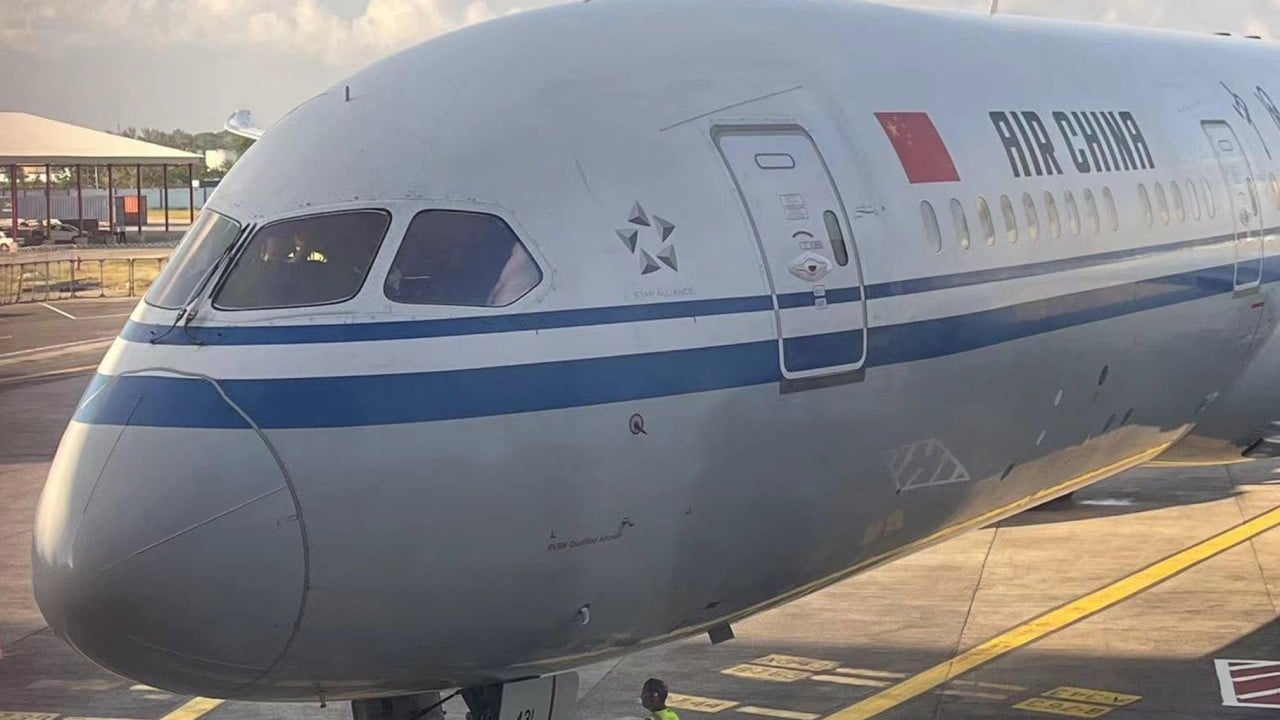
Fuel scarcity feels eerier because the threat is invisible until the aircraft cannot go. Nothing looks broken on the plane parked outside the glass. The fuselage gleams in the tropical sun. The tires are round. The cabin crew has uniforms pressed. Yet the most essential ingredient for flight—chemical energy stored in kerosene—is scarce or uncertain.
From a historical standpoint, aviation has collided with fuel chokepoints for decades. Whenever regional conflicts, embargo pressures, port delays, or currency crunches hit an import-dependent island or isolated hub, commercial air links are among the first arteries to constrict. Airlines are businesses operating on thin margins and strict safety rules. If an airline cannot guarantee safe fuel reserves, alternate-airport margins, or predictable turnaround times, pulling back or adjusting operations isn't cowardice—it's standard risk management.
Still, telling a tired passenger "risk management" does nothing to soothe an aching lower back on a molded plastic bench.
I will admit something candidly: even for people who follow travel news closely, airline reroutes and fuel advisories can sound baffling. One outlet calls it a scramble; another calls it a schedule adjustment; social media turns every delayed flight into a conspiracy or a crisis. Uncertainty breeds rumor fast when Wi-Fi drops and official updates arrive in terse bursts.
What Actually Matters When Your Flight Is Caught in a Crunch
If you are planning travel to a fuel-constrained destination—or find yourself caught in a sudden wave of cancellations—focusing on practical realities beats refreshing news feeds every sixty seconds.
First, understand how long-haul tickets work when disruptions hit. If all segments sit on one reservation, the airline has a clearer obligation to re-accommodate you along an approved route, even if that means a different connecting city or an extra overnight. Separate tickets bought on different carriers are much trickier; if one leg breaks down, getting the next carrier to protect you becomes an uphill battle.
Second, pack with friction in mind. A change of clothes, essential medications in original labeling, basic chargers, and a small amount of cash in widely accepted currencies can turn a miserable delay into a manageable detour. In places where card networks or local ATMs occasionally stutter, physical preparedness isn't paranoia—it's basic travel craft.
Third, pay attention to communication channels early. Gate lines move slowly when dozens of passengers have complicated multi-leg itineraries. Calling an airline's international support line, using its mobile app, or checking alternative routings while others stand shoulder-to-shoulder at a single desk can shave hours off your rebooking time.
The Weight of the Last Mile Home
Long after a crisis leaves the front page, the ripple effects linger in smaller ways. A missed family milestone. A drained credit card. A quiet vow never to book the tightest possible connection again.
Commercial aviation makes the globe feel stitched together—until a missing link in a supply chain reminds you that every flight is a feat of continuous coordination between engineers, fuel suppliers, air traffic controllers, and crews. When fuel runs short in a place like Cuba, the story isn't just about airplanes on a tarmac. It is about people suspended between where they were and where they need to be, waiting for the math of distance and energy to work out in their favor.
Out on the apron, heat shimmers off the concrete in thin, rippling waves, making even a stationary wing look as though it is already lifting into the sky.