Silence.
That is what usually follows a question nobody in the room expected to hear, especially when the person asking it holds the nuclear codes and the person answering holds the keys to the global artificial intelligence economy.
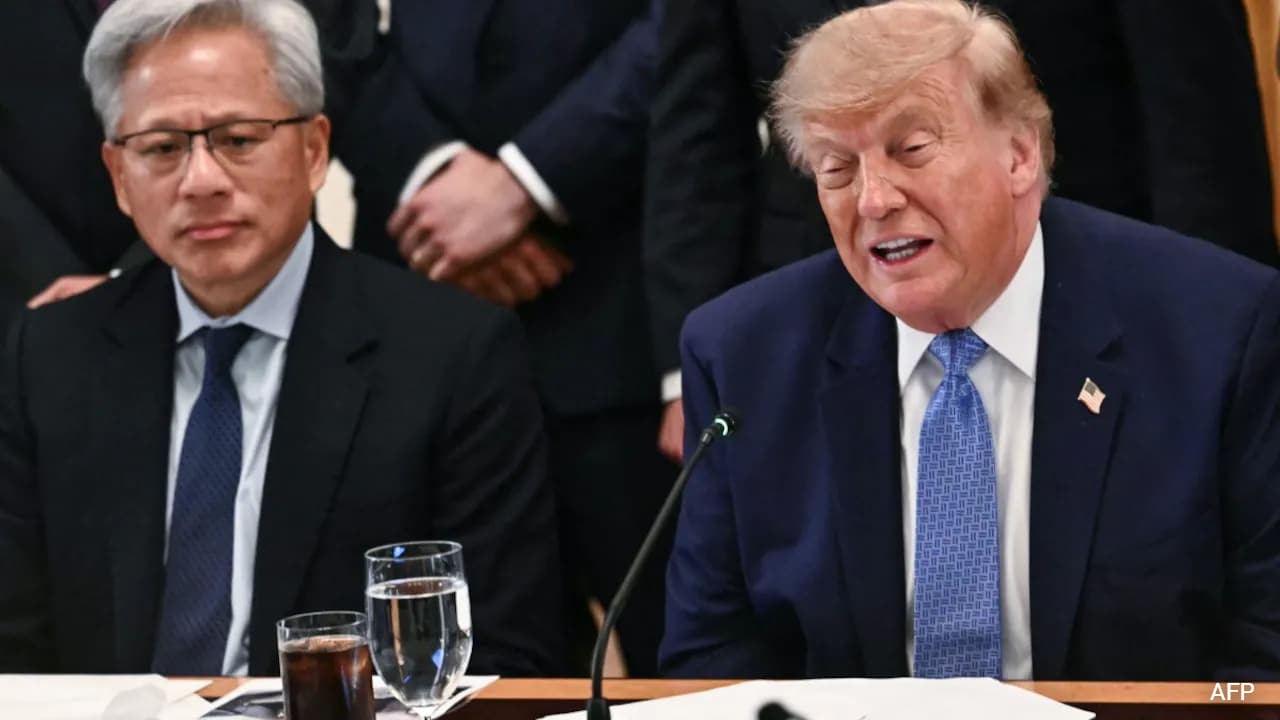
Consider the setting. You are inside a high-stakes, closed-door briefing where the fluorescent hum of Washington meets the trillion-dollar ambition of Silicon Valley. Across the table sits Donald Trump, a leader whose worldview is built on loyalty, leverage, and an instinctive suspicion of foreign entanglement. Next to him sits Jensen Huang, the leather-jacketed founder of Nvidia, a man who turned graphics cards built for teenage video gamers into the beating heart of modern supercomputing. Between them hangs a single, sharp question that cuts through billions of dollars in market capitalization and decades of carefully manicured diplomacy.
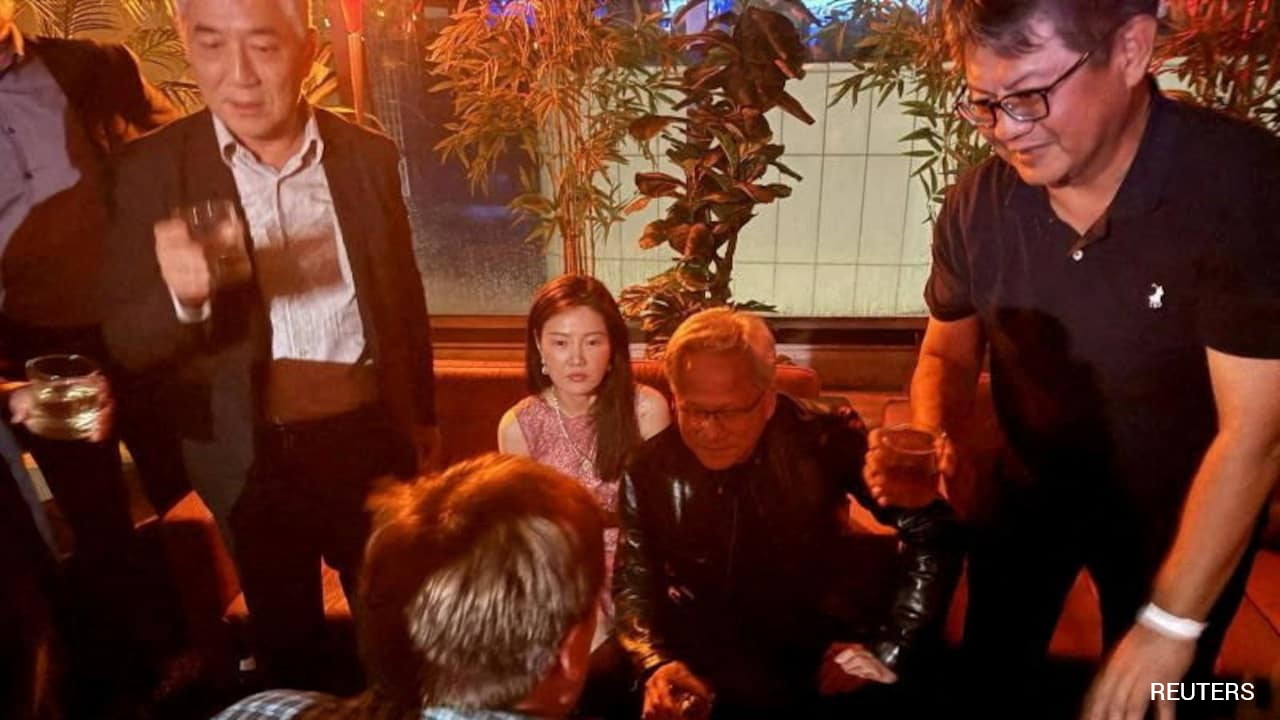
Trump looked at the Nvidia chief and asked if he knew whether Alice Huang was a spy.
Stop and let the weight of that moment settle into your chest. Because if you only read the headline, you might treat it like another fleeting piece of political theater—a viral soundbite meant to be chewed up by cable news panels and forgotten by Tuesday. You would miss the tremor beneath the floorboards. You would miss what happens when geopolitical paranoia collides head-on with the messy, deeply human reality of how modern technology is actually built.
The Architecture of a Rumor
To understand why that question landed like a grenade, you first have to understand the room it was thrown into.
Washington has spent the last several years learning a terrifying new vocabulary. Words like lithography, wafer fabrication, and export controls have migrated from obscure engineering journals onto the front pages of daily newspapers. Lawmakers who once struggled to explain how the internet works are now tasked with policing the invisible border between American innovation and Chinese espionage. Every microchip has become a potential Trojan horse; every cross-border researcher, a suspect until proven otherwise.
In that atmosphere, suspicion does not need hard evidence to grow. It only needs proximity.
Alice Huang—an executive name floating in the orbit of tech leadership, sharing a surname with Jensen himself, rooted in the intricate, overlapping networks of Taiwanese-American and Chinese-speaking engineering talent—suddenly becomes a focal point. Never mind the nuance of corporate org charts or the distinction between Taipei and Beijing that so often blurs in the minds of hurried political aides. In the hall of mirrors that is national security politics, a shared name and a global supply chain are enough to spark an interrogation.
Picture a hypothetical scenario to see how easily this happens. Suppose you are a mid-level intelligence briefer preparing a folder for a president before a meeting with a tech titan. You have three pages to summarize a company worth more than the GDP of most G7 nations. You highlight supply chain vulnerabilities in East Asia. You flag executives with international ties. By the time those bullet points travel up the chain of command, distilled from nuanced risk assessments into punchy talking points, a complicated corporate biography flattens into a binary threat. Friend or foe. Patriot or spy.
When Trump posed the question directly to Jensen Huang, he was doing what he has always done in boardrooms and bilateral summits alike: testing the person across from him by dropping the most uncomfortable truth—or accusation—straight onto the table. No diplomatic cushioning. No euphemisms. Just raw, unfiltered scrutiny.
The Weight of the Leather Jacket
If you have ever watched Jensen Huang walk onto a stage, you know he projects the calm, relentless certainty of an engineer who has already run the simulation a thousand times. He speaks in the cadence of someone who thinks in parallel processes, breaking impossibly dense computing problems down into clean, inevitable steps.
Yet behind that composure sits a life story that makes Washington’s binary worldview look hopelessly naive.
Born in Tainan, Taiwan, sent to a boarding school in rural Kentucky at age nine where he cleaned toilets and learned to survive among kids who had never met anyone who looked like him, Jensen Huang is the living embodiment of the hyphenated American dream. He co-founded Nvidia in a Denny’s booth in East San Jose in 1993. For thirty years, he built a company that relied on a simple, brutal truth: talent has no passport, and silicon does not care about flags.
To build the chips that power ChatGPT, autonomous vehicles, and defense simulations, Nvidia operates like a global nervous system. Designers in Santa Clara sketch architectures that are etched onto silicon wafers in Hsinchu, Taiwan, packaged in Malaysia, and sold to data centers from Virginia to Frankfurt. Every engineer on those teams brings a web of family, alma maters, and former employers that stretches across the Pacific.
So when the President of the United States looks you in the eye and asks if someone in your orbit is an agent of a foreign power, you are not just answering for one person. You are defending the entire premise of your life's work.
What Jensen Actually Said—And What It Meant
Huang did not flinch. He did not launch into a defensive tirade, nor did he throw an associate under the bus to appease the most powerful man in the free world.
Instead, his reply was anchored in the cold, unyielding bedrock of verification and personal knowledge. He pushed back against the insinuation with the clarity of a chief executive who knows exactly who sits inside his walls, dismissing the notion flatly and grounding the conversation back in facts rather than whispers. In essence, he drew a bright line between baseless suspicion and the reality of the people building his company—making clear that he knew his people, knew their records, and rejected the premise that proximity to Asian heritage or global tech networks equaled espionage.
Read that exchange again, and notice the friction between two entirely different operating systems.
Trump operates on intuition and leverage. In his universe, asking a blunt, accusatory question is a way of forcing the other person to reveal their hand. If Jensen had hesitated, stammered, or hedged his bets, the conversation would have tilted instantly toward deeper federal intervention, tighter licensing restrictions, and permanent distrust.
Huang operates on system integrity and precision. In engineering, if a single transistor leaks current, the whole processor fails. You cannot run a trillion-dollar company on guesswork, and you certainly cannot survive a geopolitical crossfire by letting rumors dictate your leadership roster. By meeting a political loyalty test with calm, unambiguous certainty, Huang refused to let fear rewrite the truth inside his own company.
The Invisible Tax of Suspicion
You might wonder why a single exchange behind closed doors should matter to anyone outside of Washington or Silicon Valley. After all, most of us do not trade in H100 graphics processors or attend White House briefings.
Think again.
Every time suspicion replaces evidence at the highest levels of government, an invisible tax gets levied on the rest of us. Scientists stop collaborating across borders because a joint paper might trigger a federal investigation. Brilliant engineers born in Taipei, Shanghai, or Seoul decide to take their patents and their startups elsewhere rather than spend five years proving they are not spies. Universities quietly shutter research labs, and the breakthroughs that might have cured a disease or cut your energy bill in half get delayed by a decade.
History has already run this experiment, and the results are written in scars.
In the 1950s, Qian Xuesen—a brilliant aerodynamicist who helped found NASA’s Jet Propulsion Laboratory and held a U.S. security clearance—was accused of communist sympathies during the Red Scare. Stripped of his credentials and held under virtual house arrest for five years, he was eventually deported to China. There, he went on to build the very ballistic missile and space programs that American defense planners now lose sleep over. America did not protect its secrets by driving Qian out; it handed its greatest rival a generational genius on a silver platter.
The names change. The decades turn. The anxiety remains identical.
When we allow vague accusations to linger around executives or engineers simply because their names, backgrounds, or family trees intersect with East Asia, we repeat that exact mistake in slow motion. We confuse vigilance with paranoia. Genuine counterintelligence—the quiet, methodical work of catching actual intellectual property theft—gets drowned out by loud, theatrical witch hunts that target the innocent while missing the real threats.
Walking the Tightrope Without a Net
None of this means the threat of espionage is imaginary. Pretending otherwise would be just as dangerous as seeing spies in every shadow.
State-sponsored theft of semiconductor designs, manufacturing secrets, and artificial intelligence weights is real, relentless, and documented. Foreign intelligence services spend billions trying to infiltrate research labs, recruit disgruntled insiders, and bypass export controls through shell companies. If you are a CEO sitting atop the single most coveted hardware stack on Earth, you cannot afford to be naive. Your networks are probed thousands of times a day. Your employees are targets at every international conference they attend.
That is what makes Jensen Huang’s tightrope walk so extraordinary—and so precarious.
On one side yawns the abyss of national security failure: if a genuine breach happens on Nvidia’s watch, Congress will tear the company apart, strip its export licenses, and regulate it like a public utility. On the other side yawns the abyss of xenophobic overreach: if Nvidia caves to political pressure and begins purging or sidelining talent based on heritage, surnames, or unverified rumors, the company’s culture of radical engineering meritocracy dies overnight.
I have sat in rooms with founders and policy advisors wrestling with this exact dilemma, and the exhaustion in their voices is palpable. You can feel the tension in the way they choose their words, constantly calculating how a routine hiring decision will look in a congressional hearing two years from now. One security consultant told me over lukewarm coffee in Arlington that the hardest part of his job is no longer finding vulnerabilities in firewalls—it is convincing executives not to burn down their own talent pipelines out of sheer panic.
Jensen Huang’s answer to Trump was a masterclass in refusing both traps. He acknowledged the gravity of the room without surrendering his judgment to it. He reminded the most powerful political figure in the world that trust, once earned through decades of performance and vetting, cannot be casually discarded on the strength of a rumor.
The Human Equation in an Automated Age
We spend an enormous amount of time worrying about whether artificial intelligence will eventually outsmart us, replace us, or turn against us. We write endless essays about alignment, guardrails, and existential risk.
Yet the story of Trump, Jensen Huang, and the question about Alice Huang reveals a far more immediate vulnerability. The greatest threat to our technological future is not a rogue algorithm waking up inside a server farm. It is human fear—old, tribal, and stubborn—sneaking back into the rooms where decisions are made.
Silicon does not build itself. Behind every wafer, every line of CUDA code, and every breakthrough in machine learning stands a fragile coalition of human beings who chose to trust one another across oceans, languages, and histories. Break that trust with careless accusations, and no amount of capital or compute power will put it back together.
Picture that room in Washington one last time. The briefing folders are closed. The cameras are outside, waiting for whatever carefully scripted soundbite leaks to the press. Across the table, two men who shape the modern world have just tested each other’s limits—one armed with the instinct to suspect everything, the other armed with the quiet conviction of someone who knows what it takes to build something real.
The doors open, the noise of the capital rushes back in, and somewhere across the Pacific, a cleanroom light flickers on as another shift of engineers steps up to the glass.