Pyongyang is no longer merely rattling sabers. Recent weapons testing schedules reveal an operational cadence that bypasses traditional diplomatic signaling entirely, signaling a shift toward real-world battle readiness that Western intelligence agencies are struggling to map.
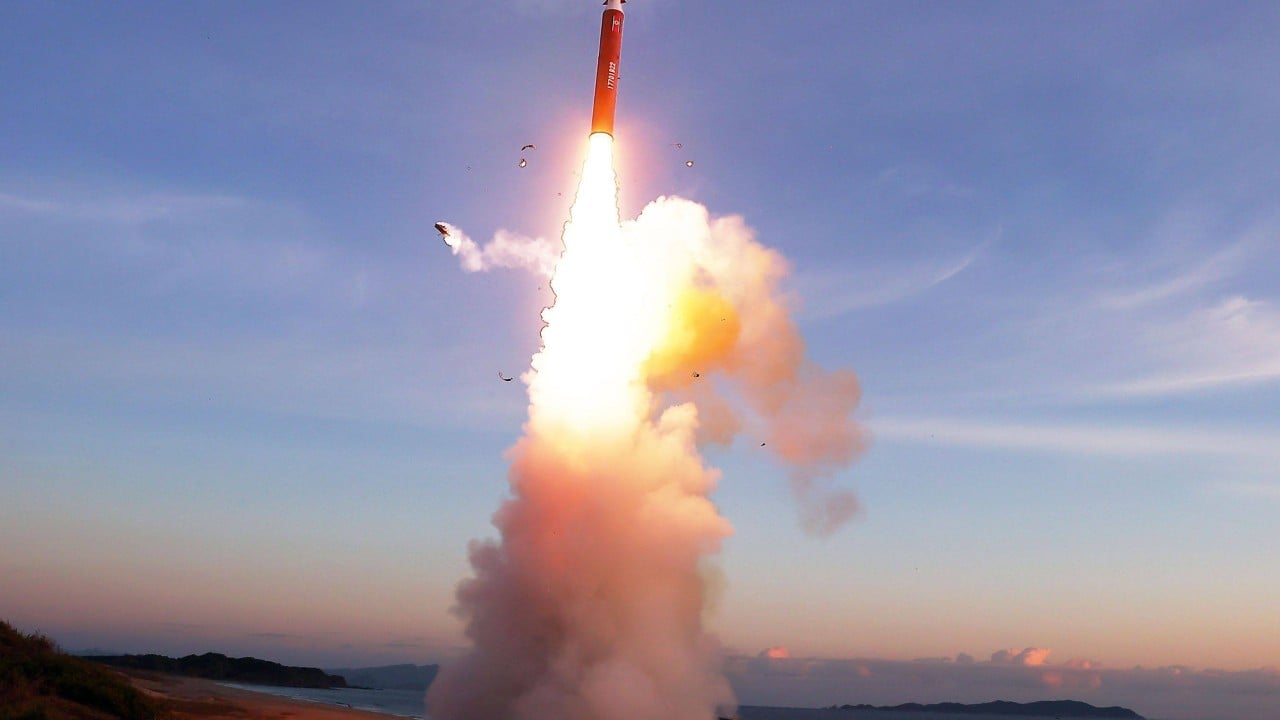
Days after Pyongyang claimed a successful test of an autonomous guidance system for tactical ballistic missiles, military command structures across the Korean Peninsula reported successive launches of short-range projectiles toward open waters. This is not routine posturing. It is a calculated stress-test of command-and-control networks under high-frequency operational pressure. Analysts watching the telemetry data recognize that North Korea has moved past the stage of proving basic rocket physics. The regime is now refining the mechanical and digital feedback loops required to operate guided munitions in contested environments.
The Architecture of Escalation
Military procurement cycles usually take decades. Pyongyang has compressed this timeline through ruthless prioritization and external industrial support, turning its domestic munitions sector into a continuous proving ground. The recent introduction of advanced guidance technology into short-range ballistic systems changes the defensive calculus for regional neighbors. Historically, short-range systems were treated as blunt instruments of terror—inaccurate, unpredictable, and largely political. Modern iterations feature maneuverable reentry vehicles designed to slip past regional missile defense umbrellas like the Patriot and THAAD systems.
When a state fires multiple projectiles in rapid succession following a major technological milestone, it is checking for systemic drift. Engineers want to know if the manufacturing tolerances hold up when batch-producing guidance chips. Field commanders want to know if launch crews can execute rapid displacement maneuvers without dropping communication links. Every launch generates telemetry. Every telemetry packet feeds the next software patch.
Intelligence assessments out of Seoul and Tokyo often frame these events through the lens of political bargaining. They look for the hidden diplomatic message, the subtle signal sent to Washington or Beijing. That approach misses the technical reality on the ground. The people running the Second Academy of Natural Sciences are engineers and logistics officers executing a rigorous technical roadmap. They are not waiting for a phone call from the State Department. They are solving engineering problems in real-time.
The Logistics of Isolation
Sanctions were supposed to choke this capability at the source. Instead, they forced a brutal form of domestic self-reliance paired with illicit supply chain engineering. Components that once required complex multinational procurement networks are now either manufactured domestically using older, durable machine tools or smuggled through porous maritime corridors.
The friction in this system is real, but it is managed through redundancy. If a primary microchip supplier goes dark, the assembly lines pivot to alternative specifications, sacrificing a fraction of performance for absolute continuity of supply. This pragmatic approach to manufacturing explains why international export controls have failed to halt the proliferation of advanced guidance systems. You cannot embargo a country that has learned to build lower-tier equivalents locally and wire them into sophisticated airframes.
The Defense Blind Spot
Regional defense postures remain calibrated for a different era of warfare. Missile defense batteries are optimized for predictable ballistic arcs and slower reaction windows. As tactical systems adopt low-altitude flight profiles and aerodynamic maneuverability, the warning time drops from minutes to seconds.
This creates a dangerous hair-trigger environment. When an air defense network has less than sixty seconds to identify, track, intercept, and verify a incoming projectile, human operators are forced to delegate decision-making authority to automated algorithms. A software glitch or a false positive on a radar screen could easily cascade into an unintended kinetic exchange. The psychological burden on border populations grows with every launch, while military planners scramble to deploy electronic warfare countermeasures that remain unproven against hardened digital guidance packages.
Pyongyang understands this vulnerability. By maintaining a high tempo of disparate launches—varying trajectories, payloads, and launch platforms—the regime forces defensive systems to operate in a state of perpetual uncertainty. You cannot optimize an interceptor algorithm when the adversary keeps changing the fundamental physics of the incoming threat.
The silence from diplomatic channels is deafening, but it is entirely rational. Neither side has an incentive to talk when both believe time is working in their favor. Pyongyang believes every successful telemetry drop brings its nuclear and conventional deterrent closer to absolute credibility. Regional capitals believe that economic pressure, given enough decades, will eventually fracture the regime's internal cohesion.
History suggests both assumptions are dangerous. Deterrence does not fail because nations suddenly decide to start wars; it fails because the technical tempo of deployment outpaces the diplomatic framework designed to manage it. When missiles fly faster than ambassadors can draft communiqués, the margin for error approaches zero. Every additional projectile launched into the sea makes the next miscalculation more likely, and the consequences more permanent.