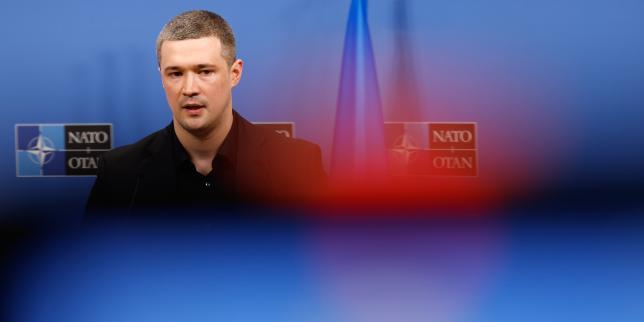
The political chattering class is obsessed with the wrong metric. They look at the rising poll numbers of Mykhailo Fedorov and conclude that Ukraine is ripe for a democratic reset. They see a dismissed minister, a surge of public trust, and a hypothetical runoff victory, and they think: "Aha! Democracy at work. Time to head to the ballot boxes."
It is a fantasy born from comfort and ignorance.
Demanding elections during an existential war isn't a bold exercise in democratic values. It is a strategic blunder that would hand an unnecessary victory to the Kremlin. The obsession with "clearing the path" for a vote ignores the brutal, mathematical reality of a nation under siege.
The Illusion of Electoral Integrity
The logic of the armchair strategist is simple: Fedorov is popular, Zelenskyy is facing headwinds, therefore, let the people choose. This assumes a stable, functioning society where every citizen has an equal voice. That reality vanished the moment the first missiles hit.
Consider the mechanics. You have millions of citizens displaced across borders, where the capacity of diplomatic missions to host a fair, verifiable vote is non-existent. You have hundreds of thousands of active-duty personnel in combat zones, where the priority is keeping an air-defense radar functioning, not establishing a polling station.
If you hold an election now, you are effectively disenfranchising the most vital segment of the population: the soldiers. Or, you are forcing the military to divert resources—logistics, security, personnel—to manage a polling process in a war zone. Any attempt to "digitalize" this via the Diia app—a tech-savvy dream—collapses under the weight of skepticism. When trust in the system is the only thing holding a country together, introducing a digital voting mechanism during a total war is an open invitation for accusations of systemic rigging.
The Fedorov Phenomenon
Fedorov’s rise, documented by organizations like the Kyiv International Institute of Sociology, is real. He is a potent symbol. He represents the "tech-reformist" archetype—a man who arguably did more to modernize the military’s procurement and drone-warfare capabilities than any career general.
But here is the truth that the pundits miss: the surge is not a signal that it is time for a new government. It is a signal of profound, visceral frustration with the status quo. Ukrainians are not voting for an alternative; they are venting their exhaustion.
I have watched enough "reformers" rise and fall to know the difference between a movement and a moment. Fedorov is the latter. He is a technocrat, not a warlord. His strength was in the gears and the code. Forcing him into the role of a presidential challenger mid-conflict, especially after he has already been discarded by the current administration, would be a move toward fragmentation, not unity.
Why the "First Peace, Then Elections" Rule Matters
The consensus among the actual decision-makers—the Verkhovna Rada—is that elections must wait for the end of martial law. The critics call this "opaque." I call it survival.
The constitution is not a flexible document that bends to the whims of a polling spike. It provides a guardrail. If you remove that guardrail, you are not saving democracy; you are abandoning the only legal structure that prevents total political collapse. You cannot hold a free and fair election when the territory is being shelled, when the voter roll is in constant flux due to displacement, and when the very existence of the state is contested.
The Real Danger
The danger isn't that Zelenskyy won't step down. The danger is the belief that internal political conflict is a luxury this country can afford while the frontline is straining under the weight of a sustained invasion. By agitating for an electoral contest that cannot be conducted with integrity, we are playing directly into the hands of those who want to see Ukraine fractured from within.
If you want to support Ukrainian democracy, support the institutions that can actually function. Advocate for transparency in military procurement. Demand accountability for the billions in spending that Fedorov correctly identified as needing audit. But stop pretending that a ballot box in a basement during an air raid is the peak of democratic expression.
The irony is that the people screaming loudest for "elections now" are the ones who would be the first to complain about the results if a single polling station in a war-torn province failed to report accurately. They want the aesthetic of democracy without the burden of the reality.
Ukraine does not need a political campaign. It needs a functioning, corruption-free defense apparatus. It needs the momentum of the reforms that Fedorov started, not the theater of his candidacy. Keep the focus where it belongs: on the survival of the state. The voters will still be there when the guns go silent. Until then, any politician pushing for a vote is prioritizing their career over the country.
Stay focused on the math, ignore the polls, and watch the front.
The rest is just noise.