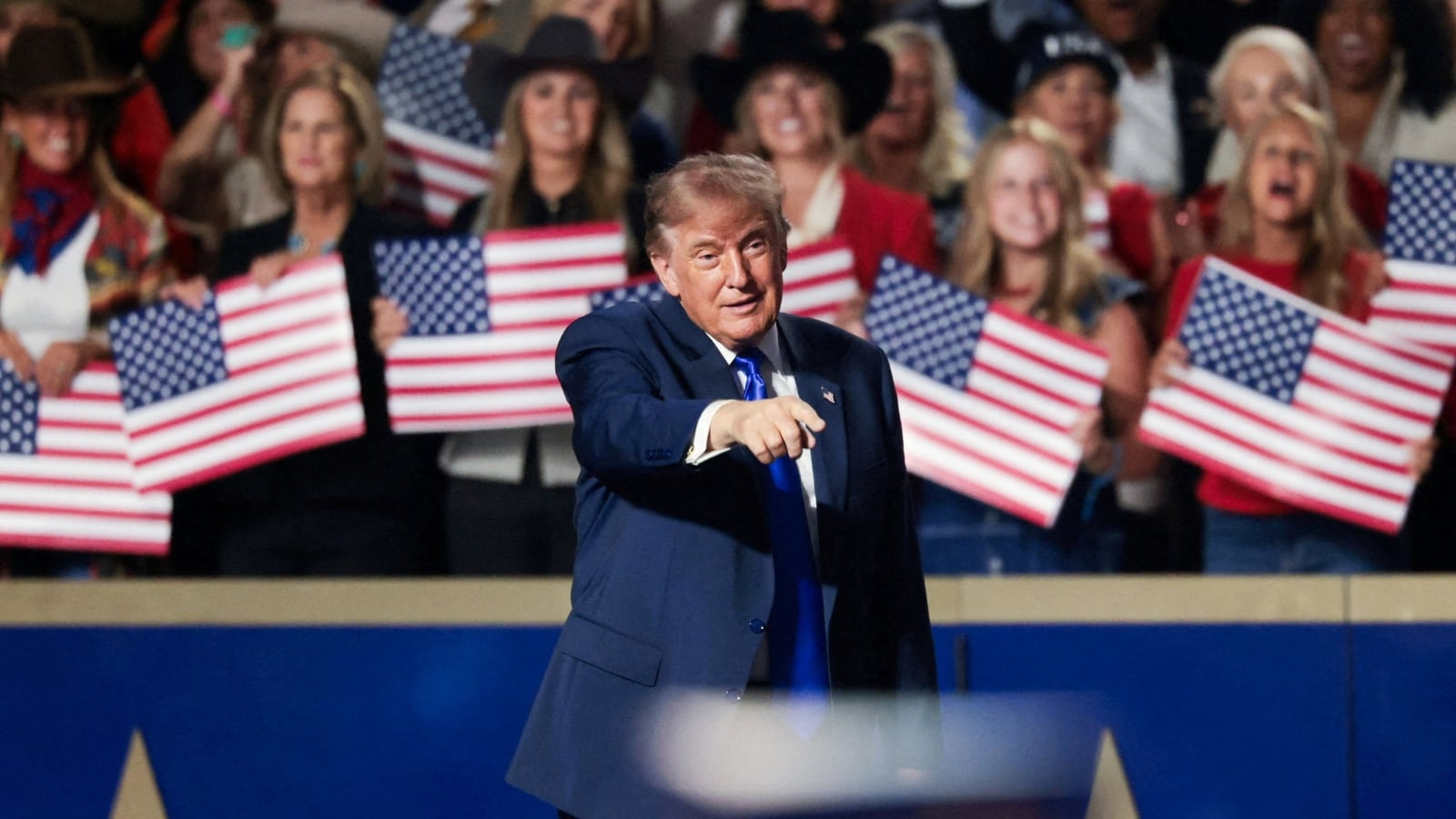
Mainstream foreign policy coverage treats diplomatic signaling like a binary switch. Either a leader is preparing for kinetic warfare, or they are capitulating to the negotiating table. When Donald Trump pairs existential threats—such as warning that the United States could "annihilate" Iran—with simultaneous confirmation of direct or indirect talks, conventional media analysts routinely frame the dynamic as erratic, contradictory, or dangerously impulsive.
According to traditional diplomatic doctrine, maximalist rhetoric poisons the well for negotiations. Yet the historical record of coercive diplomacy suggests the exact opposite. What looks like diplomatic whiplash to casual observers is actually a textbook application of high-stakes bargaining mechanics.
The Fallacy of Polite Diplomacy
Standard international relations commentary operates on a flawed premise: that de-escalation requires mutual restraint in public messaging. In reality, public restraint often signals a lack of resolve to entrenched adversaries, encouraging them to stall, extract unilateral concessions, or continue proxy warfare while dragging out negotiations indefinitely.
In strategic studies, this dynamic is well-documented. Nobel laureate Thomas Schelling, in his foundational work Arms and Influence, distinguished between brute force and coercion. Brute force takes what it wants; coercion relies on the power to hurt—specifically, the latent threat of future pain—to compel an adversary to change its calculus. For coercion to work, the threat must be credible, the cost of non-compliance must appear unbearable, and there must be a clear off-ramp.
When Washington issues an existential warning alongside an invitation to talk, it is constructing both halves of Schelling's equation simultaneously:
- The Stick: Establishing an asymmetric cost structure where escalation threatens regime survival rather than mere economic inconvenience.
- The Off-Ramp: Providing a face-saving mechanism through bilateral dialogue so the adversary can retreat from the brink without looking like they surrendered to public humiliation.
Coercive Leverage vs. Perpetual Containment
To understand why harsh rhetoric precedes or accompanies talks, one has to look at the structural failure of incremental diplomacy in the Middle East. For decades, multilateral frameworks attempted to manage Iranian regional behavior and nuclear ambitions through calibrated sanctions relief and technical guardrails. Critics of that approach—including former national security officials and regional strategists—pointed out that incrementalism allowed Tehran to bank economic benefits while preserving its underlying infrastructure and regional proxy networks.
Conversely, proponents of traditional engagement argue that maximalist threats back the Iranian leadership into a corner, empowering hardliners within the Islamic Revolutionary Guard Corps (IRGC) and making compromise politically impossible in Tehran. Both viewpoints highlight genuine strategic risks, yet both miss how leverage is actually generated at the outset of high-stakes talks.
| Diplomatic Approach | Public Posture | Primary Mechanism | Core Vulnerability |
|---|---|---|---|
| Incremental Engagement | Measured, technical, multilateral | Gradual sanctions relief in exchange for verifiable freezes | Adversary exploits slow timelines to build leverage |
| Coercive Bargaining | Maximalist, unpredictable, bilateral | Threat of catastrophic cost paired with immediate negotiation off-ramps | High risk of miscalculation if off-ramps are misread |
The Mechanics of "Madman" Bargaining
In diplomatic history, the deliberate cultivation of unpredictability is frequently associated with Richard Nixon's "Madman Theory" during the Cold War, though its roots stretch back to Niccolò Machiavelli. The logic is straightforward: if an adversary believes a leader is constrained by conventional bureaucratic rules, legalistic thresholds, and domestic political caution, the adversary can push right up to those known red lines without fear of retaliation.
When a leader disrupts those expectations—by threatening total destruction one day and entertaining high-level talks the next—the adversary loses the ability to calculate exact risk tolerances.
- Uncertainty Forces Recalculation: Tehran's leadership must weigh the probability that Washington will actually execute a devastating strike against the certainty of economic isolation.
- Bilateral Bypassing: Direct or tightly held backchannel talks strip away the procedural delays of multilateral coalitions, forcing decision-makers in both capitals to confront core demands directly.
- Domestic Political Cover: For an American administration, projecting overwhelming strength inoculates negotiators against domestic accusations of appeasement when they eventually sit down at the table.
The Real Risks Analysts Should Watch
Dismissing Trump's dual-track approach as mere bluster ignores its strategic intent, but treating it as a guaranteed masterstroke is equally naive. Coercive diplomacy carries severe, documented failure modes that analysts and policymakers must account for.
First, signal-to-noise distortion is a constant hazard. In a hyper-connected media environment, statements intended for a foreign adversary are simultaneously consumed by domestic voters, regional allies, and financial markets. If Tehran interprets a threat of annihilation not as a bargaining tactic, but as an imminent, unavoidable decision to strike, the rational response from a cornered regime is preemption rather than negotiation.
Second, the credibility trap cuts both ways. Once a leader draws an explicit, existential red line, backing down without tangible, verifiable concessions destroys future deterrence. If talks drag on without structural changes to Iran's nuclear program or regional posture, the administration faces a binary choice: follow through on massive military escalation or accept a watered-down agreement that undermines the very threats used to bring Tehran to the table.
Third, internal factionalism in Tehran complicates unitary-actor assumptions. The Iranian political system is divided between pragmatic technocrats who favor sanctions relief to stabilize the domestic economy and ideological hardliners who view concessions to Washington as an existential threat to the revolution's legitimacy. Extreme American rhetoric can inadvertently silence the very factions in Tehran willing to cut a deal.
Reading the Signal Through the Noise
When evaluating US-Iran relations, the headline-grabbing quotes are rarely the primary story. Political rhetoric is designed to shape the psychological environment before negotiators ever enter a room. The real indicators of whether coercive diplomacy is succeeding or failing lie in the operational details that follow the headlines:
- Who is at the table: Whether talks involve empowered decision-makers with direct access to top leadership, rather than mid-level diplomats reiterating talking points.
- The scope of the agenda: Whether discussions remain narrowly focused on temporary nuclear freezes or expand to address ballistic missiles, regional proxies, and permanent verification mechanisms.
- Kinetic restraint on the ground: Whether proxy attacks on US forces and regional shipping pause during backchannel communications, signaling top-down command and control from Tehran.
Journalists and commentators who treat harsh warnings and diplomatic outreach as mutually exclusive misunderstand the fundamental nature of coercive statecraft. The threat is not a contradiction to the negotiation—it is the price of admission.