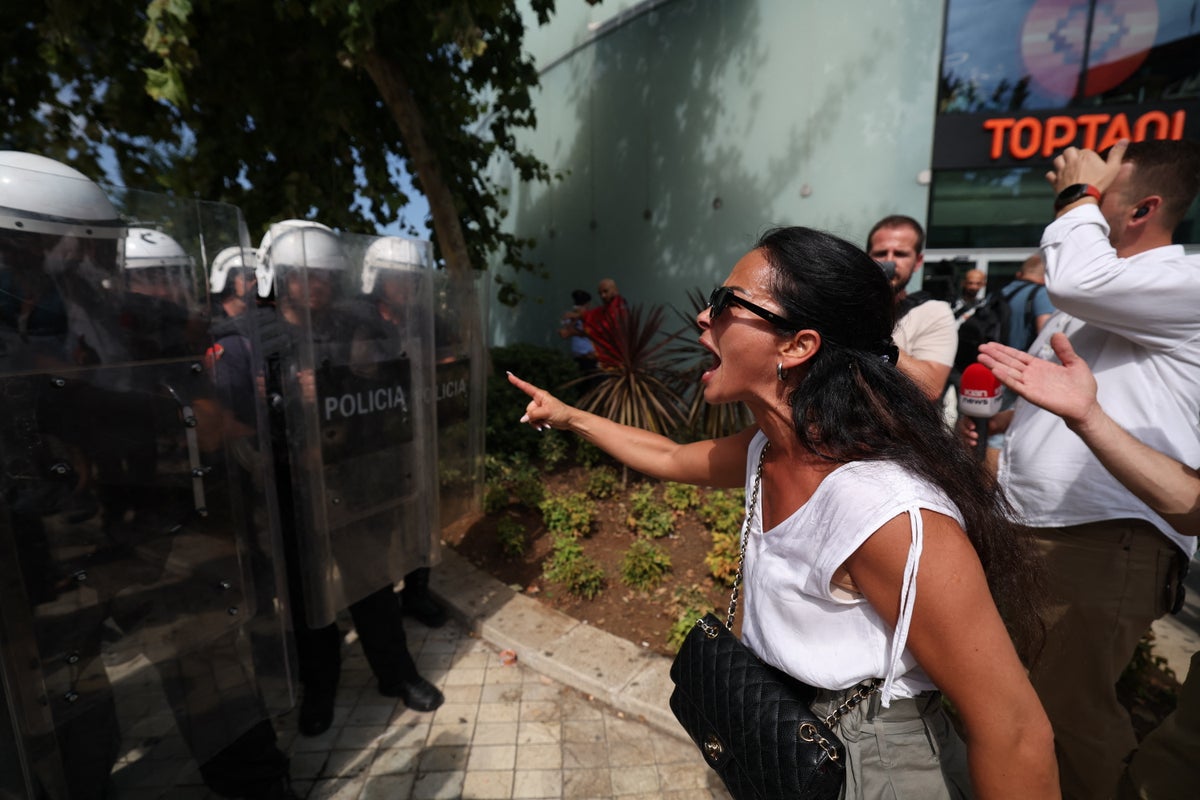
The international media loves a predictable villain. When news broke that Albanian police deployed teargas and water cannons against demonstrators protesting Jared Kushner’s planned luxury resort on Sazan Island, the narrative wrote itself. Activists were painted as heroic defenders of an untouched ecosystem. The developers were cast as rapacious capitalists. The state was labeled an authoritarian enabler.
It is a neat, emotionally satisfying story. It is also completely wrong.
The lazy consensus surrounding the Sazan Island and Zvërnec projects misses the brutal reality of Mediterranean development. Western commentators looking at the Balkans suffer from a romantic delusion. They want Eastern Europe to remain a picturesque, impoverished museum for their own occasional backpacking trips.
The truth is uncomfortable. High-end, ultra-luxury tourism is the most effective conservation strategy available to developing coastal nations. The protests blocking these projects are not protecting the environment. They are campaigning for its slow, suffocating destruction via mass tourism.
The Myth of the Pristine Balkan Eden
To understand why the backlash is flawed, look at what Sazan Island actually is. Activists speak of it as if it were an untouched Galapagos of the Adriatic.
It is not. For decades, Sazan was a heavily fortified military outpost during the communist regime of Enver Hoxha. It is riddled with over 3,000 bunkers, decaying army barracks, tunnels, and unexploded ordnance. The soil contains industrial waste from military operations. The local ecosystem is already compromised by decades of neglect and military contamination.
Leaving Sazan alone does not preserve nature. It preserves a toxic military graveyard.
Cleaning up a former military base requires capital. It requires hundreds of millions of dollars in remediation before a single guest can safely spend the night. The Albanian government does not have the liquidity to fund this cleanup. The options are simple: let the island rot, or bring in foreign direct investment to pay for the decontamination.
When Affinity Partners commits to a project of this scale, the capital injection covers infrastructure that the state cannot afford. This includes waste management systems, water desalination plants, and renewable energy grids. The alternative is the status quo, where local municipalities dump untreated sewage directly into the sea because their budgets are bone-dry.
The Simple Math of Coastal Preservation
Let’s look at the financial and ecological mechanics of luxury hospitality versus mass tourism.
Consider two development models for a coastline.
Model A: The Mass Tourism Trap
A destination builds dozens of mid-tier hotels, cheap hostels, and public beaches. They attract 500,000 tourists a year. Each tourist spends $50 a day.
- Total Revenue: $25 million.
- Environmental Footprint: 500,000 people generating plastic waste, straining local water grids, creating traffic congestion, and eroding the coastline.
Model B: The High-Yield Luxury Model
A destination builds one ultra-exclusive resort. It attracts 5,000 tourists a year. Each tourist spends $5,000 a day.
- Total Revenue: $25 million.
- Environmental Footprint: 1% of the human traffic of Model A.
The math is undeniable. Luxury resorts generate the exact same economic yield—or greater—with a fraction of the ecological wear and tear.
Look across the Adriatic at Italy or Greece. The places that opted for mass tourism are suffocating. Venice is charging entry fees to control crowds. Mykonos is running out of fresh water. The beaches of Mallorca are buried under plastic cups and cheap sunloungers.
By targeting the ultra-high-net-worth demographic, Albania avoids the demographic tsunami that ruined the rest of the Mediterranean. High prices act as an ecological filter. It sounds elitist because it is elitist, but ecology does not care about egalitarian ideals. Nature cares about volume. Fewer feet on the ground means less destruction.
Why Mass Tourism is the Real Ecological Catastrophe
I have spent two decades analyzing hospitality infrastructure across emerging markets. I have seen what happens when a government caves to populist pressure and rejects premium developers. The capital does not vanish; it downmarkets.
If the Kushner project is canceled, Sazan Island will not become a national park. The economic pressure on Albania to monetize its coast is too immense. Instead, the land will eventually be carved up by local, politically connected developers who lack the capital to build world-class infrastructure.
They will build cheap, concrete apartment blocks. They will construct mid-tier hotels with substandard plumbing. They will line the beaches with illegal bars that blast music and dump graywater into the marine reserve.
We know this happens because it already happened in Durrës and Saranda. The rapid, unregulated boom in those Albanian coastal cities created an urban sprawl nightmare. Concrete buildings stand half-finished. The lack of centralized planning ruined the aesthetic value of the coastline.
The protestors in Vlorë are fighting the wrong enemy. They are throwing rocks at the one development model that enforces strict environmental zoning. Ultra-luxury brands like Aman or Six Senses—which frequently partner with these types of mega-investments—demand pristine environments. Their business model depends on it. A billionaire will not pay $3,000 a night to look at a polluted bay or a beach covered in trash. The developer is financially incentivized to keep the surrounding nature immaculate.
The Geopolitical Theater Behind the Teargas
The outrage over the Vlorë and Sazan projects is not driven by environmental science. It is driven by geopolitical theater and partisan optics.
Because the investment involves Jared Kushner, the project is a lightning rod for international political commentary. Western media outlets view the story through a domestic political lens. They treat the Albanian coastline as a chess piece in American electoral politics.
Local opposition parties in Albania use the project as a cudgel against Prime Minister Edi Rama. They claim the government changed its laws on protected areas specifically to benefit foreign tycoons.
Let's dissect that claim. Governments alter zoning laws constantly to facilitate major infrastructure. When Germany cleared sections of the Herrenwyk forest to build industrial facilities, or when Sweden alters local regulations for mining operations, it is called strategic economic planning. When Albania does it to transition from an agrarian economy to a high-value service economy, critics call it corruption.
The use of water cannons and teargas by police is always a terrible look. But state authority exists to protect legal infrastructure and foreign investment from mob vetoes. If a small group of highly vocal protestors can halt a billion-dollar international contract through blockades, a country becomes uninvestable. The rule of law means enforcing contracts, not capitulating to the loudest voices in the street.
What the Critics Get Wrong About Foreign Capital
A common argument from the nationalist left is that these resorts represent a new form of economic colonialism. They argue that the profits fly out of the country to New York or Miami, leaving Albanians with nothing but low-wage service jobs.
This argument ignores how hotel economics work.
A luxury resort cannot import its entire workforce. It relies on local supply chains. The food served in the restaurants is sourced from local farmers and fishermen, who can suddenly charge premium prices for high-quality organic goods. The construction phase employs local engineers, contractors, and laborers.
More importantly, it forces an upgrade in the local human capital. When a worker is trained to the standards of a five-star international resort, their earning potential multiplies. They learn languages, management skills, and international corporate standards.
To see this in action, look at Montenegro. Twenty years ago, Tivat was a run-down naval base. Then came Porto Montenegro, a luxury superyacht marina backed by foreign capital. The critics screamed about corruption, environmental damage, and the loss of local heritage.
Today, Tivat is the economic engine of coastal Montenegro. The project raised property values across the entire region. It funded local schools and roads. The local population did not become an underclass; they became business owners, managers, and service providers to a wealthy global elite.
The Cost of the Contrarian Stance
An honest assessment requires admitting the risks. The high-end development model is not a magic fix without downsides.
Land appreciation will price out locals from buying property in their immediate hometowns. The cost of living in Vlorë will rise. There is a risk that during economic downturns, these massive projects stall, leaving half-built concrete skeletons on the coast for years.
Furthermore, if the Albanian government fails to monitor the developer, promises regarding waste management and renewable energy could be hollowed out. Constant institutional oversight is required.
But comparing the Kushner project to an imaginary, perfect eco-utopia is a bad-faith argument. The real comparison is between a managed, high-capital luxury development and the unmanaged, chaotic explosion of mass tourism.
Albania stands at a crossroads. It can choose the path of Spain's Benidorm—wall-to-wall concrete, cheap beer, and destroyed marine life—or it can choose the path of Monaco and Montenegro.
The protestors fighting the police in Vlorë are inadvertently voting for Benidorm. They are fighting for the right to remain poor and see their coastline ruined by a million cheap plastic bottles. The teargas cleared the road, and for the long-term survival of the Albanian coast, that is the best outcome possible.
Stop romanticizing poverty. Stop cheering for mobs who want to lock Albania out of the global economy. The luxury resort on Sazan Island is the only realistic way to save it.