History is rarely written in grand halls. More often, it accumulates quietly in the margins, captured in the hasty ink of private journals and the blue-light glow of government computer screens. For years, the public narrative of the global pandemic was defined by podiums, press briefings, and polarized shouting matches. But behind the curtain of televised certainty lay a different reality, one recorded in more than one thousand pages of personal notes kept by the nation's top infectious disease official.
When those private diaries surfaced under the glare of a congressional inquiry, they did not just offer a timeline of a crisis. They offered a rare, unfiltered look at the psychological weight borne by those tasked with steering a terrified world through the dark.
Consider what it felt like in the earliest weeks of 2020. While official pronouncements from foreign capitals insisted that a novel respiratory illness possessed no capacity for sustained human transmission, private scientific correspondence told a vastly different story. In his journal entries, Dr. Anthony Fauci documented the frantic scramble of virologists and epidemiologists trying to decode an invisible enemy. Genomic data and epidemiological tracking were painting an alarming picture behind closed doors long before the full magnitude was acknowledged to the populace.
The tension between public reassurance and private doubt is a recurring motif of crisis leadership. To maintain social stability, leaders must project calm. Yet, science itself is built on doubt. It is an iterative process of testing, failing, and revising. When that internal process is laid bare years later, stripped of its immediate context, it can look like contradiction. But true science never arrives fully formed; it fights its way out of the dark.
The diaries also paint a surreal picture of a man caught between microscopic pathogens and macroscopic fame. Pages that track viral mutations and hospital capacities sit right alongside surreal accounts of celebrity culture. There are notes detailing Zoom calls with Hollywood icons who viewed him as a personal hero, alongside bizarre merchandise drops of bobbleheads and custom face masks bearing his likeness. Few individuals in modern history have experienced such an explosive, unwanted elevation into pop culture iconography while simultaneously managing a public health catastrophe.
Yet, the fame came with an escalating security cost and a profound sense of isolation. The pages reveal a growing bewilderment at the political friction inside the administration, where scientific recommendations frequently collided with electoral imperatives. When debates arose over whether rising infection numbers were merely an artifact of increased testing, the private notes show a stark pushback against political minimization of the crisis.
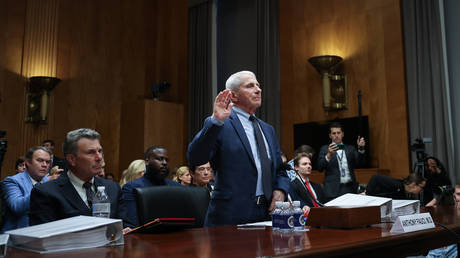
Years later, these documents became ammunition in a bitter legislative showdown. Summoned before a Senate committee under the weight of a subpoena, the retired scientist chose silence, invoking his constitutional protections against an interrogation he characterized as a politically motivated quest for retribution. The dramatic standoff marked a grim bookend to decades of public service.
We are left to grapple with the messy intersection of science, politics, and human frailty. The private journals do not provide simple heroes or tidy villains. Instead, they expose the raw, unpolished mechanics of decision-making under existential pressure, reminding us that history is always messier than the stories we tell about it.