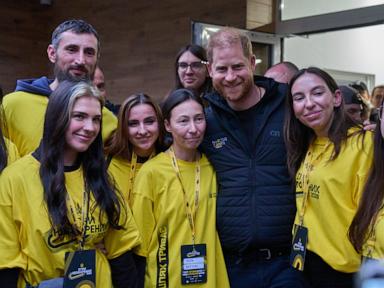
When Prince Harry made an unannounced appearance in Lviv, Ukraine, meeting with wounded soldiers at the Superhumans Center and calling them role models, the surface coverage focused on royal diplomacy and emotional photo opportunities. Beneath the headlines lies a much larger, rarely examined story about how modern industrialized warfare is reshaping global trauma medicine, veteran reintegration, and soft-power philanthropy.
The visit was not a spontaneous gesture of sympathy. It was a calculated convergence of Harry’s long-standing institutional brand—built around the Invictus Games—and Ukraine’s urgent need to keep international funding and specialized medical technology flowing into its overwhelmed rehabilitation infrastructure. For a prince operating outside the official machinery of the British Crown, high-risk humanitarian appearances serve as both moral currency and strategic positioning. For Kyiv, a globally recognized figure walking through a prosthetic clinic achieves what dozens of diplomatic briefings cannot: sustained Western media attention during a period of donor fatigue.
The Anatomy of a Modern Trauma Crisis
To understand why a clinic in western Ukraine became the focal point of an international media cycle, you have to look at the sheer scale of modern battlefield injuries. Unlike the counterinsurgency conflicts in Iraq and Afghanistan, where improvised explosive devices caused the majority of coalition amputations, the war in Ukraine is defined by relentless artillery barrages, loitering munitions, and heavy armored combat.
Military medical analysts and humanitarian organizations have documented tens of thousands of severe limb losses among Ukrainian service members and civilians since the full-scale invasion began. These are rarely clean surgical cases. Blast trauma from high-explosive shells drives dirt, shrapnel, and bacteria deep into bone and soft tissue, requiring multiple revision surgeries before a patient can even be considered for a prosthetic fitting.
Standard state healthcare systems are built for predictable, peacetime demographics—elderly patients losing limbs to vascular disease or diabetes, not twenty-two-year-old infantrymen who need to run, lift, and re-enter the workforce. That gap created an immediate vacuum. Into that space stepped privately funded, donor-backed facilities like the Superhumans Center in Lviv, which operates outside the traditional bureaucratic constraints of state hospitals.
Why Private Clinics Outpace State Medicine
State medical networks in wartime prioritize survival. Their primary metric is keeping wounded troops alive through triage, stabilization, and acute surgery. Long-term functional recovery—fitting a patient with a microprocessor-controlled knee or a myoelectric arm, followed by months of neurological and physical retraining—often falls to the bottom of the budget.
Private rehabilitation hubs operate on a fundamentally different model. By pooling capital from international philanthropists, corporate sponsors, and foreign governments, they bypass public procurement bottlenecks. They recruit specialists globally, import high-end prosthetic components directly from manufacturers in Germany, Iceland, and the United States, and offer psychological counseling alongside reconstructive surgery under one roof.
When Harry walked those wards and praised the patients as role models, he was validating this privatized, high-tech model of war recovery. It is an approach that produces remarkable individual outcomes, turning bilateral amputees into athletes and business owners within months. Yet it also highlights an uncomfortable reality: access to world-class recovery in wartime often depends on charitable infrastructure rather than guaranteed state capacity.
The Invictus Blueprint and Royal Soft Power
Prince Harry’s personal stake in veteran rehabilitation is well documented, dating back to his own deployments in Afghanistan and the founding of the Invictus Games in 2014. Over the past decade, Invictus has evolved from a sporting event into a transnational network linking defense ministries, corporate defense contractors, and medical researchers.
Ukraine’s participation in the Invictus Games has carried outsized symbolic weight since the conflict escalated. Unlike teams from NATO countries, whose athletes are mostly veterans of past expeditions, Ukrainian competitors are frequently active-duty personnel pulled directly from hospital beds or frontline rotations, returning to the war zone once the closing ceremonies end.
For Harry, stepping onto Ukrainian soil—something senior working members of the British Royal Family have largely avoided due to strict security protocols and Foreign Office risk assessments—marks a clear divergence in how he operates compared to Buckingham Palace.
Consider the mechanics of royal diplomacy:
- Working Royals act strictly on the advice of the UK government. Every handshake, trip, and statement is calibrated to align with Downing Street’s foreign policy and intelligence briefings.
- Independent Figures like Harry carry no constitutional mandate, which frees them from diplomatic protocol while exposing them to personal security risks and political scrutiny.
- Media Leverage remains his primary asset. Without a state apparatus behind him, his ability to generate front-page coverage globally is the sole currency he brings to partner organizations.
Critics often dismiss celebrity and royal visits to conflict zones as performative branding. That cynicism misses how modern humanitarian fundraising actually works. Major institutional donors and corporate boards rarely release multi-million-dollar grants based purely on white papers. They respond to visibility, reputational alignment, and narrative momentum. A single afternoon of global television coverage featuring a recognizable public figure testing prosthetics alongside wounded soldiers can unlock more donor capital in a week than a year of quiet lobbying.
The Economics of High-Tech Prosthetics
Calling wounded veterans role models makes for an inspiring headline, yet the reality behind those recoveries involves staggering financial and technical hurdles. A basic mechanical prosthetic leg costs a few thousand dollars. A high-performance bionic limb capable of adapting to uneven terrain, stairs, and running can easily exceed fifty thousand dollars, not including the lifetime cost of socket replacements, software updates, and maintenance.
In a hypothetical scenario involving a thirty-year-old veteran with a bilateral above-the-knee amputation, the initial hardware is only the beginning of the ledger. As the residual limb changes shape over the first two years due to muscle atrophy and swelling reduction, the carbon-fiber socket must be remade multiple times. Each adjustment requires skilled prosthetists, specialized diagnostic equipment, and weeks of physical therapy to prevent gait abnormalities that destroy the lower back and hips.
Multiply that single case by tens of thousands of patients, and the long-term fiscal burden becomes clear. Charities and celebrity endorsements can build flagship centers and outfit hundreds of high-profile cases. They cannot, on their own, fund fifty years of maintenance for an entire generation of wounded troops.
The Psychological Trap of the Superhuman Narrative
There is also a subtle danger in framing disabled veterans exclusively as inspirational role models. Rehabilitation psychologists have long warned against the cultural pressure placed on injured service members to perform resilience for the public.
When media coverage and high-profile visitors focus relentlessly on the amputee who runs a marathon or climbs a mountain, it sets an unspoken standard that every wounded soldier must achieve extraordinary physical feats to be valued. The veteran struggling with severe traumatic brain injury, chronic phantom limb pain, or treatment-resistant post-traumatic stress disorder does not fit neatly into an uplifting news segment.
True reintegration is rarely cinematic. It happens in quiet, unglamorous settings:
- Workplace adaptation, where employers modify physical spaces and schedules to accommodate fluctuating pain levels and medical appointments.
- Family support systems, which bear the brunt of behavioral changes, sleep disturbances, and financial stress long after the cameras leave.
- Community accessibility, ranging from basic wheelchair ramps on public transit to equitable disability pensions that keep pace with inflation.
When public figures visit flagship clinics, the spotlight naturally gravitates toward the most visually compelling recoveries. Acknowledging the grit of those patients is warranted, provided it does not obscure the vast majority of veterans whose recovery is nonlinear, invisible, and permanent.
Security Logistics and the Information War
Pulling off an unannounced visit by a high-profile British figure in a country under active missile threat requires an extraordinary operational footprint. Lviv sits hundreds of miles from the eastern front lines, yet it remains well within the range of Russian cruise missiles and long-range drones, having suffered repeated strikes on energy infrastructure and residential buildings.
Such trips are typically coordinated weeks in advance under strict operational security. Travel manifests are compartmentalized, local cellular networks around the venue are often monitored or restricted, and movements are timed to minimize predictability. The news is almost always embargoed until the principal has safely crossed back over the border into Poland.
Why take the physical risk when a video call or a meeting in London would be safer? Because physical presence is a direct counter-measure in an ongoing information war.
Moscow’s narrative strategy consistently aims to portray Ukraine as isolated, exhausted, and abandoned by its Western backers. Every high-profile visit—whether by a head of state, a Hollywood actor, or a British prince—serves as visual proof that Western networks remain physically and financially invested in the country’s survival. Standing in a Ukrainian hospital room sends an unmistakable signal that the security risk is deemed manageable and the alliance remains intact.
What Happens When the Cameras Leave
The real measure of Prince Harry’s trip to Ukraine will not be found in the volume of social media impressions or the warmth of the headlines generated over forty-eight hours. It will be visible in the procurement ledgers and patient waiting lists six months from now.
For the Superhumans Center and similar initiatives, the immediate challenge is scaling their clinical model without diluting quality. Training Ukrainian prosthetists, physical therapists, and trauma surgeons to operate independently of foreign visiting specialists is the only sustainable path forward. International partnerships work best when they transfer technical capability rather than just hardware.
At the same time, Western governments and multilateral lenders face mounting pressure to integrate long-term veteran healthcare into broader reconstruction packages. Roads, power grids, and bridges are tangible assets that attract infrastructure investors. Human capital—specifically the physical and psychological restoration of hundreds of thousands of war-wounded citizens—is harder to quantify on a balance sheet, yet it determines whether a post-war economy can actually function.
Prince Harry’s salute to Ukraine’s wounded soldiers captured a genuine moment of mutual recognition between a former combat veteran and men and women enduring the brutal realities of modern warfare. Yet admiration does not pay for carbon-fiber sockets, fund neurological research, or sustain rural clinics decades after a ceasefire is signed. Until international donors treat long-term veteran rehabilitation with the same financial urgency as weapons shipments and energy grid repairs, the hardest part of the war for Ukraine’s wounded will begin the day the fighting stops.