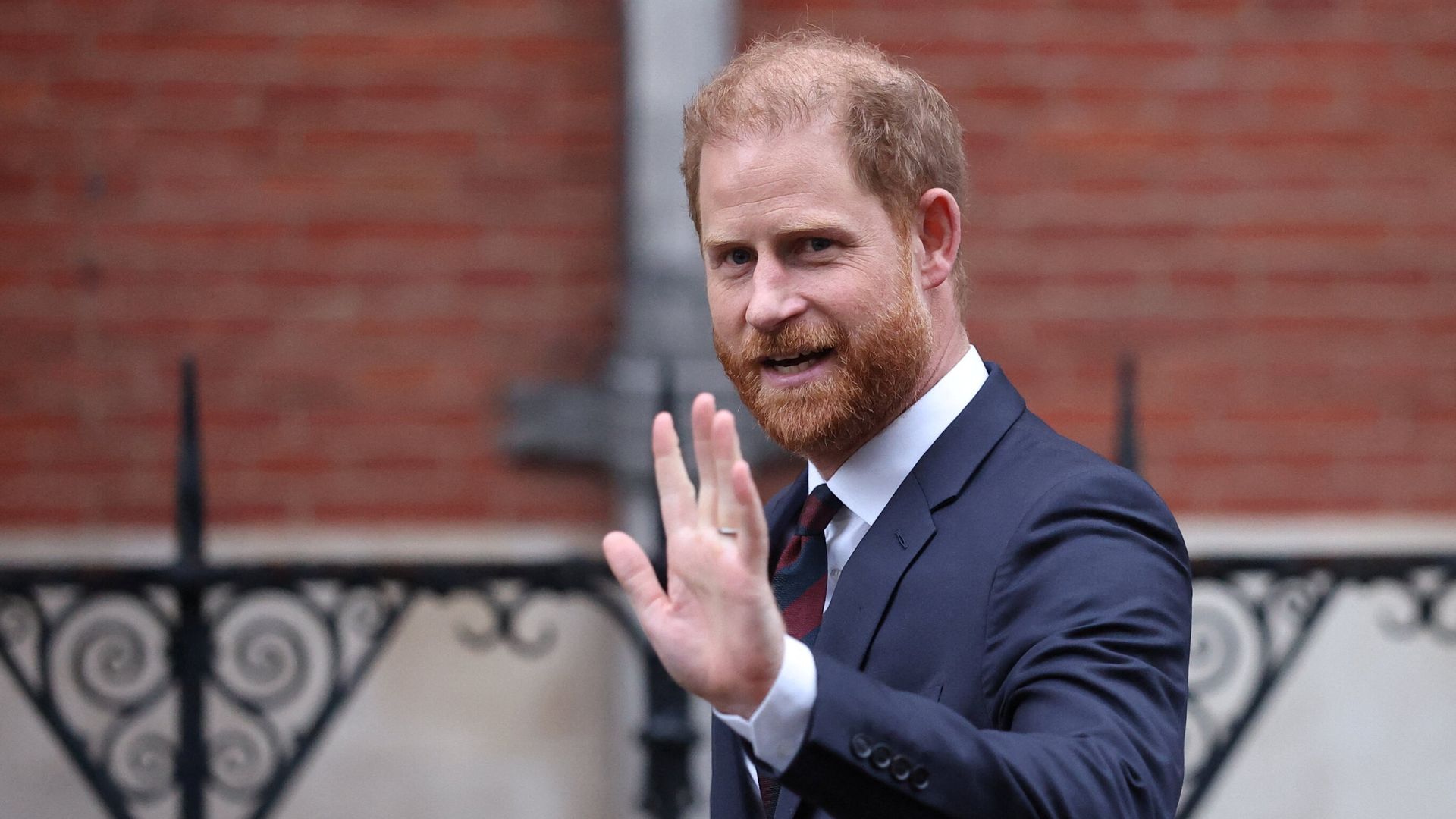
He lost the first round, yet Prince Harry is doubling down on his legal war against the British tabloid press. When a London High Court judge dismissed his privacy lawsuit against Associated Newspapers Limited—the publisher behind the Daily Mail and The Mail on Sunday—most royal watchers assumed the Duke of Sussex would finally cut his losses and walk away. They were wrong.
Harry's decision to appeal isn't just about bruised pride or a lingering grudge against Fleet Street editors. It's a calculated, high-stakes gamble that could reshape how British courts handle historical privacy claims and investigative journalism. If you've been following the sprawling web of litigation between the Sussexes and the UK press, you already know this particular case carries massive financial and reputational risks for both sides. Meanwhile, you can explore related events here: Inside the Russell Brand Trial Clash That Forced a Senior Barrister to Report Himself.
Let's strip away the royal drama and look at what actually happened in the courtroom, why the judge tossed the case, and what Harry's legal team is betting on next.
What Actually Happened in the High Court Dismissal
To understand why Harry is appealing, you first have to look at why his claim hit a brick wall. The Duke of Sussex, alongside six other high-profile figures—including Elton John, David Furnish, Elizabeth Hurley, and Sadie Frost—sued Associated Newspapers Limited (ANL) over allegations of unlawful information gathering. To explore the bigger picture, check out the detailed analysis by BBC News.
The accusations were severe. The claimants alleged that ANL hired private investigators to place listening devices inside cars and homes, commissioned the tapping of live telephone calls, and obtained private medical and financial records through deception, a practice commonly known in the tabloid industry as "blagging."
ANL flatly denied every single allegation, calling the claims "preposterous smears." More importantly, their legal team didn't just argue innocence; they argued the clock had run out.
Under UK law, specifically the Limitation Act 1980, claimants generally have a strict six-year window to bring privacy or breach-of-confidence claims once they know—or could reasonably have discovered—they had a case. ANL argued that the alleged wrongdoing took place between 1993 and 2011, with a few isolated incidents stretching to 2018. Because the lawsuit wasn't filed until October 2022, the publisher contended the claims were legally time-barred.
Mr. Justice Nicklin agreed, at least in part, and delivered a major blow to the claimants' strategy, though the procedural path here got messy fast. In an earlier preliminary ruling, Justice Nicklin actually allowed the group's broader claims to proceed to trial, rejecting ANL's bid to throw out the entire lawsuit on limitation grounds. However, specific elements and parallel rulings in Harry's separate litigation—particularly regarding what he knew and when he knew it—created severe legal friction. When specific privacy and defamation angles faced dismissal or strike-out rulings, Harry's team immediately moved to challenge the court's interpretation of the timeline.
Why Prince Harry's Appeal Strategy Hinges on Timing
You might wonder how anyone expects to win an appeal when a statute of limitations looks so black and white. Six years is six years, right? Not quite.
In British privacy law, the six-year clock doesn't automatically start ticking the moment a journalist taps a phone or blags a medical file. If a publisher actively conceals their wrongdoing, the countdown only begins when the victim discovers the fraud—or when they could have discovered it using "reasonable diligence."
That phrase—"reasonable diligence"—is the entire battleground of Harry's appeal.
ANL's lawyers pointed out that phone hacking and tabloid surveillance were front-page news across Britain for over a decade. Between the 2006 royal phone-hacking convictions involving the News of the World, the 2011 Leveson Inquiry into press ethics, and Prince William's own confidential settlement with Rupert Murdoch's newspaper group, the Daily Mail's legal team argued that Harry had plenty of reasons to suspect he was a target long before 2016.
Harry's camp tells a very different story. His barristers, led by David Sherborne, argue that the Duke had no concrete evidence implicating Associated Newspapers specifically until much later, largely because ANL executives repeatedly and publicly insisted under oath at the Leveson Inquiry that their hands were clean.
Think about the logic of that argument for a second. If a newspaper group stands before a public judicial inquiry and swears they never engaged in unlawful information gathering, can they turn around ten years later and blame a victim for believing them? Harry's lawyers say no. They contend that a victim shouldn't be penalized for failing to uncover a crime that the perpetrators actively denied committing in an official public forum.
The Difference Between This Case and His Mirror Group Win
A lot of casual observers confuse Harry's various lawsuits, and honestly, it's easy to see why. At one point, the Duke was juggling multiple simultaneous actions against different British newspaper publishers.
To grasp why he's so determined to appeal against the Daily Mail publisher, you have to compare it to his massive victory against Mirror Group Newspapers (MGN).
In December 2023, Mr. Justice Fancourt ruled in Harry's favor in his phone-hacking lawsuit against MGN, the publisher of the Daily Mirror, Sunday Mirror, and The People. The judge found that phone hacking had been "widespread and habitual" at MGN titles from the late 1990s through 2011, and that senior executives knew about it and covered it up. Harry was awarded £140,600 in damages—a figure that later grew through a subsequent confidential settlement covering his remaining claims and substantial legal costs.
That win validated Harry's worldview. For years, he claimed the British press had systematically invaded his privacy, destroyed his relationships, and fueled paranoia within his inner circle. The Mirror Group ruling proved he wasn't imagining things.
Naturally, that victory emboldened him. When you've already proven in the High Court that one major tabloid group systematically targeted you and lied about it for decades, walking away from a similar fight against another publisher feels like leaving the job unfinished. Harry has explicitly stated in court filings and interviews that he views reforming the British press as his "life's work." Appeals aren't an inconvenience to him; they're part of the mission.
The Financial Reality Nobody Wants to Admit
Here's the part that makes legal analysts wince. Fighting Associated Newspapers Limited in the Court of Appeal—and potentially the Supreme Court—isn't just emotionally exhausting. It's astronomically expensive.
Under the UK's "loser pays" civil litigation system, the party that loses an application, a preliminary hearing, or a full trial is typically ordered to pay a massive chunk of the winning side's legal bills. And when you're dealing with King's Counsel barristers charging upwards of £1,000 an hour, those numbers spiral out of control fast.
We've already seen how painful this gets for Harry. In his separate libel lawsuit against ANL over an article regarding his taxpayer-funded UK police security, Harry dropped the case just hours before a key deadline, leaving him on the hook for roughly £750,000 in combined legal costs. In the broader unlawful information gathering case, preliminary skirmishes have already racked up millions of pounds in combined fees across all seven claimants.
By appealing a dismissal, Harry is essentially doubling his wager at the blackjack table. If the Court of Appeal sides with him, he keeps his claim alive, forces ANL toward a potentially bruising public trial, and shifts the cost burden back onto the publisher. If he loses the appeal, he doesn't just lose the case—he gets handed another seven-figure bill to pay the Daily Mail's lawyers.
Most ordinary litigants would settle or fold under that kind of financial pressure. Even wealthy celebrities usually take the quiet off-ramp when a judge signals skepticism. Harry isn't operating on a standard financial spreadsheet, though. Between his Netflix deals, his memoir Spare, and his inheritance, he has the war chest to absorb losses that would bankrupt almost anyone else.
What the Daily Mail Publisher Stands to Lose
It's a mistake to think Associated Newspapers holds all the cards just because they won a round in the High Court. In fact, ANL has spent millions trying to kill these lawsuits before they ever reach a full witness-box trial, and there's a very specific reason why.
Discovery.
If Harry's appeal succeeds and the case proceeds toward a full trial, ANL will be forced to hand over internal accounting records, private investigator invoices, emails, and editorial logs stretching back decades. Even if the publisher ultimately wins on technical legal points, the public relations damage of having private investigator ledgers read aloud in open court is immense.
We saw this play out during the News of the World scandal and the Mirror Group trial. Once internal payment records become part of the public court record, former editors, executives, and current newsroom leaders face relentless scrutiny. Reputationally, a dragged-out trial is a nightmare for any news organization that prides itself on public trust.
ANL knows this. That's why their legal strategy has focused so aggressively on procedural knockouts—arguing limitation periods, challenging the admissibility of certain documents, and trying to narrow the scope of the claims before a single witness takes the stand.
How British Media Law Could Shift Because of This Appeal
Whether you sympathize with Prince Harry or think he's waging a personal vendetta against journalists, the outcome of this appeal matters far beyond royal gossip.
British privacy law sits at an awkward crossroads. On one hand, courts recognize that victims of covert surveillance can't be expected to sue within six years if they had no way of knowing they were being spied on. On the other hand, judges are deeply reluctant to let claimants dredge up 25-year-old grievances when witnesses have died, memories have faded, and physical records no longer exist.
If the Court of Appeal rules in Harry's favor, it could lower the bar for what counts as "reasonable diligence" in historical privacy cases. That would open the door for dozens of other public figures, politicians, and ordinary citizens to bring fresh lawsuits over decades-old tabloid practices, effectively nullifying the six-year limitation shield publishers have relied on.
Conversely, if the appellate judges uphold the dismissal, it will send a clear message that the window for Leveson-era tabloid litigation is finally closing. Publishers will breathe a massive sigh of relief, knowing that events from the 1990s and early 2000s can't be endlessly relitigated every time a new batch of private investigator invoices surfaces.
What You Should Watch for as the Appeal Moves Forward
If you want to track how this actually plays out without getting lost in sensationalized headlines, pay attention to three specific milestones over the coming months:
- The Permission to Appeal Ruling: In the UK, you don't have an automatic right to appeal a High Court judge's decision. Harry's team first has to convince either the trial judge or the Court of Appeal itself that their challenge has a "real prospect of success." Watch whether permission is granted on all grounds or only narrow technical points.
- Co-Claimant Solidarity: Keep an eye on the other six claimants in the group litigation, particularly Elton John and Elizabeth Hurley. Group litigation relies heavily on shared legal costs. If one or two high-profile claimants decide to settle privately with ANL, the financial burden on Harry increases overnight.
- Disclosure Battles: Watch for rulings regarding documents obtained from the Leveson Inquiry. Both sides have fought fiercely over whether confidential evidence submitted to the 2011 inquiry can be used in modern civil trials. Any shift there changes the leverage immediately.
Prince Harry has made it clear he won't be managed, silenced, or priced out of a courtroom. Whether his appeal ends in a landmark legal precedent or an expensive defeat, he's forcing the British media establishment to answer questions they thought they had buried twenty years ago.