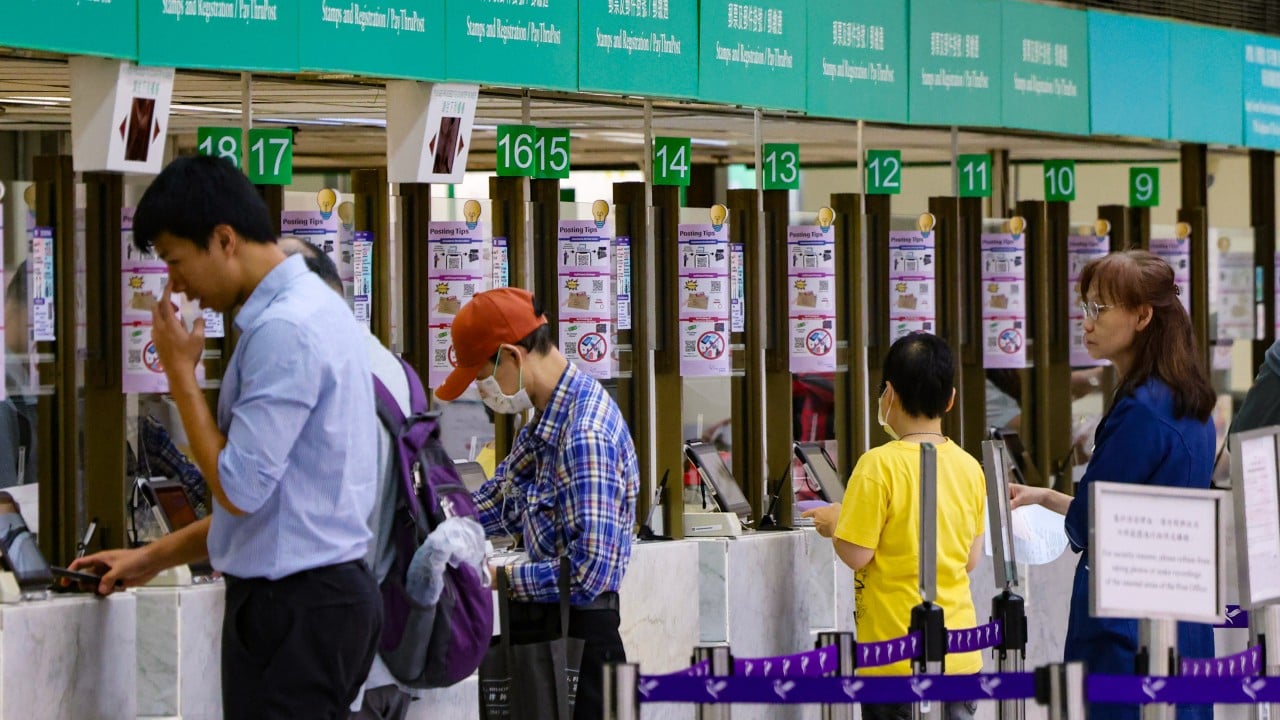
In a small, windowless corner of a high-rise in Mong Kok, an elderly woman named Mei Lin carefully licks the back of a postage stamp. She is eighty-two. Her hands shake, just a fraction, as she presses the small serrated square onto a thick envelope addressed to a grandson in Vancouver. For decades, this ritual has been her heartbeat. It is the physical manifestation of a bridge built across an ocean. But starting April 13, that bridge gets a little more expensive to cross.
Hong Kong is raising its postage rates. On the surface, it sounds like a triviality—a few cents here, a dollar there. Most of us don't even look at the price of a stamp anymore; we tap our credit cards or scan QR codes, living in a world where data moves at the speed of light for what feels like zero cost. But for the postal service, the world is made of heavy things. It is made of jet fuel, rubber tires, and the sweat of carriers climbing stairs in the humid heat of a Mid-Levels afternoon.
The reality is grounded in the volatile math of energy. As oil prices surge globally, the invisible machinery that moves Mei Lin’s letter begins to groan under the financial weight. It takes fuel to fly a Boeing 747 across the Pacific. It takes diesel to move the green delivery vans through the snarled traffic of the Cross-Harbour Tunnel. When the price of a barrel of crude oil spikes, the ripple effect eventually lands on the tongue of someone licking a stamp.
The Mathematics of Movement
The adjustment isn't arbitrary. It is a survival tactic. Local letters weighing thirty grams or less will see a modest rise, moving from the current $2.00 to $2.20. For those sending thoughts and gifts abroad, the shift is more pronounced. Airmail to places like the United States or the United Kingdom is feeling the squeeze of a global logistics chain that has become increasingly fragile and expensive.
Consider the journey of a single postcard.
It travels from a metal box on a street corner to a central sorting office in Kowloon Bay. It is scanned, sorted by humming machines, packed into a container, driven to Chek Lap Kok, loaded into the belly of a plane, flown thousands of miles, unloaded, sorted again, and finally carried by hand to a front door. Every single one of those steps requires energy. For years, the Post Office has absorbed the fluctuations in these costs, but the current economic climate has made that buffer disappear.
Logistics is a game of margins. When fuel costs rise by double digits, a postal service—which is essentially a giant logistics company with a social mandate—faces a choice: degrade the service or ask the public to help cover the bill. Hong Kong has chosen the latter to maintain the efficiency that the city prides itself on.
Why the Physical Still Matters
You might wonder why we should care. We have encrypted chats. We have video calls that let us see the wrinkles around a loved one’s eyes in real-time. Why does a twenty-cent increase in postage matter in 2026?
It matters because digital communication is ephemeral. A text message is a ghost; it exists until you delete it or your phone dies. A letter is an artifact. It has weight. It carries the scent of the room where it was written. For the small business owner in Sham Shui Po shipping handmade jewelry to a boutique in Paris, these rates are not just "pennies." They are a direct tax on their ability to compete in a global marketplace.
Imagine a young entrepreneur, Leo, who runs a niche vinyl record shop. He ships rare Cantonese pop records to collectors in London and New York. For Leo, the surge in postage is a line item that threatens his very narrow profit margins. He can’t simply "digitize" a 12-inch record. He relies on the physical infrastructure of the world. When the cost of movement goes up, his world gets a little smaller. He has to decide whether to hike his prices—risking the loss of his international customers—or eat the cost himself.
The Global Energy Shadow
We often talk about "the economy" as if it’s a weather pattern, something that just happens to us. But the economy is really just a series of interconnected pipes. One pipe carries oil from the Middle East. Another carries consumer goods from South China. A third carries the letters and parcels of seven million people.
The spike in oil prices is the blockage in the system.
This isn't just a Hong Kong problem; it’s a global friction. When energy becomes expensive, the world expands. Distances that felt short when fuel was cheap suddenly feel long again. The "death of distance" that the internet promised was always a bit of a lie. Distance still exists; we just got very good at hiding the cost of it for a while. Now, the bill is coming due.
It is a sobering reminder of our physical dependence on the Earth's resources. Every time we send a package, we are participating in a massive, carbon-burning ballet. The price hike is a reflection of that reality. It is a nudge to remember that moving things from Point A to Point B is a feat of engineering and human effort that we have taken for granted for too long.
The Silent Infrastructure
The postman is a fixture of the Hong Kong landscape. Rain or shine, through typhoons and heatwaves, they navigate the labyrinthine estates and the steep slopes of the Peak. We expect our mail to arrive. We expect the system to work with the silent precision of a Swiss watch.
But precision is expensive.
To keep the fleet of delivery vehicles running, to keep the sorting centers powered, and to ensure that staff are paid a fair wage in one of the world's most expensive cities, the revenue must balance against the rising tide of operational costs. The government has noted that these adjustments are necessary to ensure the long-term sustainability of the postal service. Without them, the "universal service obligation"—the promise that the post will go anywhere, to anyone—becomes an impossible burden.
The timing, April 13, marks a transition. It is the end of an era of cheaper movement. For the average person sending a birthday card to a friend in Shatin, the extra twenty cents won't break the bank. It’s the price of a couple of plastic bags at the supermarket. But the cumulative effect on the city's commerce and its connection to the outside world is significant.
The Weight of a Letter
Back in Mong Kok, Mei Lin finishes her letter. She doesn't know about the Brent Crude index or the logistical complexities of air freight. She only knows that it will cost her a little more to hear her grandson's voice in her head as she reads his eventual reply.
She walks to the corner, the humidity already clinging to her clothes, and drops the envelope into the red pillar box. Clack. The sound of the letter hitting the bottom of the box is a small one, but it is a sound that connects her to a vast, global network of ships, planes, and people. That twenty-cent increase is the price of keeping that connection alive. It is the cost of ensuring that in a world of fleeting pixels, the physical word still has a way to travel.
We pay more because the world has become harder to traverse. We pay more because the energy that powers our lives is no longer cheap or certain. We pay more because, despite everything, we still need to reach out and touch someone on the other side of the planet.
The mailbox stands on the corner, indifferent to the price of oil, waiting for the next passenger. Within its metal walls, the hopes, business deals, and grievances of a city are gathered, waiting for the fuel to carry them away. Distance has reclaimed its price, and for now, we have no choice but to pay it.