The needle on the dashboard doesn’t just measure fuel; it measures the shrinking diameter of a life.
When the cost of a gallon of gas climbs toward the double digits, the geography of your existence begins to contract. You stop visiting the aunt who lives three towns over. You skip the weekend trip to the coast. Eventually, you find yourself staring at the driveway, calculating the literal cost of a trip to the grocery store against the weight of your bank account. It is a slow, suffocating constriction.
Then there is the other fire. Across the world, the geopolitical fault lines have finally fractured. The headlines are no longer speculative; they are jagged and hot. An escalating conflict with Iran is no longer a "brewing tension" discussed by pundits in climate-controlled studios. It is a reality that vibrates through the smartphone in your pocket, delivering a rhythmic pulse of anxiety that never quite resets to zero.
We are living in a pincer maneuver. On one side, the economic impossibility of movement. On the other, the psychological impossibility of peace.
The Human Cost of the Picket Line
Consider Elias. He is a hypothetical composite of the thousands of people currently recalculating their worth against a spreadsheet of rising costs. Elias works in a cubicle under flickering fluorescent lights. Two years ago, his escape was a high-speed drive to the mountains, the engine humming a song of liberation. Today, that engine is a silent, expensive paperweight.
Elias feels trapped. He is a prisoner of his own zip code. When he opens his laptop, he sees images of drones over Isfahan and troop movements in the Strait of Hormuz. His chest feels tight. It is a specific kind of modern vertigo—the feeling that the world is moving too fast while you are stuck entirely still.
What does a person do when the world becomes too expensive to navigate and too terrifying to watch?
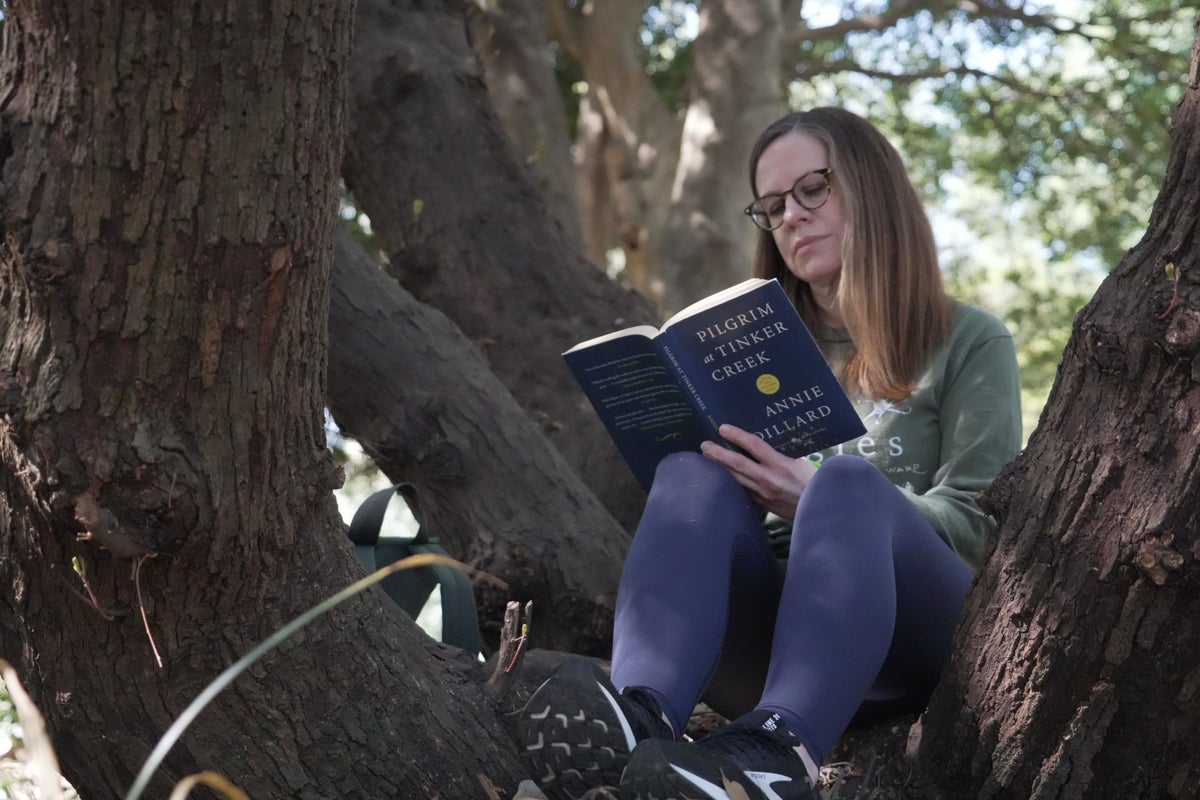
They walk into the woods.
They aren't looking for a hike. They aren't looking for "exercise" in the traditional, calorie-burning sense of the word. They are looking for Shinrin-yoku. In the West, we call it forest bathing. In reality, it is a biological surrender.
The Chemistry of the Canopy
Forest bathing is often dismissed as a "soft" wellness trend, the kind of thing people do when they have too much time and not enough problems. This is a profound misunderstanding of human physiology.
When we are stressed by the threat of war or the specter of poverty, our bodies are flooded with cortisol and adrenaline. Our sympathetic nervous system—the fight-or-flight mechanism—is stuck in the "on" position. We are prepared to outrun a predator that doesn't have a face, a predator that is just an abstract concept like "inflation" or "regional instability."
Because we cannot fight an abstract concept, the chemicals sit in our blood. They corrode our sleep. They sharpen our tempers.
Enter the phytoncides. These are organic compounds—essentially essential oils—secreted by trees like cedars and pines to protect themselves from various germs and insects. When a person walks into a dense forest and breathes deeply, they are inhaling a natural pharmacy.
Studies conducted in Japan, where this practice originated in the 1980s as a response to a tech-boom burnout crisis, show that just two hours under a canopy can significantly increase the activity of "natural killer" cells. These are the immune system’s front-line soldiers. Blood pressure drops. Heart rate variability improves.
For someone like Elias, the forest isn't a luxury. It is an off-switch for a nervous system that is melting down.
The Economy of the Earth
There is a grim irony in the fact that as oil prices soar, the most effective mental health intervention remains free.
A tank of gas might cost a hundred dollars, but the trail across the street costs nothing. This shift toward the local and the natural is a forced evolution. For decades, the "American Dream" was synonymous with mobility—the ability to go anywhere, fast, at any time. We defined our freedom by how much distance we could put between ourselves and our starting point.
Now, that definition is being rewritten. Freedom is becoming the ability to find stillness exactly where you are.
As the conflict with Iran threatens the global energy supply, the ripple effects are felt in every suburban kitchen. It is a reminder of how fragile our hyper-connected, high-consumption lives truly are. We are tethered to ancient oil fields and the whims of distant regimes. When those tethers fray, we are yanked back to the earth.
The people turning to forest bathing right now are not just "enjoying nature." They are practicing a form of radical self-preservation. They are reclaiming their attention from the 24-hour news cycle and giving it to the moss, the bark, and the slow, indifferent swaying of the branches. The trees do not care about the price of Brent Crude. The forest is not tracking the movement of naval destroyers.
The Invisible Stakes
We often talk about the "stakes" of a war in terms of borders and resources. We talk about the "stakes" of an economic crisis in terms of GDP and purchasing power. We rarely talk about the invisible stakes: the mental sovereignty of the individual.
If you spend your entire day reacting to the volatility of the world, you no longer own your mind. You are a reactive organism, a leaf caught in a gale.
The act of forest bathing is a quiet rebellion against this loss of self. It is a way of saying: The world is in chaos, but I will not be.
It is important to understand that this isn't about avoidance. It isn't "head in the sand" escapism. You cannot ignore a war into non-existence, and you certainly cannot ignore a depleted bank account. But you can change the vantage point from which you view these problems.
When you are deep in the woods, the scale of time changes. You are surrounded by organisms that have survived centuries of fire, drought, and human folly. They operate on a different frequency. By syncing your breath to that slower rhythm, you gain the perspective necessary to handle the crisis waiting for you back at the trailhead.
The Texture of the Truth
The bark of a white oak is rough, like a topographical map of a mountain range you'll never visit. The air in a pine grove is heavy, almost sweet, tasting like something ancient and clean. These sensory details matter because they provide the "grounding" that modern life lacks.
We spend our days touching glass screens and plastic keyboards. We live in a world of smooth, sterile surfaces that offer no feedback. When we step onto a forest floor, the ground is uneven. It demands our presence. You have to watch where you step. You have to feel the shift in weight in your ankles.
This physical engagement pulls the mind out of the future (where it is worrying about gas prices) and out of the past (where it is mourning a simpler time) and drops it squarely into the present.
The present is the only place where stress cannot survive. Stress requires a timeline. It requires a "what if" or a "why did." The forest only offers "what is."
A New Kind of Resilience
We are entering an era of forced localization. As the costs of our previous lifestyle become prohibitive, we are being funneled back into our immediate environments.
This could be viewed as a tragedy—a shrinking of the world. Or, it could be viewed as a deepening.
If we cannot go wide, we must go deep.
The rise of forest bathing in the face of geopolitical and economic turmoil is a sign that the human spirit is trying to find a way to endure. We are biologically hardwired to seek out the green. It is our ancestral home. After a century of pretending we could live entirely apart from the natural world, the current crisis is a brutal, necessary reminder of where we actually belong.
Elias eventually turns off his phone. He leaves it in the glove box of his parked car. He walks past the "Trailhead" sign and feels the temperature drop by five degrees as the canopy closes over him.
The silence is not empty. It is full of the sound of wind in the needles and the scurry of life in the undergrowth. For the first time in weeks, his shoulders drop away from his ears. He isn't thinking about the Strait of Hormuz. He isn't thinking about the numbers on the gas pump.
He is just breathing.
The world is still on fire. The prices are still high. But for the next hour, he is more than a consumer or a concerned citizen. He is a biological entity in a biological world, finding the strength to go back and face the flames.
The needle on the dashboard might be on empty, but the soul is finally starting to fill.