Ink dries on a contract, but the real agreements happen in the margins.
You can smell the leather of a newly minted basketball before it ever touches an NBA floor. You can hear the squeak of brand-new sneakers against pristine parquet, the rhythmic thump of a basketball being pounded into the wood by a rookie trying to prove he belongs. It sounds like hope. It sounds like ambition. But in the neon-lit backrooms of modern professional sports, a different sound has begun to echo over the past few years: the quiet, methodical turning of audit pages.
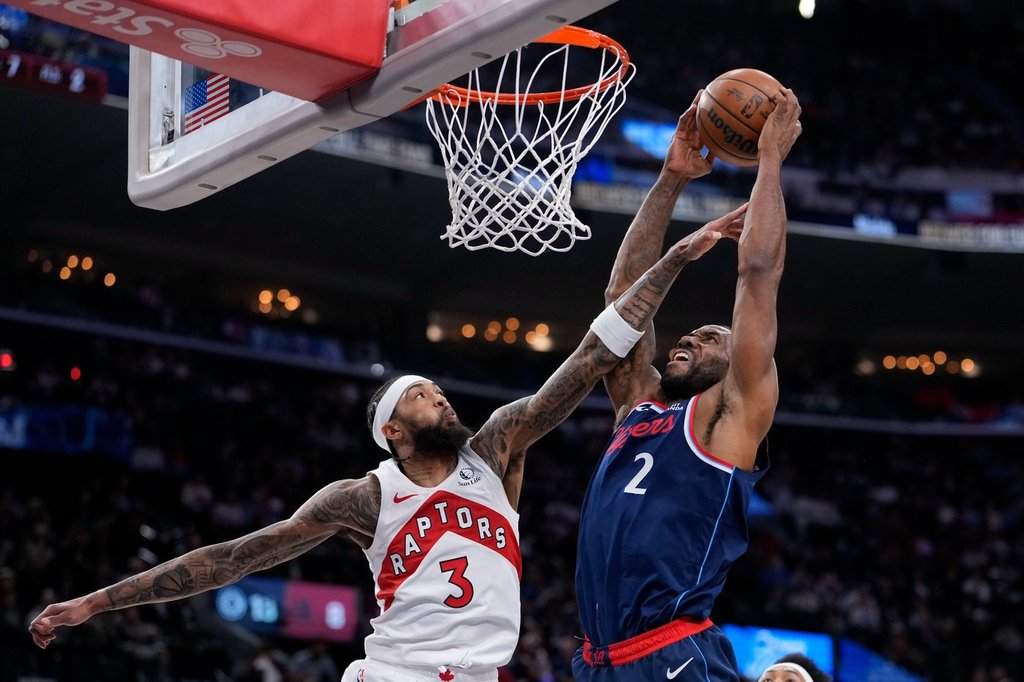
When the league office dropped a thirty-million-dollar penalty on the Los Angeles Clippers alongside a series of severe executive suspensions, the sports world gasped. Headlines buzzed with standard jargon. Terms like "investigation," "probe," and "protocol" filled the airwaves. Yet, beneath the sterile legal phrasing lies a much older, much messier human story. It is a story about how far people will bend the rules when the prize is absolute supremacy, and what happens when the floor finally gives way beneath their feet.
Consider what it feels like to sit in a front office when a transcendent talent is on the market.
Imagine a general manager sitting alone in a darkened arena at two in the morning. The phone glows in his hand. On the other end is an agent, or perhaps a confidant, whispering numbers that defy gravity. Everyone wants to win. The fans demand it. The ownership group, having poured billions into concrete, steel, and branding, expects a return on investment that only a championship banner can guarantee. In that moment of intense, white-hot pressure, the rulebook starts to look less like a sacred text and more like a set of speed bumps designed to slow down the ambitious.
The trouble with shortcuts is that they leave footprints.
In the high-stakes ecosystem of professional basketball, the line between aggressive recruiting and outright circumvention is fiercely guarded. The league operates on a delicate social contract. Every franchise agrees to play by the same financial constraints—the salary cap, the luxury tax, the meticulously structured agreements meant to ensure that a team in a smaller market theoretically has a puncher's chance against the glamour giants of the coast. When those boundaries are tested, or outright ignored, the damage goes deeper than a ledger sheet. It erodes trust.
Trust is the invisible currency of any league. Without it, you just have a collection of wealthy men shouting at each other across a boardroom table.
The investigation into the circumstances surrounding Kawhi Leonard's arrival in Los Angeles revealed a labyrinth of side deals, unofficial promises, and extraordinary demands. To understand why this matters, you have to look past the star player himself. Kawhi Leonard is an enigma wrapped in a warm-up jersey, a quiet assassin who speaks softly and destroys defenses with methodical precision. He is not a carnival barker. He doesn't crave the spotlight; he simply wants to win, and he wants the machinery around him to facilitate that victory at all costs.
And that is precisely where the system broke down.
When a franchise bends over backward to accommodate every unwritten desire of a superstar, they create an alternate reality. They build a bubble where standard compliance feels like an insult to their ambition. They begin to believe that their brilliance justifies the circumvention. We are different, the internal monologue goes. We are building something historic. The rules were written for ordinary teams.
Then the auditors arrive.
There is a distinct chill that fills a corporate office when subpoenas are served and emails are subpoenaed. The casual laughter in the hallways ceases. The internal Slack channels go quiet. Executives who once swaggered through summer league games with espresso in hand suddenly find themselves consulting teams of high-priced defense attorneys.
The thirty-million-dollar fine levied against the Clippers is not merely a financial deterrent. It is a neon sign flashing a warning to every other front office in the league. It says that the ledger must balance, that the rules apply even when the prize is a generational talent, and that the league office will aggressively protect the integrity of its competitive balance.
Yet, as fans, we are left to wrestle with a strange cognitive dissonance.
We love the ruthless pursuit of greatness. We demand that our favorite teams leave no stone unturned, that they pull every lever, that they do whatever it takes to hoist that trophy in June. When our front office plays it strictly by the book and loses in the first round, we call them timid. When they aggressively push the envelope, we cheer the audacity—until the hammer falls. Then, suddenly, we act surprised that the game is played in the shadows as much as it is on the hardwood.
The human element of this scandal isn't found in the fine print of the collective bargaining agreement. It is found in the exhaustion of the people caught in the crossfire. Executives whose careers took decades to build, tarnished in a single afternoon. Owners whose massive investments are suddenly overshadowed by an asterisk of scandal. Players who simply wanted to play basketball now forced to answer questions about wire transfers and advisory boards they never asked to understand.
Basketball has always been a game of spacing. You cut to the basket, you create an angle, you find the open man. But off the court, the geometry of success is far more treacherous. Step an inch outside the designated lines, and the penalty is catastrophic.
The arena lights are still bright. The parquet is still polished to a mirror shine. But out in the hallway, away from the roaring crowds and the flashing cameras, the shadows are a little bit longer today. The price has been paid, the ledger adjusted, and the game moves forward, carrying its secrets into the next tip-off.