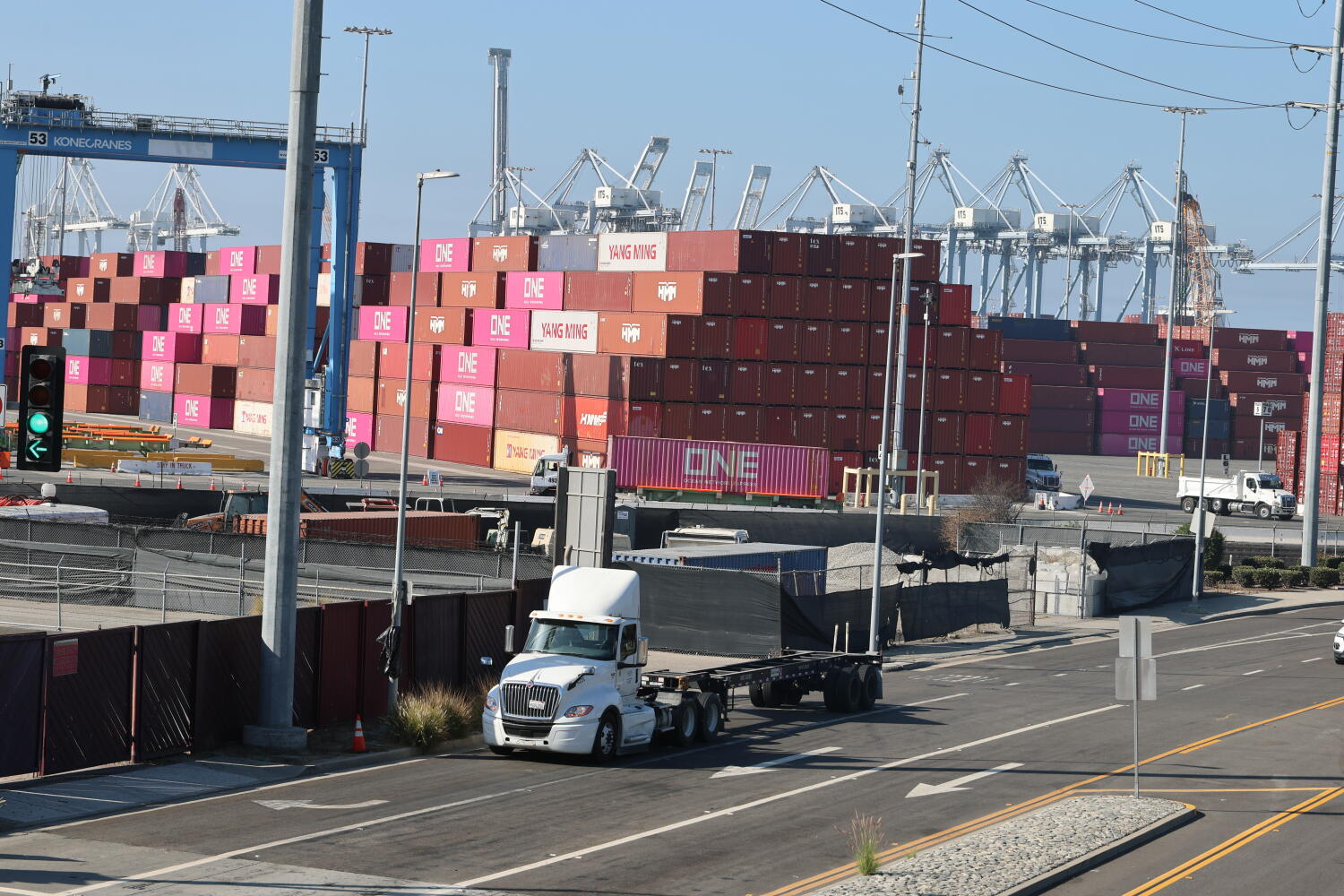
Before the sun clears the jagged spine of the Tehachapi Mountains, the asphalt on Interstate 5 is already beginning to radiate heat. Mateo knows this road by the rhythmic thrum of his tires and the amber glow of a diesel gauge that has spent the last year marching downward into territories he never thought he would see. He drives a twelve-year-old Peterbilt, a machine that smells of stale black coffee, worn vinyl, and the faint, unmistakable sulfur of burning fuel. He is hauling three thousand crates of early-season bell peppers out of the Central Valley, heading north toward distribution hubs that will feed tables from Sacramento to Seattle.
Every time he shifts gears, he calculates the burn.
Diesel is not just a commodity for Mateo. It is oxygen. When the price of a gallon climbs past the thresholds that bureaucrats in state capitals model on spreadsheets, it tightens like a tourniquet around his chest. California sits at a peculiar, painful intersection of geography and policy, bearing the heaviest fuel costs in the nation. This is not an abstract market fluctuation happening in some distant financial district. It is a toll collected at pump islands across the state, paid by men and women whose knuckles turn white on steering wheels as they watch their profit margins evaporate into thin air.
The numbers themselves are staggering, yet they fail to capture the grit under the fingernails. Across the United States, diesel prices have etched new milestones into the economic ledger, but California remains the anomaly. Here, environmental mandates, specialized fuel blends designed to clear smog from metropolitan air basins, and high state excise taxes combine to create a pricing ecosystem entirely of its own. When diesel spikes, the shockwave does not stay on the highway. It bleeds into the soil.
Consider the farmer standing in a dusty field near Fresno, watching an irrigation pump draw water from a dwindling aquifer. That pump runs on electricity, yes, but the tractor turning the earth, the combine harvesting the yield, and the refrigeration units keeping the harvest cool on its journey to market all run on diesel. To call it fuel is to misunderstand its function. Diesel is the invisible blood pumping through the veins of American agriculture.
When that blood grows too expensive to circulate, choices become brutal.
Farmers do not simply absorb these costs. They cannot. Margins in agriculture are razor-thin, dictated by weather, global commodity markets, and massive grocery conglomerates that squeeze suppliers for every fraction of a cent. As fuel prices hit record highs, the math breaks down. A grower planting almonds or lettuce faces a bitter calculus: pay exorbitant freight rates to move perishable goods to distant cities, or watch the crop rot in the furrow because the transport costs exceed the wholesale return.
(Note: While Mateo and the Fresno grower are composite characters built from industry realities, the economic squeeze they represent is drawn directly from recent energy tracking data and agricultural reports across California.)
This is the hidden cost of the milestone. When economists talk about supply chain friction, they use sterile language to describe a very human panic. They speak of logistical headwinds and inflationary pressures. But on the ground, it looks like a fourth-generation farmer putting his land up for sale because he cannot afford to fuel his equipment for another planting season. It looks like a trucking fleet owner in Bakersfield liquidating half his trucks because servicing the loans on rigs that cost more to fill than they earn is financial suicide.
The irony is sharp enough to draw blood. The very policies designed to transition the economy toward a cleaner, greener horizon often accelerate the pain for the people least equipped to bear the immediate transition costs. California is aggressively pushing toward zero-emission freight, mandating electric and hydrogen medium- and heavy-duty trucks. The goal is noble, breathable air for children playing in the shadow of major logistics corridors. But the transition does not happen overnight. The charging infrastructure for heavy commercial electric trucks is still in its infancy, sparse and unreliable along rural stretches of highway.
Until that future arrives, the present demands diesel. And because the present demands diesel, every regulatory hurdle, every incremental tax, and every supply bottleneck lands with crushing weight on the diesel-dependent economy right now.
Drive down Highway 99 at midnight and watch the truck stops. They are quieter than they used to be. The idling engines are fewer, shut off to save precious fractions of fuel while drivers sleep in cramped cabs, waiting for freight rates to adjust or for the market to grant them some merciful reprieve. You can see the exhaustion in the posture of drivers leaning against vending machines, comparing notes on fuel apps, trading stories about stations charging five or six dollars a gallon just off the interstate.
They are living through a slow-motion squeeze. The consumer feels it downstream, of course. Every box of cereal, every carton of milk, and every fresh vegetable displayed under the fluorescent lights of a supermarket carries the invisible weight of that high-priced diesel mile. Freight costs are baked into the price of survival. When it costs more to move a good, the good becomes a luxury.
Yet, the system persists through sheer stubbornness. Mateo checks his mirrors, shifts into a higher gear as the grade flattens out, and watches the desert give way to orchards of dark green leaves dusted with valley silt. He has a mortgage to pay, a daughter in college, and twenty years invested in the hum of a diesel engine. He does not care about the geopolitical factors driving crude oil futures or the intricacies of state blending laws. He cares about the next truck stop, the next load, and whether the math at the end of the week will leave him enough to keep turning the key.
The highway stretches ahead, a ribbon of gray disappearing into a hazy horizon where the San Joaquin Valley meets the sky, carrying the weight of a state on a tank of expensive fuel.