The air at five hundred meters below the surface does not feel like the air outside. It is heavy. It smells of damp stone, old timbers, and the faint, sweet tang of hydraulic fluid. Down here, the absolute darkness of the earth is fought back only by the narrow beams of headlamps, cutting through a perpetual fog of coal dust.
To understand what happened at the Chenjiashan coal mine, you have to understand the silence.
Mining is an inherently deafening profession. The roar of the shearer tearing into the black seam, the rattle of the conveyor belts, the shouting of men over the din of machinery—it is a wall of sound. But miners will tell you that they listen past the noise. They listen for the mountain talking. They listen for the creak of wooden props bowing under thousands of tons of shifting rock.
Then comes a different kind of sound. A sudden, violent rushing of air, like a train tearing through a tunnel where no tracks exist.
On that November morning, the mountain did more than talk. It screamed.
A methane gas explosion rip-sawed through the shafts of the state-owned mine in Tongchuan, located in China’s Shaanxi province. The initial shockwave was catastrophic. In an instant, eighty-two lives ceased to exist. Dozens more were instantly cut off from the surface, trapped in a labyrinth of collapsing tunnels, suffocating air, and rising heat.
We look at energy as a abstract concept. We flip a switch, the lights blink on, and the room warms up. We track global markets on clean digital screens. But every kilowatt-hour has a lineage. Sometimes, that lineage is written in the dark, under the weight of a mountain that decided to settle.
The Chemistry of a Ghost
Methane is an invisible roommate in the coal beds. Formed over millions of years alongside the carbon, it sits trapped under immense pressure. When humans blast and drill into the earth to extract the coal, the pressure drops. The gas escapes.
It is a patient killer. At concentrations below five percent, it is largely harmless. Above fifteen percent, it lacks the oxygen to ignite. But in that narrow, terrifying sweet spot between five and fifteen percent, the air becomes highly explosive. All it takes is a single spark. A frayed wire on an old piece of machinery. A friction spark from a steel tool hitting pyrite. Even a static discharge from synthetic clothing.
Consider a hypothetical miner named Feng. He is thirty-four, has two children waiting in a concrete brick home a few miles from the pit head, and his hands are permanently stained with the grey-black grease of the machinery he services. Feng knows the risks. Every man in Tongchuan knows someone who didn't come up at the end of a shift. But the winter is coming, the northern provinces are freezing, and the factories in the south are hungry for power. The country needs coal. Feng needs the bonus pay.
When the pocket of methane breached the working face at Chenjiashan, Feng wouldn't have smelled it. Methane is odorless. If the electronic sensors were working, they might have flashed a warning. If the ventilation fans were running at full capacity, the dangerous gas might have been diluted and swept up to the surface.
Instead, the spark found the gas.
The explosion of a methane pocket in a confined tunnel is not like an explosion in the open air. It is a thermobaric nightmare. The blast wave travels at supersonic speeds, compressing the air ahead of it, followed immediately by a wall of flame that consumes every molecule of oxygen in its path. If the blast doesn't kill you, the vacuum that follows will. The air is instantly replaced by "afterdamp"—a lethal cocktail of carbon monoxide, carbon dioxide, and nitrogen.
Eighty-two men died in that initial flash. For the dozens trapped behind the resulting cave-ins, the clock began ticking with agonizing speed.
The Weight of the Infrastructure
The tragedy at Chenjiashan was not an isolated stroke of bad luck. It was the predictable friction point between a nation’s runaway industrial appetite and the physical limits of human endurance.
During this era of rapid expansion, China relied on coal for roughly seventy percent of its energy needs. The country was moving faster than any society in human history, building cities, laying high-speed rail, and manufacturing goods for the entire globe. That engine ran on carbon. The pressure on mine managers to meet production quotas was immense. When quotas collide with safety protocols, history shows us which one usually gives way.
A mine is a living system. It requires constant maintenance to stay safe. Fresh air must be pumped down continuously through massive ventilation shafts to keep methane levels low. Water must be pumped out to prevent flooding. Dust must be sprayed with water or stone powder to prevent it from catching fire, because while a gas explosion is terrible, a coal dust explosion is far worse. The gas acts as the detonator; the airborne coal dust acts as the fuel, carrying the firestorm through miles of tunnels.
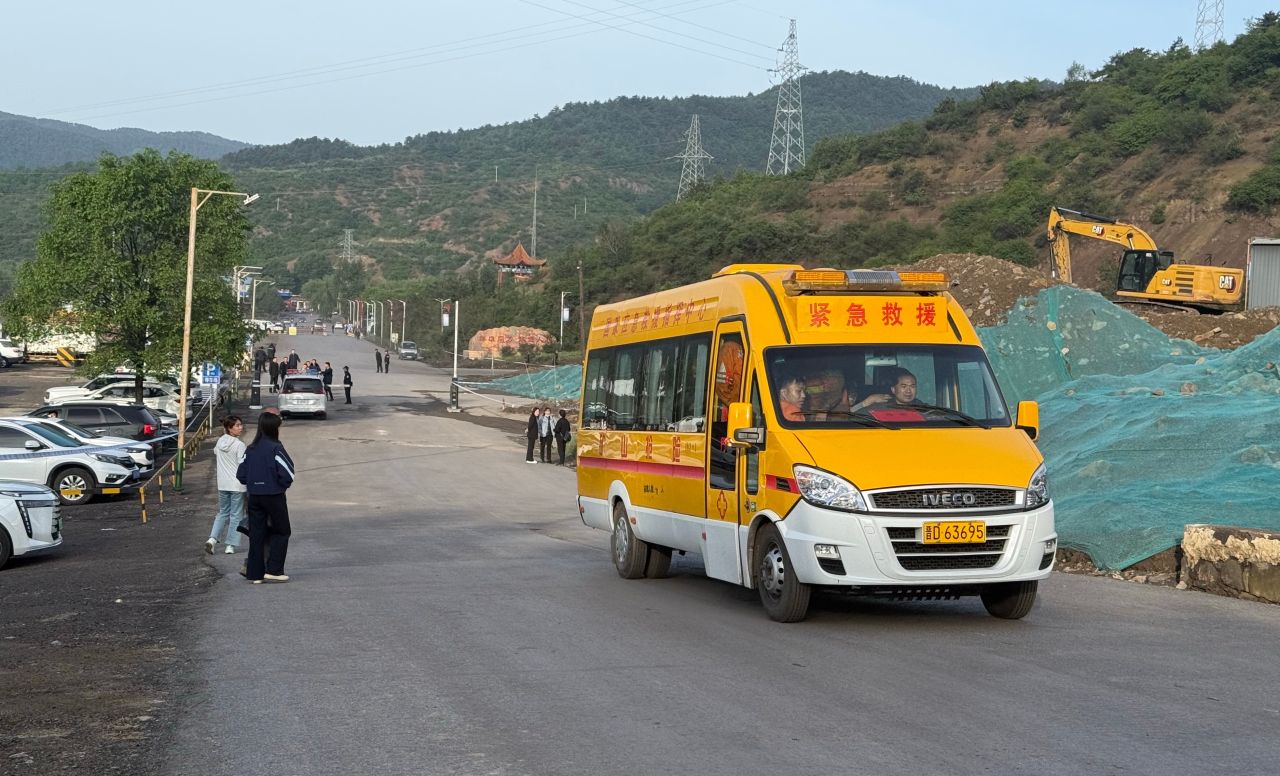
When news of the blast reached the surface, the transformation of the mine mouth was immediate and horrific.
The quiet, orderly rhythm of the shift change was replaced by the chaotic arrival of emergency vehicles. Families gathered at the gates, wrapping their heavy winter coats tightly against the Shaanxi wind. They stood in the grey dust, waiting for names to be read aloud over crackling megaphones.
In these moments, the statistics we read in news briefs dissolve into the stark reality of human grief. Eighty-two is a number on a page. It is a statistic used by policymakers to measure regulatory compliance. But at the pit head, eighty-two is eighty-two empty chairs at dinner tables. It is eighty-two pairs of boots sitting on porches, never to be worn again. It is a generation of grandfathers, fathers, and sons vanished from a single community.
The Anatomy of the Rescue
To go down into a compromised mine after an explosion requires a specific, quiet kind of courage. The rescue teams who arrived at Chenjiashan knew exactly what they were walking into.
The structural integrity of the tunnels was gone. The blast would have shattered the heavy timber and steel supports, leaving millions of tons of loose rock hanging by a thread. The air inside was unknown. Rescue workers had to carry heavy oxygen rebreathers, navigating through visibility that was often reduced to zero by suspended dust and smoke.
They faced a double enemy: time and fire. Underground fires can burn for weeks, fueled by the very coal the miners were trying to extract. These fires eat the remaining oxygen and pump out carbon monoxide, creating an invisible wall that rescue teams cannot cross.
Every step forward required testing the air, reinforcing the ceiling, and listening. They listened for the sound of steel rhythmic tapping on pipes—the universal distress signal of the trapped miner. A single tap means I am here. Two taps mean we are alive.
Up on the surface, the state media apparatus began its familiar, somber reporting. Bulletins were issued. Officials arrived to oversee the operation, promising thorough investigations and severe punishment for any violations of safety laws.
But the truth of mining safety is rarely found in the text of the laws; it is found in the enforcement. When the price of coal skyrockets, the temptation to bypass safety checks grows exponentially. A sensor that automatically shuts down equipment when methane rises can be taped over. A ventilation fan that uses too much electricity can be dialed back during peak hours. A known gas leak can be ignored for just one more shift to finish a rich seam.
This is the hidden tax of our modern existence. We have built a world where the consumers of energy are utterly insulated from the producers of it. The person charging their phone in a gleaming high-rise in Shanghai or Beijing does not see the black grit under Feng’s fingernails, nor do they feel the concussive thump of the earth giving way five hundred miles away.
The Long Shadow Below
As the days wore on in Tongchuan, the hope that characterized the early hours of the rescue effort began to sour into grim resignation. The environment inside the Chenjiashan mine was simply too hostile, the destruction too absolute.
The tragedy eventually faded from the front pages, replaced by the next cycle of economic data, international policy shifts, and domestic developments. The mine would eventually be cleared, the bodies recovered, the compensation paid out to grieving widows, and the shafts repaired. The hunger for coal did not stop because eighty-two men died. The furnaces required feeding.
We are told that progress requires sacrifice. We write off industrial accidents as the inevitable cost of modernization, a necessary toll paid on the road to a developed economy. But this perspective is only comfortable for those who do not have to pay the toll themselves.
The true legacy of the Chenjiashan disaster is found in the quiet streets of the mining towns that ring Tongchuan. It is found in the eyes of the children who grew up knowing the mountain only as the thing that took their fathers.
Years after the mine is sealed and the equipment is auctioned off for scrap, the earth remains. The coal that took millions of years to form still sits in the deep dark, silent and heavy. And if you stand near the old ventilation shafts when the winter wind blows across Shaanxi, you can hear it—a low, hollow whistle, like the breath of a giant sleeping under the stone, waiting for the next spark.