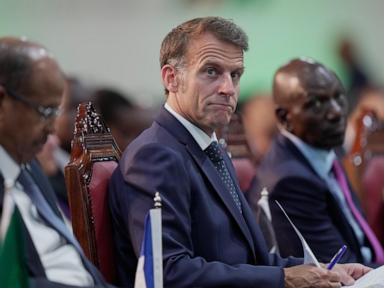
The gilded halls of the Élysée Palace recently played host to a familiar spectacle of high-finance diplomacy. President Emmanuel Macron, flanked by a cohort of development bankers and industrial titans, pledged a staggering multibillion-euro investment package aimed at reshaping the African economic map. On paper, the figures are impressive. The rhetoric is even bolder. Macron promised a "partnership of equals" and a departure from the paternalistic shadows of the past. But beneath the flashbulbs and the polished press releases lies a much grittier reality of shifting geopolitical loyalties, high-interest debt, and a desperate scramble to maintain European relevance in a continent increasingly looking toward Beijing, Moscow, and Riyadh.
This is not just about development. It is about survival. France is watching its traditional sphere of influence in West and Central Africa erode at a pace that has blindsided the Quai d'Orsay. The sudden withdrawal of French troops from Mali, Niger, and Burkina Faso created a vacuum that is being filled by security contracts with Russia and infrastructure deals with China. To counter this, Paris is pivoting from the bayonet to the balance sheet. By injecting billions into digital infrastructure, green energy, and healthcare, France hopes to prove that it remains an indispensable partner. However, the African leaders sitting across the table are no longer satisfied with symbolic gestures. They want concrete returns, technology transfers, and, most importantly, an end to the "risk premium" that makes borrowing in Africa several times more expensive than in Europe. Learn more on a similar topic: this related article.
The Mechanics of the New Deal
The announced billions are not a simple gift from the French taxpayer to African treasuries. That is a common misconception that clouds the actual economic impact of these summits. The bulk of this funding consists of concessional loans, credit guarantees, and private equity mobilizations channeled through the Agence Française de Développement (AFD) and Proparco.
In practice, this means French money is often tied to French expertise. If a French bank provides the financing for a new solar farm in Senegal, there is a high probability that a French engineering firm will be the lead contractor. This creates a circular economy where the capital technically leaves Paris but eventually flows back through service contracts and equipment sales. It is a sophisticated form of soft power that keeps the French industrial machine humming while providing African nations with essential infrastructure. Additional analysis by The Motley Fool explores comparable perspectives on this issue.
Breaking the Credit Ceiling
The most significant hurdle for African growth is not a lack of projects, but the prohibitive cost of capital. African nations often face interest rates in the double digits, driven by credit rating agencies that view the continent through a lens of perpetual instability. Macron’s latest initiative attempts to address this by using French sovereign backing to lower these rates.
By acting as a guarantor, the French state essentially tells global investors that Paris will shoulder a portion of the risk. This can bring a loan down from a crushing 12% interest rate to a more manageable 4% or 5%. For a country like Côte d'Ivoire or Kenya, that difference translates into hundreds of millions of euros saved over the life of a project. These savings can be the difference between a project that builds schools and one that merely services its own debt.
The Shadow of the CFA Franc
You cannot discuss French investment in Africa without addressing the elephant in the room. The CFA franc remains a lightning rod for criticism and a symbol of what many activists call "monetary colonialism." While the currency provides a degree of stability and keeps inflation low compared to neighbors like Nigeria or Ghana, it also limits the ability of member states to set their own monetary policy.
The recent promises of billions in investment are often viewed with skepticism because of this underlying financial architecture. Critics argue that as long as the currency is pegged to the euro and a portion of reserves is held in Paris, African economies remain tethered to the European Central Bank’s priorities. Macron has signaled a willingness to reform the system, but the pace is glacial. For many young Africans, the investment summits look like a distraction from the fundamental need for monetary sovereignty.
Why Energy is the New Battleground
A massive portion of the new investment package is earmarked for the "Green Transition." This is where the strategic interests of Paris and the needs of African capitals converge most clearly. Europe is desperate to diversify its energy sources away from Russian gas, and Africa sits on a goldmine of renewable potential and natural gas reserves.
- Hydrogen Production: Northern Africa is becoming a primary target for green hydrogen projects that could eventually pipe clean fuel directly into the European grid.
- Mineral Extraction: The batteries powering Europe’s electric vehicle revolution require cobalt, lithium, and copper—minerals that Africa possesses in abundance.
- Grid Modernization: Massive investments are required to stabilize aging power grids that currently stifle industrial growth in hubs like Lagos or Nairobi.
By funding these sectors, France isn't just being altruistic. It is securing the supply chains of the future. If French companies like TotalEnergies or Engie can lead the transition in Africa, they ensure their own dominance for the next fifty years. The risk is that these "green" investments often mirror the old extractive models, where raw materials leave the continent and high-value finished products are sold back to it.
The Competition for the African Mindset
The era of the "uncontested" French presence is over. In the corridors of power in Luanda, Addis Ababa, and Kinshasa, French diplomats are now competing with aggressive Chinese "Belt and Road" initiatives and Turkish "Drone Diplomacy."
The Chinese Model vs The French Model
China’s approach has long been "no strings attached"—or at least, no political strings. They build roads and bridges in exchange for resource concessions, rarely lecturing leaders on human rights or democratic norms. France, conversely, often ties its investments to "governance" and "rule of law" standards.
While the French approach is arguably more sustainable in the long run, it is often slower and more bureaucratic. A bridge funded by the AFD might take five years of environmental impact studies and transparency audits. A bridge funded by the Exim Bank of China can often be finished in eighteen months. Macron is trying to find a middle ground—maintaining high standards while stripping away the red tape that has made France a frustrating partner for African entrepreneurs.
The Rise of the New Sovereigntists
A new generation of African leaders and intellectuals is rejecting the binary choice between East and West. They are practicing "multi-alignment." They will take French money for a hospital, Chinese money for a railway, and American tech for their telecommunications. This shift has forced a certain humility onto the French diplomatic corps. The "billions" being touted are no longer a way to buy loyalty; they are merely the entry fee to stay at the table.
Small Businesses and the Missing Middle
One of the most credible parts of the new French strategy is the focus on Choose Africa, an initiative aimed at Small and Medium Enterprises (SMEs). For decades, international investment focused only on massive infrastructure or mining projects. This ignored the "missing middle"—the local bakeries, tech startups, and transport firms that actually drive employment.
The failure of previous decades was the "trickle-down" delusion. It was assumed that if you built a billion-euro port, the surrounding city would naturally prosper. It didn't. The profits were often externalized. By shifting focus to micro-loans and venture capital for African founders, France is attempting to build a grassroots base of support. If a young entrepreneur in Cotonou grows their business because of a French-backed credit line, they are far less likely to join the chorus of anti-French sentiment.
The High Stakes of Failure
If these investments fail to produce tangible improvements in the daily lives of citizens, the consequences will be felt far beyond Africa’s borders. Economic stagnation is the primary driver of migration and regional instability. France knows this. The billions being promised are, in many ways, an insurance policy against future crises.
However, money alone is insufficient. If the capital is swallowed by corruption or if the projects are designed in Paris offices without local input, they will become "white elephants"—expensive monuments to failed intentions. The real test of this partnership is not the amount of money announced at a summit, but the number of jobs created on the ground in the months that follow.
The rhetoric of "equal partnership" is easy to deploy in a ballroom in France. It is much harder to implement when the structural imbalances of global trade remain skewed in favor of the Global North. African nations are demanding more than just credit; they are demanding a seat at the table where the rules of the global economy are written. They want a permanent seat on the UN Security Council and a greater voice in the IMF. Until France and its peers address these structural inequities, the billions will be seen as a temporary bandage on a deep and historical wound.
The shift is palpable. African states are leveraging their demographics and their resources with a newfound confidence. They are no longer the junior partners in these negotiations. France is finally realizing that in the new global order, it needs Africa more than Africa needs France. The investment is not a favor; it is a necessary down payment on a future where Europe is no longer the center of the world.