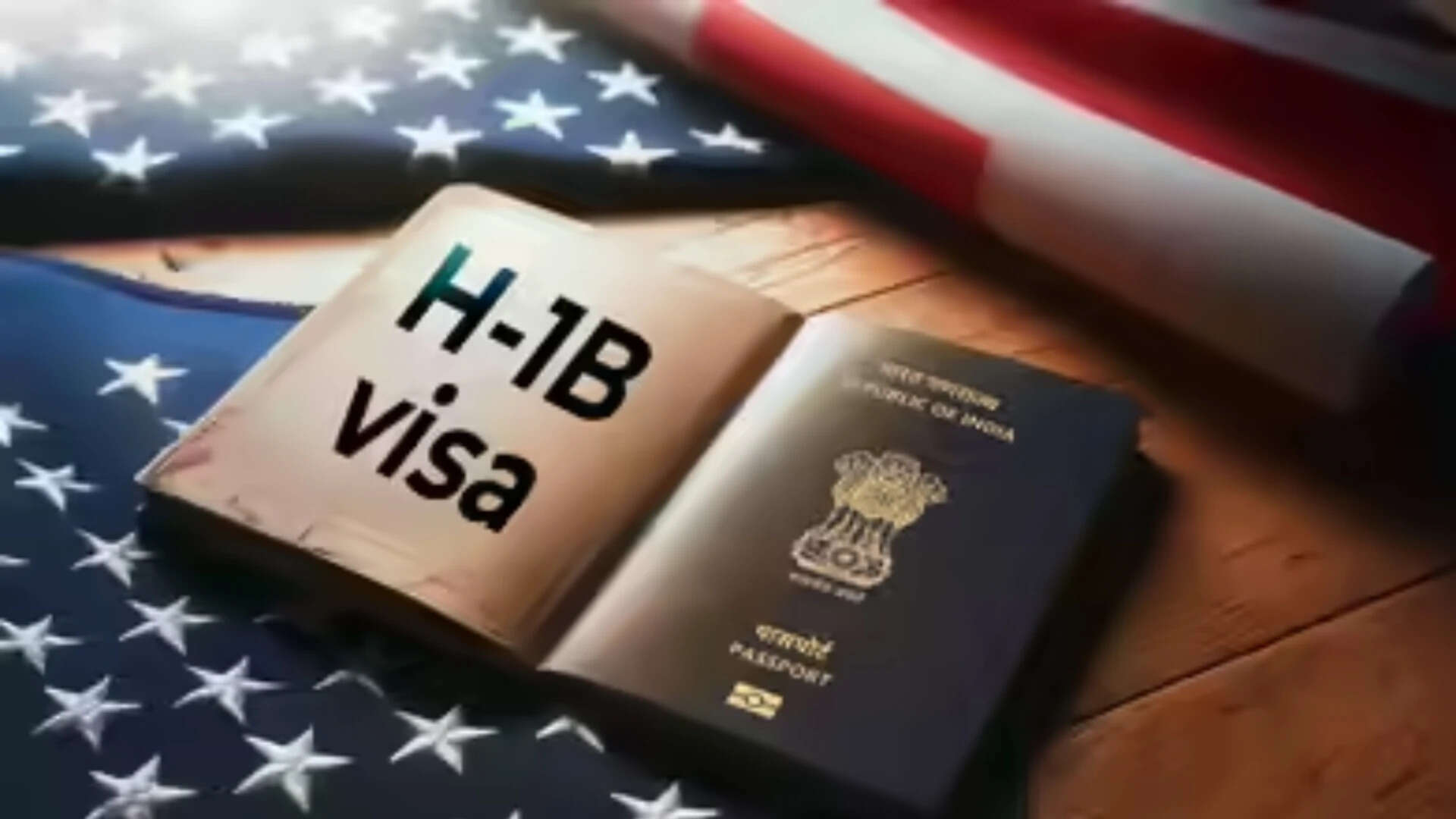
The fluorescent lights of a midnight office in Hyderabad or Bangalore don't just illuminate a desk. They illuminate a specific kind of hope. For thousands of engineers, data scientists, and developers, that hope has a very technical name: the H-1B visa. But lately, the math behind that dream is changing. The US government is sharpening its pencil, and the new numbers they are scribbling down could rewrite the lives of families half a world away.
At the heart of the latest policy shift is a move toward higher wage requirements for foreign workers. On paper, it looks like a dry regulatory adjustment. In reality, it is a tectonic shift in who gets to call America home. In similar news, take a look at: The Brutal Reality of Susan Collins and the Fed Inflation Trap.
The Invisible Weight of a Number
Consider a hypothetical developer named Arjun. He has spent four years mastering cloud architecture. He has a job offer from a mid-sized tech firm in Ohio. He isn't a "cheap labor" statistic; he is a specialist whose skills fill a gap that the local market hasn't caught up to yet. Under the old rules, his salary offer was competitive. Under the proposed higher wage mandates, that same salary might suddenly be deemed insufficient.
The firm now faces a choice: pay Arjun significantly more than the local median—potentially more than his American managers—or rescind the offer. Investopedia has analyzed this fascinating subject in extensive detail.
This isn't just about corporate overhead. It's about the friction between protectionist policy and the global hunt for talent. The logic from Washington is straightforward: by forcing companies to pay H-1B holders more, you theoretically protect American wages from being undercut. If a foreign worker costs more than a local one, the company will hire the local one.
But the economy is rarely that linear.
The tech industry doesn't function like a factory line where one body is perfectly interchangeable with another. It’s a mosaic. When you pull one tile out because the "price" of that tile was artificially inflated by a regulation, the whole picture can blur.
The Expert Divide
Economists and immigration experts are currently locked in a heated debate over these "prevailing wage" hikes. One camp argues that the H-1B program has been used for too long as a loophole for outsourcing giants to flood the market with entry-level talent, dragging down the standard of living for every tech worker in the country. To them, a higher wage floor is a long-overdue correction. It ensures that the H-1B is reserved for the "best and brightest," just as it was originally intended.
The other camp looks at the empty desks in Silicon Valley and the burgeoning tech hubs in Austin and Raleigh. They see a different story. They argue that the US is already facing a massive deficit in STEM talent. By raising the entry price so high, the government isn't just protecting American jobs; it is encouraging companies to move those jobs to Canada, Ireland, or India.
If you can’t bring the talent to the work, you take the work to the talent.
The Human Toll of Uncertainty
Statistically, the H-1B program is a lottery. Literally. Every year, tens of thousands of applicants throw their names into a digital hat, praying for a selection. Now, they aren't just fighting the odds of the draw; they are fighting an escalating price tag.
For the worker, this creates a state of permanent liminality. You build a life in a country. You buy a car. You send your kids to a local school. Then, a memo drops from a government office three thousand miles away, and suddenly, your "value" is recalibrated. If your employer can't meet the new threshold during your visa renewal, the life you built evaporates in sixty days.
There is a psychological cost to being treated like a variable in an equation. It breeds a culture of quiet desperation. Workers become hesitant to switch jobs or speak up about workplace conditions because their legal status is tied to a specific wage tier that feels increasingly precarious.
The Ripple Effect
The impact doesn't stop at the individual. Think about the small-town hospital in rural America that relies on foreign-born specialists, or the startup trying to build the next generation of renewable energy tech. These organizations don't have the infinite cash reserves of a Google or an Apple.
When the "floor" for wages rises, the smaller players are the first to fall through the cracks. We risk creating a two-tier innovation system: one where only the wealthiest corporations can afford to hire global talent, while the rest of the American economy is left to starve for specialized skills.
We often talk about immigration in terms of borders and walls, but the most effective walls are often made of paperwork and payroll requirements. These "invisible walls" are much harder to protest because they look like sensible economic policy. They are wrapped in the language of "fairness" and "market rates."
A Fragile Balance
The reality is that the US immigration system is a relic of the twentieth century trying to govern a twenty-first-century economy. The H-1B visa was never supposed to be the primary gateway for the world's talent, yet it has become exactly that because there are so few other viable paths.
When we tweak the wage rules, we are tinkering with the engine of American exceptionalism. For decades, the US has been the world’s greatest "brain drain" beneficiary. We took the most ambitious people from every corner of the globe and gave them a platform to build.
If we make the price of entry too high, we don't just save a few local jobs. We change the very identity of the country. We transition from being a destination for those who want to build the future to a gated community that is more concerned with protecting what it already has.
The coffee goes cold on the desk in Hyderabad. The engineer refreshes the news page again. He looks at his daughter sleeping in the next room and wonders if the English alphabet she is learning will ever be used on the streets of Cincinnati or Seattle. The numbers on the screen tell him he is worth more than ever before, but for the first time, that feels like a threat rather than a promise.
The American Dream has always been a gamble, but we are reaching a point where the house is changing the rules in the middle of the hand.