The paper was submitted in secret. It arrived at the Securities and Exchange Commission without the usual fanfare of a Silicon Valley milestone. It was a confidential S-1 registration statement, a document that serves as the official prologue to an initial public offering.
For years, the architects of this machinery operated under a different creed. They were researchers in a non-profit sanctuary, insulated from the quarterly tyranny of Wall Street. They spoke of safety, alignment, and the preservation of humanity.
But sanctuary requires capital. A lot of it.
The submission of that paperwork signals the end of the romantic era of artificial intelligence. It is a surrender to the mathematics of the modern world. Building models that can reason like a human requires billions of dollars in silicon, electricity, and engineering talent. By stepping onto the public markets, OpenAI is no longer just a research lab chasing a grand techno-utopian dream. It is a corporation trying to balance the ledger.
The Weight of the Invisible Ledger
Consider the reality of an engineer sitting in a glass-walled office in San Francisco. Let us call her Sarah. Hypothetically, Sarah joined OpenAI three years ago, motivated by a belief that she was helping build a safe future for machine intelligence. She watched as ChatGPT transformed from an internal experiment into a global infrastructure. She also watched the energy bills arrive.
To train the next generation of neural networks, Sarah’s team requires computing clusters that consume as much electricity as small European cities. The data centers require massive capital layout before a single line of code runs.
The numbers are staggering. In March, OpenAI closed a massive funding round, pegging its private valuation at roughly $852 billion. Yet, beneath that mountain of cash lies a complex truth. The burn rate of training these systems is immense. The company has faced headwinds, missing internal revenue and user-growth targets. A valuation close to a trillion dollars requires an endless supply of fuel.
+-------------------------------------------------------------+
|               THE TRILLION-DOLLAR RACE (2026)               |
+------------+--------------------------+---------------------+
| Company    | Indicated Valuation      | Listing Status      |
+------------+--------------------------+---------------------+
| SpaceX     | $1.75 Trillion           | Launching June 12   |
| Anthropic  | $965 Billion             | Confidential S-1    |
| OpenAI     | $852 Billion             | Confidential S-1    |
+------------+--------------------------+---------------------+
The financial pressure does not exist in a vacuum. Just a week prior, Anthropic, OpenAI's fiercest rival, filed its own confidential S-1. Anthropic’s latest private valuation climbed to $965 billion, slipping past OpenAI in the private markets. Meanwhile, Elon Musk’s SpaceX, newly merged with xAI, is preparing a public debut that could value the entity at $1.75 trillion.
The pressure is building. The private markets are tapped out. The public markets are the only reservoir deep enough to sustain this architecture.
The Ghost of the Foundation
The road to the SEC was paved with litigation and existential dread. For months, a high-stakes legal battle loomed over the company's future. Elon Musk had sued, claiming OpenAI breached its original founding covenant to remain a non-profit entity dedicated to the public good.
A nine-member jury recently cleared OpenAI of liability, ruling that the claims fell outside the statute of limitations. The legal victory removed a massive hurdle to an IPO, but the ethical question remains open.
Can a company bound to maximize shareholder value also be trusted to build a technology that could fundamentally alter human labor, politics, and reality?
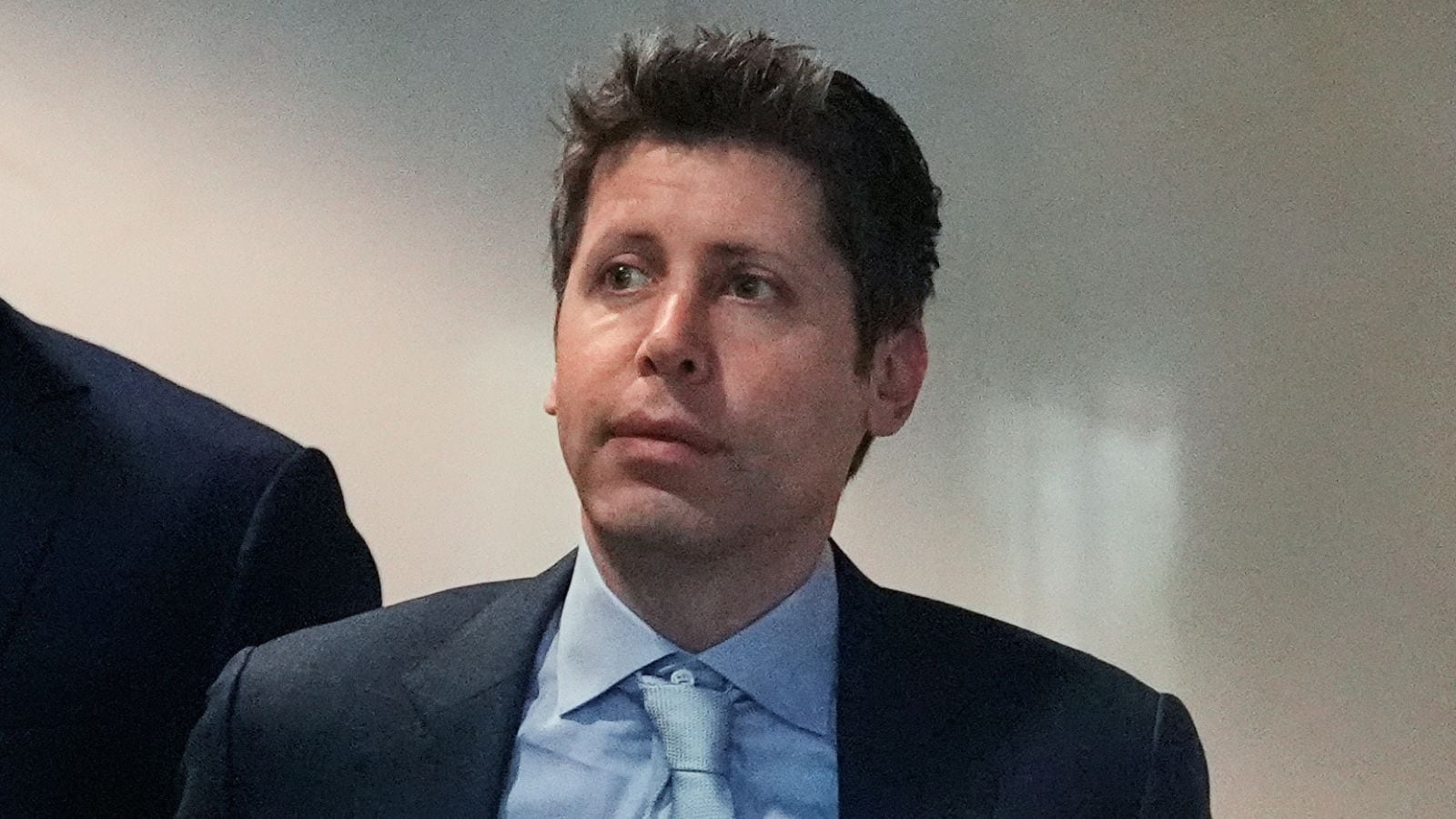
Sam Altman, the chief executive officer, addressed the public markets with a characteristically brief statement on Monday. "We recently submitted a confidential S-1. We expect it to leak so we're just announcing it," the company shared. The announcement was paired with an explicit caveat: there is no fixed timeline. The leadership noted that certain research and deployment goals are easier to achieve as a private company.
But the door is open. The choice has been made.
The transition from a closed lab to a public company brings intense scrutiny. For the first time, OpenAI will be legally required to pull back the curtain. Every dollar spent on computing power, every loss incurred from subsidized API access, and every executive compensation package will be laid bare before investors, short-sellers, and competitors.
The freedom of privacy is slipping away.
The Quiet Room
Behind the financial calculations lies a simpler, human tension. Employees at OpenAI hold equity that is worth millions on paper, yet they are trapped in a liquidity cage. The company plans a tender offer to allow workers to cash out some shares at the $852 billion valuation, providing relief to staff who have spent years working eighty-hour weeks.
But the true pivot lies in the company's long-term structure. Altman recently noted that OpenAI's history can be split into distinct eras. The first was pure research. The second was turning that research into products that hundreds of millions of people use every day.
The third era belongs to Wall Street.
There is an inherent friction between the speed of building an IPO roadshow and the slow, deliberate care required for safety research. The public market does not reward caution; it rewards growth curves, monthly active users, and expanded margins.
To add another layer of complexity, OpenAI is in active discussions with the Trump administration regarding a potential government stake in the firm. The intersection of national security, global markets, and sovereign interests creates an incredibly complex environment for a company preparing to go public.
The paperwork sits in Washington, undergoing a quiet regulatory review. The text is hidden from the public for now, but the path is set. The pioneers who set out to build a digital intellect for the benefit of all humanity must now learn a new language. They must answer to the ticker symbol, the institutional shareholder, and the opening bell.
The ultimate cost of creating artificial general intelligence may not be the technical breakthrough itself. It may be the loss of the quiet independence required to build it safely.