The air smells faintly of burnt rubber, stale popcorn, and the distinct, high-octane electricity of a crowd that has been standing on asphalt for six hours too long.
You know the smell if you have ever stood near a racetrack. It gets into the back of your throat. It lingers on your jacket for days. It is the smell of anticipation compressed into a chemical haze.
Then came the Beast.
Not a racing car. Not an aerodynamic marvel carved from carbon fiber and designed to corner at speeds that defy human instinct. This was a rolling fortress. A six-ton, armor-plated Cadillac limousine, built like a bank vault on a heavy-duty truck chassis, carrying the most heavily guarded man on earth.
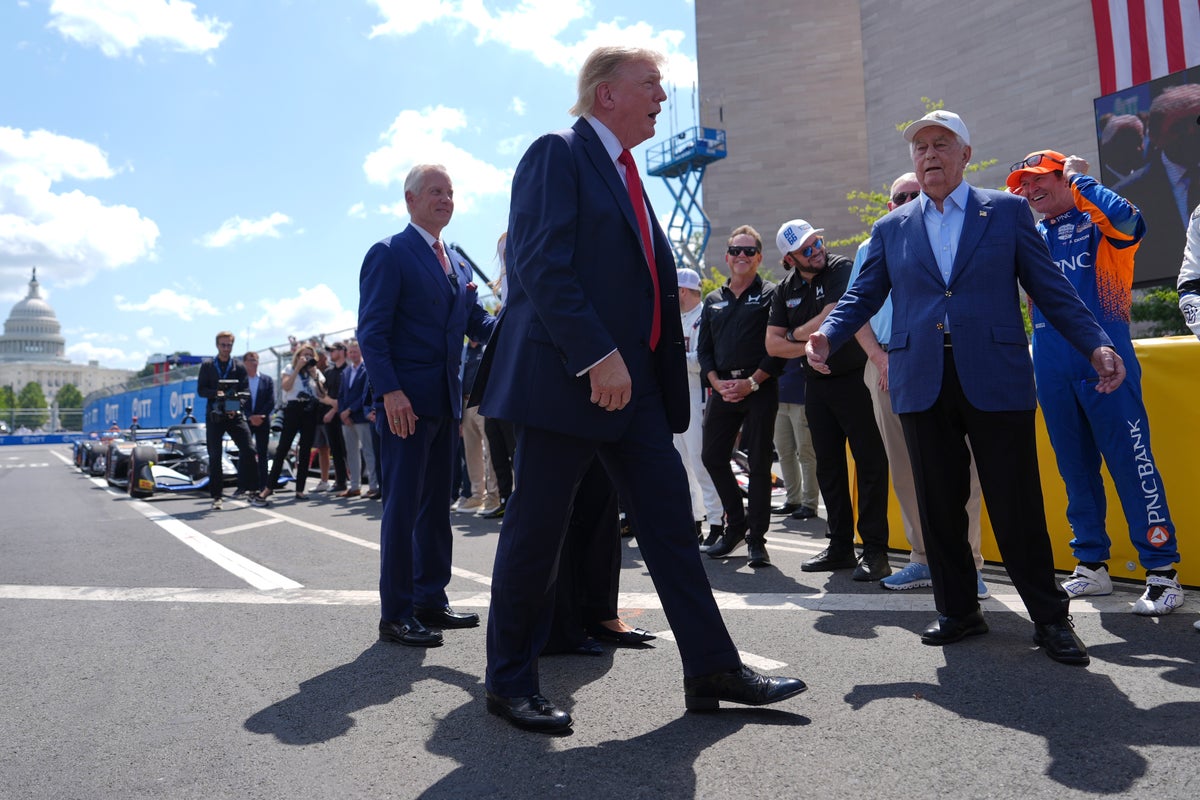
And there it was, rumbling down the asphalt of Washington, D.C., leading a field of sleek IndyCars through the historic streets of the nation's capital.
Motor sports are supposed to be about purity of motion. The poetry of friction. The desperate, beautiful dance between a driver’s reflexes and four contact patches of rubber no larger than a postcard. But on this afternoon, the traditional rhythm of the pre-race ceremonies collided with the heavy machinery of statecraft.
Imagine standing at the barrier. The distant rumble does not sound like a machine; it sounds like rolling thunder coming up from the basement of the earth. The crowd presses forward. Cell phones go up, a forest of glowing rectangles trying to capture a moment that feels entirely out of place, yet utterly magnetic.
Donald Trump, leading the pack in the presidential limousine.
It sounds like a mad-libs prompt written by a cynical satirist. Yet, reality often outpaces satire because reality has no obligation to make sense.
The juxtaposition was jarring. Behind the hulking, bulletproof bulk of the presidential detail sat machines engineered for pure velocity. IndyCars are mechanical ferocity wrapped in bright corporate sponsorships, capable of hitting speeds over two hundred miles per hour on oval tracks and screaming through city circuits with the agility of a striking viper. They are low to the ground, loud enough to rattle your teeth, and fundamentally allergic to caution.
The Beast, by contrast, is caution incarnate. It is designed to withstand improvised explosive devices, chemical attacks, and ballistic threats. It weighs as much as an adult hippopotamus. Watching it lead a pack of featherweight open-wheel racers is like watching an armored personnel carrier lead a school of dolphins through a narrow channel.
Why were they there? Why Washington?
Cities are living museums, but they are also stubborn beasts. Shutting down the avenues of the federal district for a motor race is not a logistical feat; it is an administrative miracle born of sheer willpower and relentless negotiation. Asphalt that usually echoes with the quiet footsteps of tourists reading monument plaques suddenly reverberated with the ear-splitting shriek of thousand-horsepower engines idling in the stifling summer heat.
For the fans packed against the steel barricades, the contradiction did not matter. They did not care about municipal permits or security protocols. They cared about the noise. They cared about the theater.
Sport has always been theater’s louder, sweatier cousin. We do not watch racing because we admire the mechanical efficiency of internal combustion; we watch it because it flirts with disaster. Every corner is a whispered question about physics and mortality. When you add the leader of the free world to the parade lap in a rolling bunker, you supercharge the spectacle with a strange, undeniable gravity.
Consider what it takes to orchestrate such a moment. The Secret Service detail sweating through their tailored suits, calculating sightlines and exit routes while surrounded by fans wearing neon racing caps and holding oversized sodas. The race organizers holding their breath, hoping the heavy Cadillac does not leak fluids on the freshly swept racing line. The drivers sitting in cramped carbon-fiber cockpits, their hearts hammering against fireproof suits, idling behind a car that could stop a rocket-propelled grenade.
It is an absurd tableau. It is also unforgettable.
We live in an era where the boundary between public life and entertainment has not just dissolved; it has been paved over, striped, and turned into a grand prix circuit. Politics is spectacle, and spectacle is politics. You can bemoan the commercialization of civic spaces, or you can watch a six-ton presidential limousine roll past the monuments of Washington with a tail of open-wheel beasts howling in its wake, and feel a strange, reluctant surge of adrenaline.
The engines revved. The crowd roared back.
And for one loud, surreal afternoon, history stopped taking itself so seriously and decided to drop the hammer.