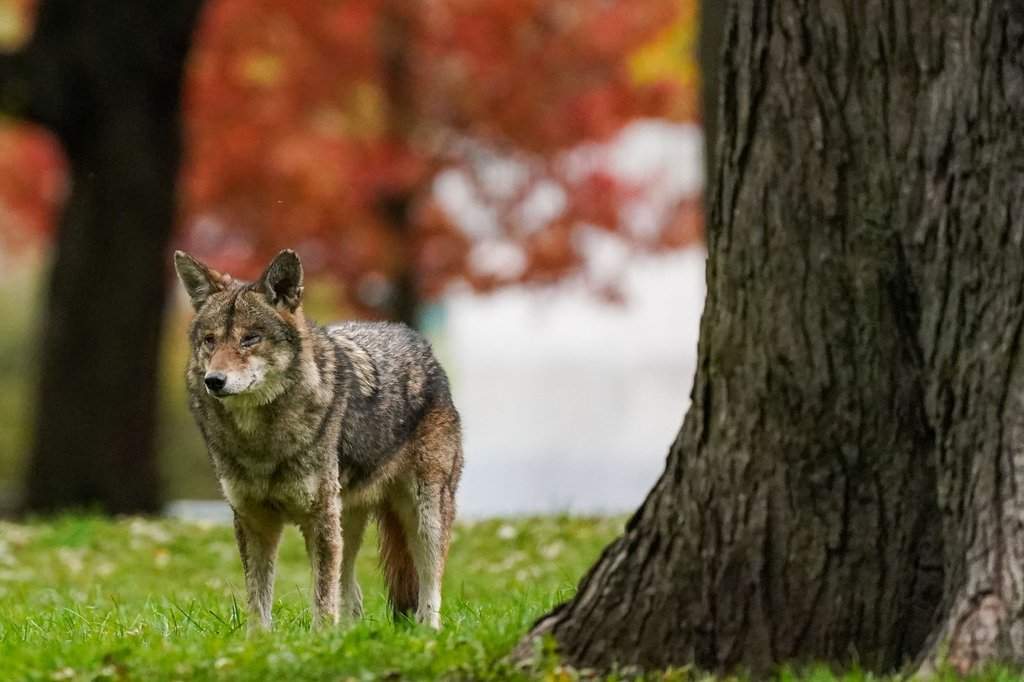
Parks Canada officials locked down sections of Cape Breton Highlands National Park following an aggressive coyote encounter that left a visitor with a bite wound. The closure affects some of the most heavily trafficked hiking routes in the region, triggering immediate concern among local conservationists and wildlife management professionals. Wildlife biologists have deployed tracking teams and set live traps in the area to locate the animal responsible. Public safety warnings remain active across the entire park perimeter. Visitors are urged to maintain strict distance from all wildlife and report any unusual animal behavior immediately.
The Anatomy Of An Urbanized Wilderness Conflict
National parks are marketed as pristine ecosystems where humans can step outside the noise of modern infrastructure and reconnect with raw nature. That romantic narrative collapses the moment a wild carnivore draws blood. Coyotes in eastern Canada are not the small, timid shadows of historical accounts. Over decades of ecological shifts, hunting pressures, and habitat fragmentation, the eastern coyote has evolved into a larger, more adaptable apex predator capable of taking down white-tailed deer.
When human recreation corridors overlap directly with established coyote home ranges, friction is inevitable. Visitors drop food wrappers, leave picnic scraps unattended, or worse, deliberately feed wildlife for the sake of a photograph. This behavior trains wild animals to associate human presence with an easy meal. Once that habituation sets in, the natural fear barrier erodes completely. A coyote that views humans as a food source stops running away. It approaches. And when it approaches a crowded trail and does not get food, frustration can quickly curdle into aggression.
Parks Canada faces an impossible management balancing act. Shut down a park entirely, and you spark economic panic among local tourism operators who rely on summer foot traffic. Keep trails open, and you roll the dice on public safety. Temporary zone closures offer a middle ground, but they rarely address the root systemic failure. Wildlife doesn't respect park boundary lines or yellow police tape.
Shifting Predator Dynamics In The Atlantic Provinces
To understand why coyote bites inside protected areas generate such intense public anxiety, look at the broader ecological timeline of Nova Scotia. Coyotes are relative newcomers to this landscape. They expanded their range eastward through agricultural clearings and deforested corridors during the mid-twentieth century, filling the ecological vacuum left by the systematic eradication of wolves and cougars.
Without a true apex predator to regulate their numbers or territory sizes, coyote populations stabilized dynamically. They adapted to coastal forests, highland barrens, and even suburban fringes. Yet, public perception lagged far behind biological reality. Generations of outdoor enthusiasts grew up treating the woods as a safe playground, assuming that national park status somehow insulated visitors from the realities of predator ecology.
Recent field data from eastern North America highlights a troubling behavioral shift among habituated coyotes. Unlike wolves, which maintain strict social hierarchies and deep suspicion of human scent, coyotes exhibit high individual variation in temperament. A small percentage of the population becomes bold, testing boundaries during daylight hours. When these individuals lose their innate wariness, standard hazing techniques—such as shouting, throwing rocks, or waving arms—often fail to deter them. At that point, wildlife agencies have very few operational choices left. Public safety protocols dictate the removal of any habituated animal that displays unprovoked aggression toward humans.
The Enforcement Gap On Protected Trails
Posting signs at a trailhead is cheap. Enforcing behavioral compliance among park visitors is expensive, labor-intensive, and politically unpopular. Walk any major trail in Cape Breton Highlands during peak season, and you will witness dozens of infractions within the first hour. Hikers stepping off marked paths to get a better view of the gorge. Photographers leaving protein bar wrappers behind. Campers storing food in soft-sided tents rather than hard-sided vehicle lockers.
Parks Canada operates on severely constrained enforcement budgets. Rangers spend the vast majority of their shifts managing traffic flow, checking backcountry permits, and responding to medical emergencies. Proactive wildlife management—such as patrolling remote trail junctions to fine illegal feeders or clear improperly secured garbage—often takes a backseat.
This reactive posture guarantees that management strategies remain trapped in a permanent loop of crisis response. An incident occurs. Trails close. Traps are set. An animal is euthanized. Public outrage flares up for a fortnight. Then the park reopens, visitor numbers rebound, and everyone waits for the next inevitable collision between a hungry predator and an oblivious tourist.
Recalibrating Human Expectations In The Backcountry
True coexistence with large predators requires a fundamental cultural reset among recreational users. The wilderness is not a theme park exhibit curated for human comfort. Entering a national park means stepping directly into an active biological arena where humans occupy a temporary, uninvited status.
Mitigating future trail closures demands structural changes that go far beyond temporary closures and reactive culls. It requires mandatory wildlife safety orientations at all major entry points, backed by heavy, non-negotiable fines for feeding wildlife or improper food storage. It requires continuous habitat monitoring using motion-activated telemetry and real-time tracking collars on regional packs to map high-risk overlap zones before an attack happens.
Until park administrators and the recreating public accept the hard truth that wild animals demand absolute distance and disciplined behavior, these closures will continue to repeat. Every bite is a symptom of a deeper systemic failure in how humans manage their footprint within shared ecological spaces. The trails will eventually reopen. Whether visitors return with a renewed respect for the apex predators sharing those woods remains entirely unwritten.