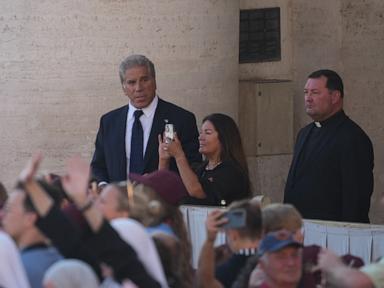
Actor Lou Ferrigno recently stood in St. Peter Square and checked off a lifelong personal milestone by meeting Pope Leo XIV. For mainstream media outlets, the headline wrote itself. You take a globally recognizable television icon from the late 1970s, pair him with the newly elected pontiff, and watch the digital traffic flow. Yet beneath the surface gloss of celebrity photo-ops lies a much more compelling intersection of traditional Italian-American upbringing, old-school media nostalgia, and the evolving public relations strategy of the modern Vatican under Pope Leo XIV.
To understand why this specific encounter matters beyond a standard celebrity brush with greatness, we have to look at the mechanics of papal audiences. St. Peter Square is a staging ground where global secular fame intersects with ancient ecclesiastical pageantry on a weekly basis. Ferrigno, best known for painting his physique green and embodying Marvel's The Incredible Hulk opposite Bill Bixby, represents an era of television production that predates modern cinematic universes by decades. Back when the CBS series aired from 1977 to 1982, comic book adaptations were rare, earnest, and heavily reliant on practical physical presence rather than computer-generated imagery.
Ferrigno’s path to the Vatican is rooted deeply in his heritage. Growing up in a working-class Italian-American household with roots in Amalfi, religion and cultural identity were tightly bound. He has frequently spoken about his childhood spent serving as an altar boy and navigating a youth marked by severe hearing loss—a physical obstacle that forced him to build the immense psychological resilience that later propelled him into body-building dominance and acting. Meeting the pope was not merely a publicity stunt for a retired actor looking for headlines; for Ferrigno, it functioned as a full-circle validation of his ancestral roots and his lifelong Catholic upbringing.
At the same time, the encounter highlights a subtle shift in how the Holy See interacts with prominent public figures. Pope Leo XIV, born Robert Francis Prevost in Chicago, brings an American sensibility to the papacy. Having spent decades serving as a missionary and bishop in Latin America before ascending to the throne of Peter, Leo understands the value of public accessibility. While traditional papal diplomacy relies heavily on statecraft and formal ambassadorial channels, the modern pontificate recognizes that cultural ambassadors—actors, athletes, and musicians—hold immense sway over public discourse. When Ferrigno praised the pontiff's messaging on peace and kindness amid global turmoil, he was tapping into a universal desire for moral clarity that transcends traditional religious boundaries.
Critics often dismiss these high-profile greetings as superficial distractions from heavier geopolitical issues. However, mass media spectacles have always served a specific function within the Catholic Church. They humanize the institution. They bridge the gap between high theology and everyday pop culture. When a towering cultural relic of 20th-century television stands side-by-side with a pontiff who grew up in the American Midwest, it creates a shared cultural moment that traditional pastoral letters cannot achieve on their own.
The public fascination with this meeting also reveals our collective exhaustion with modern, highly curated celebrity culture. Ferrigno belongs to an older breed of entertainer—one forged in the grueling gyms of the pre-internet era, where fame was earned through physical endurance and repetitive television syndication rather than viral social media campaigns. His reverence for the pontiff felt old-fashioned because it was rooted in an authentic generational respect for authority, tradition, and spiritual hierarchy.
As the cameras flashed in St. Peter Square and Ferrigno exchanged a brief dialogue with the head of the Catholic Church, the spectacle underscored a timeless truth about fame and faith. Even those who have spent their lives mythologized as larger-than-life comic book monsters ultimately seek out simple, grounding spiritual truths. The Hulk may have been fueled by radioactive rage on television screens, but the man behind the green paint found his way to Rome seeking peace.


