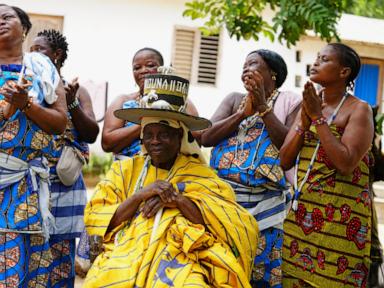
Benin did not salvage Voodoo from the margins of history out of pure cultural benevolence. The nation transformed a heavily suppressed spiritual tradition into a centralized instrument of state power and geopolitical branding to secure political stability and lucrative cultural tourism. While casual observers view this as a democratic triumph for indigenous faith, the reality is a calculated, top-down institutionalization. The state effectively bureaucratized a decentralized religion, trading its fluid, localized nature for political utility and international leverage.
European colonial regimes and the subsequent Marxist dictatorship of Mathieu Kérékou spent decades trying to eradicate Voodoo. They failed. Yet, the current commercialized revival faces a entirely different threat: assimilation by the state apparatus. If you liked this piece, you might want to look at: this related article.
The Illusion of Democratic Revival
The narrative surrounding Voodoo in modern Benin often centers on liberation. Activists and government officials point to the annual National Voodoo Day, established in the 1990s by President Nicéphore Soglo, as the moment the faith reclaimed its rightful place. This narrative oversimplifies a complex political maneuver. Soglo did not just grant religious freedom. He needed a unifying national identity to stabilize a fragile, newly democratic country fractured by regional and ethnic divisions.
Voodoo served that purpose perfectly. By elevating a faith practiced by the vast majority of the population, either exclusively or alongside Christianity and Islam, the government created a shared cultural bedrock. This was state-building disguised as religious tolerance. For another angle on this story, refer to the recent update from Associated Press.
The strategy worked, but it altered the religion itself. Historically, Voodoo operated through decentralized convents and local lineages. It had no pope, no central scripture, and no unified hierarchy. When the state stepped in to sponsor festivals and recognize specific religious leaders, it began picking winners and losers.
Monolithic representation replaced local autonomy. High priests who aligned with government initiatives received state backing, media exposure, and financial resources. Those who remained independent found themselves marginalized, cut off from the state-directed tourism pipeline that now drives much of the coastal economy in cities like Ouidah and Cotonou.
The Tourism Economy and Global Rebranding
The economic calculus behind Benin's embrace of Voodoo is blatant. The government has poured millions of dollars into infrastructure projects specifically designed to monetize spiritual heritage. The "Route des Esclaves" (Slave Route) in Ouidah and the construction of massive cultural museums are not merely educational endeavors. They are economic engines designed to attract the global African diaspora.
This tourism strategy requires a specific presentation of Voodoo. The state must present a version of the religion that is accessible, aesthetically profound, and stripped of the negative stereotypes long propagated by Western media.
- Sanitization: The public face of the religion focuses heavily on dance, costume, and philosophy, while downplaying more confrontational or esoteric practices that might alienate foreign tourists.
- Standardization: Rituals that were once highly variable and dependent on local contexts are increasingly choreographed for public consumption during state-sanctioned holidays.
- Commercialization: Local shrines are transformed into tourist stops, where spiritual consultations are commodified for international visitors holding hard currency.
This economic pivot creates a stark divide between the transactional Voodoo displayed to outsiders and the lived reality of practitioners in rural communities. For a family in a northern village, Voodoo remains a private system of justice, medicine, and ancestral connection, entirely decoupled from the glossy brochures of the tourism ministry.
Resistance from Within the Shrines
Not every spiritual leader welcomes the government's embrace. A quiet resistance persists among traditionalists who view state patronage as a form of co-optation. These practitioners argue that the essence of Voodoo lies in its independence from temporal authority.
When a government funds a temple or regulates a festival, it gains implicit veto power over the religious community. If a high priest criticizes state policy, the funding can vanish. This dynamic has effectively muted the prophetic voice of the religion. Historically, Voodoo secret societies like the Zangbeto functioned as grassroots police forces and political checks on local chiefs. Today, these institutions are increasingly integrated into the state's broader security and tourism apparatus, dulling their edge as independent social critics.
Furthermore, the state's focus on the southern coastal variants of Voodoo has exacerbated internal regional tensions. The complex spiritual systems of the north are frequently overshadowed by the Fon and Yoruba-derived traditions of the south, creating a hierarchy within the national religious landscape itself.
The Geopolitical Gamble
Benin's domestic policy correlates directly with its foreign policy. By positioning itself as the global capital of Voodoo, Benin exerts significant cultural influence across the Atlantic, particularly in Brazil, Haiti, and the United States. This cultural diplomacy yields tangible diplomatic benefits, fostering international partnerships and development aid under the guise of cultural exchange.
Yet, this reliance on spiritual branding leaves Benin vulnerable to shifting political currents at home. If a future administration decides to court conservative Christian or Islamic voting blocs—both of which are growing rapidly in the region—the state's relationship with Voodoo could shift once again. Evangelical Christianity, in particular, has seen a massive surge in Benin, often preaching a message directly hostile to traditional practices.
The current equilibrium is fragile. The state has tamed Voodoo to serve the republic, turning a underground movement of survival into a bureaucratic department. In doing so, it preserved the religion's structure while permanently altering its soul. The true measure of Voodoo's strength in Benin is not found in the state-sponsored spectacles on the beaches of Ouidah, but in the hidden, rural shrines where the state's ledger books hold no sway.