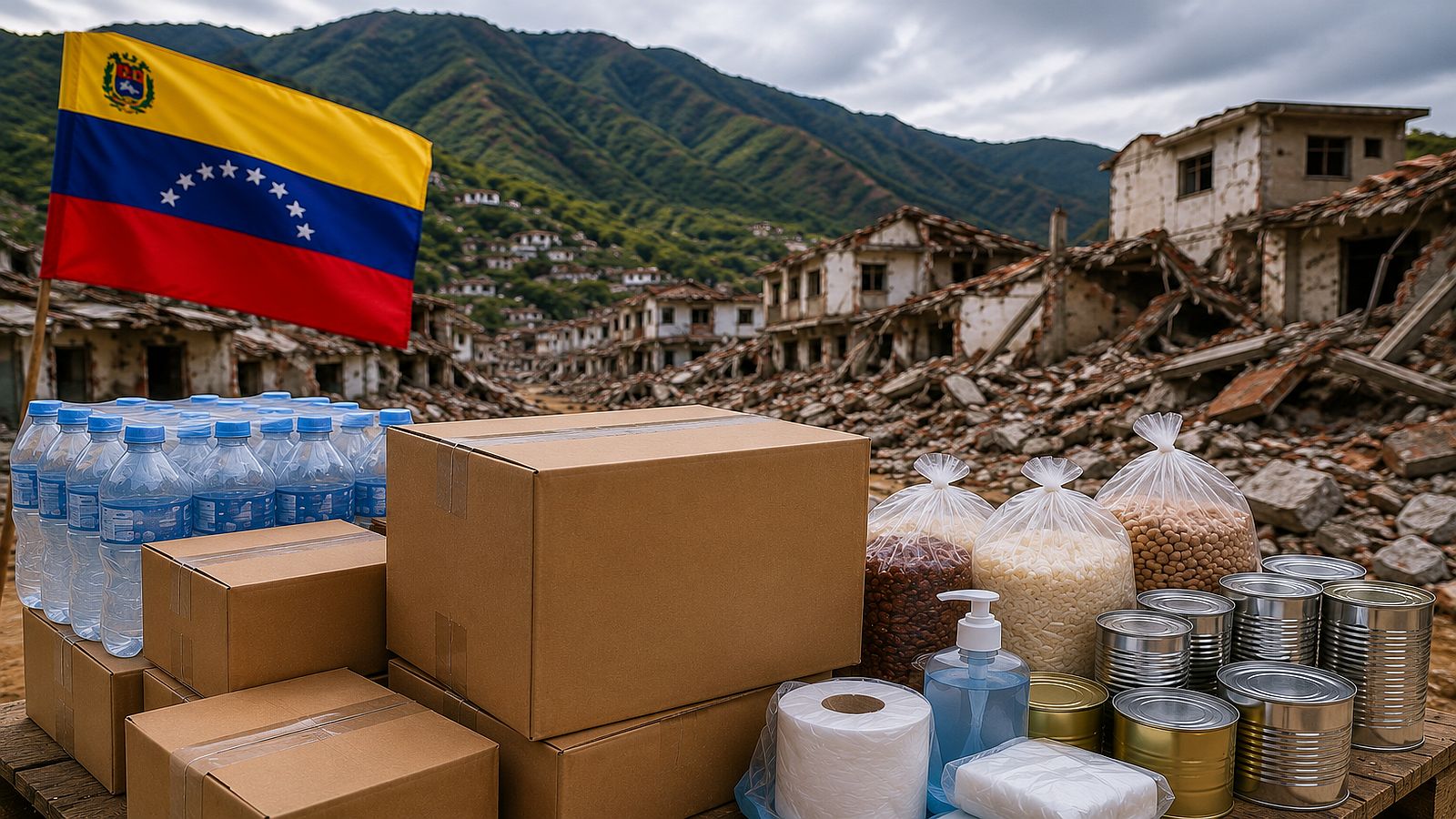
Disaster zones do not need political symbols. They need excavators, clean water, and supply chain logistics.
When María Corina Machado announces a high-profile return to Venezuela under the banner of helping earthquake victims, the mainstream media eats it up. The narrative writes itself: a brave opposition leader risking everything to stand with her people in their darkest hour. It is moving. It is dramatic.
It is also fundamentally flawed.
Using a natural disaster as a staging ground for a political return is a logistical nightmare masquerading as heroism. When a state is already fractured by authoritarian control and economic collapse, injecting a hyper-polarized political figure into a crisis zone does not accelerate relief. It paralyzes it.
The Logistics of Tragedy Do Not Care About Logistics of Power
When an earthquake hits, the immediate needs are brutally simple. You need search and rescue teams. You need field hospitals. You need heavy machinery to clear roads so aid can move from ports to the affected communities.
Every single one of these actions requires coordination with whoever controls the physical territory. In Venezuela, that means the Maduro regime. Like it or not, the military controls the checkpoints, the airports, and the fuel distribution networks.
Imagine a scenario where a highly contested political figure arrives at a disaster site. What happens next is entirely predictable:
- Resource Diversion: State security forces that should be maintaining order or assisting in clearing rubble are instantly redeployed to monitor, restrict, or arrest the political figure.
- Aid Politicization: The ruling regime immediately views all incoming aid associated with the opposition as a Trojan horse. Distribution gets bottlenecked at customs as bureaucrats inspect boxes for political contraband instead of distributing medicine.
- Volunteer Danger: Local volunteers and grassroots organizations on the ground face sudden, intense scrutiny. Affiliating with a political figure marks them as targets, disrupting the quiet, neutral work they were already doing.
Humanitarian aid relies on a strict principle of neutrality. The moment aid wears a political campaign button, it ceases to be aid in the eyes of an authoritarian state. It becomes a threat. When the state perceives a threat, it locks down. The people under the rubble pay the price for that lockdown.
The Flawed Premise of the Ground Level Leader
People often ask why leaders shouldn't be on the ground during a crisis. They believe that visibility equals efficacy.
This is a fundamental misunderstanding of crisis management. True administrative expertise in a disaster involves managing supply chains from a safe distance, securing international financing, and clearing bureaucratic hurdles. A political leader standing in a hard hat amidst ruins makes for an excellent front-page photograph, but it actually hinders operations.
I have watched organizations waste days planning the security logistics for a single VIP visit to a disaster area—days that should have been spent moving tons of grain and water purification tablets. The footprint of a major political figure includes security details, press pools, and local coordinators. In a disaster zone where fuel is scarce and roads are cracked, that footprint consumes resources that belong to survivors.
Furthermore, entering a country with the explicit goal of "helping victims" while facing severe legal and political opposition from the ruling government sets up an impossible paradox. If the goal is genuinely humanitarian, the most effective strategy is to channel funds, resources, and international pressure through established, neutral entities like the International Federation of Red Cross or local non-governmental organizations that already have a working relationship on the ground.
Bypassing these channels to lead a personal crusade ensures maximum friction with minimum efficiency.
The Cost of the Counter-Strategy
There is a downside to pointing this out. Critics will argue that staying away concedes the ground to an incompetent, corrupt regime that will inevitably mismanage the relief funds. They are right about the regime. The Venezuelan government's track record on managing public funds and infrastructure is catastrophically poor. Leaving them solely in charge of disaster relief guarantees inefficiency and favoritism.
But the alternative—turning the disaster into a geopolitical tug-of-war—is worse.
When aid becomes a battleground, the regime doubles down on its worst instincts. They will willingly block foreign aid shipments, let food rot in warehouses, and deny visas to international specialists just to prove they retain control. We saw this exact playbook play out during the 2019 humanitarian aid standoff at the Colombian border. The trucks burned, the border closed, and the people remained hungry.
Stop Treating Crises as Campaign Stops
The assumption that political defiance translates into humanitarian relief is a dangerous fantasy. Defiance is useful for winning elections or rallying international sanctions. It is useless for rebuilding collapsed concrete structures or preventing the spread of cholera.
If the goal is to save Venezuelan lives after a catastrophe, the strategy must be entirely decoupled from the struggle for the presidency. International donors and domestic leaders need to stop funding high-profile, politically charged rescue missions. Instead, they must do the hard, unglamorous work of negotiating quiet access for neutral professionals who do not give speeches.
History shows that when politics enters the tent of a disaster victim, relief leaves through the back door. Venezuela does not need a savior in the rubble. It needs a clear path for the trucks.