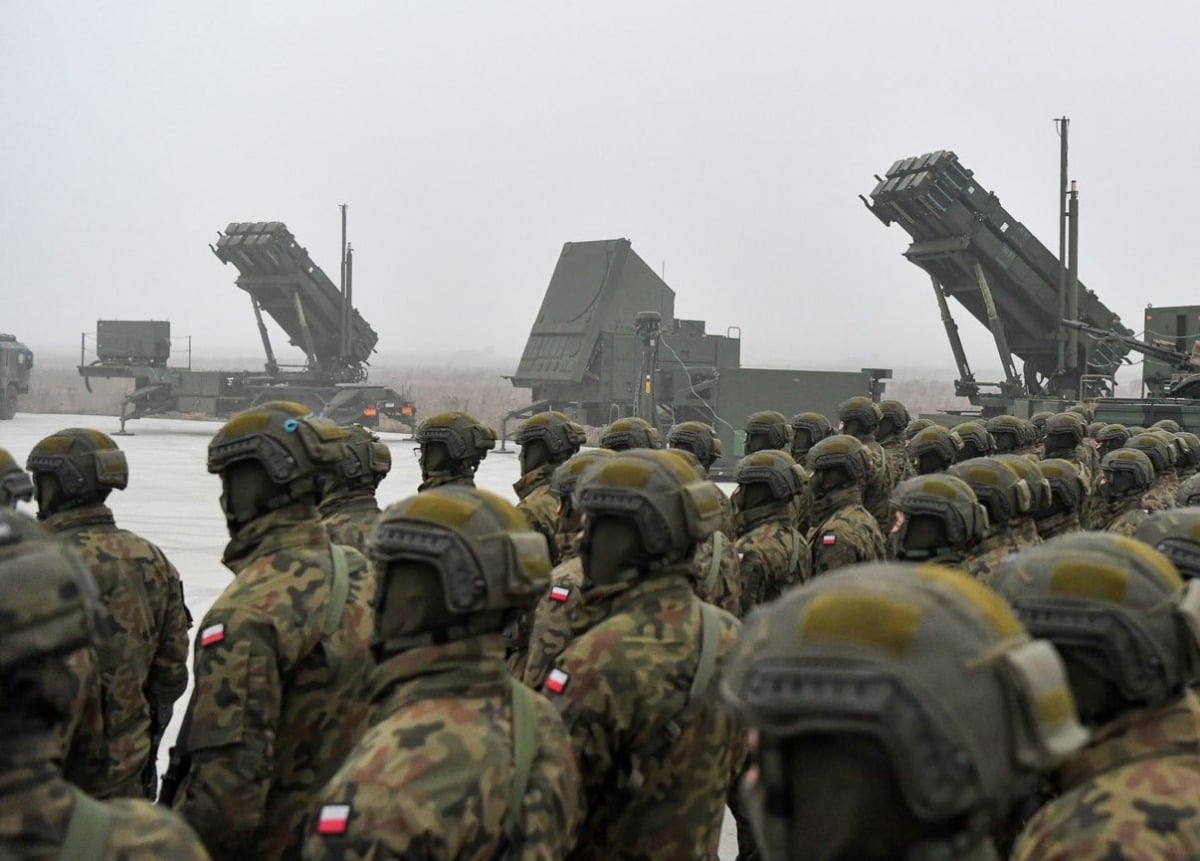
Poland isn't waiting around to see what happens next on NATO's eastern flank. The country has been aggressively buying, building, and upgrading its military hardware. The latest move involves a $31 million contract awarded to Northrop Grumman to keep its advanced air and missile defense command system up and running.
This isn't just a simple tech support agreement. It represents a deeper American industrial commitment to a frontline ally. For Poland, maintaining the operational health of its Integrated Battle Command System (IBCS) is central to its entire national defense plan. If you've been watching Warsaw’s multi-billion-dollar military expansion, you know they're not just purchasing weapons. They're constructing a unified web designed to stop modern aerial threats in their tracks.
The Operational Brain of Polish Air Defense
To understand why a $31 million sustainment contract matters, you have to look at what the IBCS actually does. Most air defense systems are proprietary and isolated. A Patriot radar wants to talk to a Patriot missile launcher. A British-made CAMM launcher wants to talk to its own specific tracking hardware. They don't naturally communicate with each other.
That's the exact problem Poland set out to solve. They became the first international launch customer for the IBCS, selecting it to act as the core architecture for their Wisła medium-range air defense program. Deputy Prime Minister and Minister of National Defense Władysław Kosiniak-Kamysz described the system as the "operational brain" of their network.
Essentially, the system links radars and effectors that weren't designed to cooperate under a single command structure. It lets Polish commanders look at one screen and see data gathered by totally different sensors, then choose the best missile for the job, regardless of who manufactured the launcher.
[Disparate Radars & Sensors] ---> [IBCS Command Net] ---> [Optimized Weapon Select]
                                         |
                       (Patriot / CAMM / National Systems)
Real-World Stress Tests on the Baltic Coast
This architecture isn't just theoretical. The Polish military has been putting it through intense paces. They carried out a major live-fire operational exercise on the shores of the Baltic Sea, which represented the first international live-fire flight test for this specific command system.
During the exercise, the network successfully engaged and intercepted surrogate air-breathing targets. Company executives noted it was probably the most stressing live-fire test the system has undergone to date. The system proved it could take real-time tracking data, feed it through the unified net, and neutralize incoming threats seamlessly.
The strategy makes immense practical sense when you consider interceptor stock preservation. Missile defense is a numbers game. If you launch two massive, multi-million-dollar Patriot missiles at a cheap drone, you lose the economic war. By tying everything together, the command system allows operators to see the threat clearly and use a cheaper, short-range interceptor or a counter-drone gun battery instead.
Beyond Tech Support: The Broader Polish Defense Strategy
This $31 million injection keeps American technical experts and logistical support tied directly to Polish operations. It comes right as Warsaw pushes to reach full operational capability milestones for its initial air defense batteries.
Poland’s spending isn't subtle. They've planned to spend roughly 4.2% of their gross domestic product (GDP) on defense, which leads the way among NATO allies relative to economic size. This sustainment funding runs parallel to other massive acquisitions, including a $745 million deal signed for over 200 of Northrop Grumman's AGM-88G Advanced Anti-Radiation Guided Missiles-Extended Range (AARGM-ER) to equip their upcoming F-35 fleet.
Warsaw is also localizing defense production. They've entered agreements to jointly produce over 180,000 rounds of 155mm artillery ammunition annually within Poland to counter European shortages. They're buying a $1.4 billion counter-drone system from Kongsberg. Everything they're buying is intended to connect back into the central command node managed by Northrop Grumman's software.
Practical Next Steps for Regional Security Observers
If you're tracking defense logistics or European security trends, there are a few specific developments you should watch closely over the coming months:
- Monitor Germany's Acquisition Path: Keep tabs on Berlin's procurement choices. Northrop Grumman has already signed agreements with German weapons builders Diehl Defence and MBDA, pitching the same integrated command framework for the European Sky Shield Initiative (ESSI).
- Track F-35 Integration Timelines: Watch how Poland integrates its newly arriving fifth-generation fighter jets with its ground-based air defenses. The true power of an open-architecture command system lies in its ability to loop airborne sensors into the ground network.
- Evaluate Ammunition Industrial Base Scale-Up: Observe the domestic production lines for 155mm artillery shells and short-range missiles inside Poland. True defense sustainability requires local manufacturing, not just foreign purchase agreements.
Poland has taken lessons from nearby conflicts and concluded that partial protection is no protection at all. By securing long-term sustainment for their central command architecture, they ensure their multi-billion-dollar investments remain functional, connected, and ready.