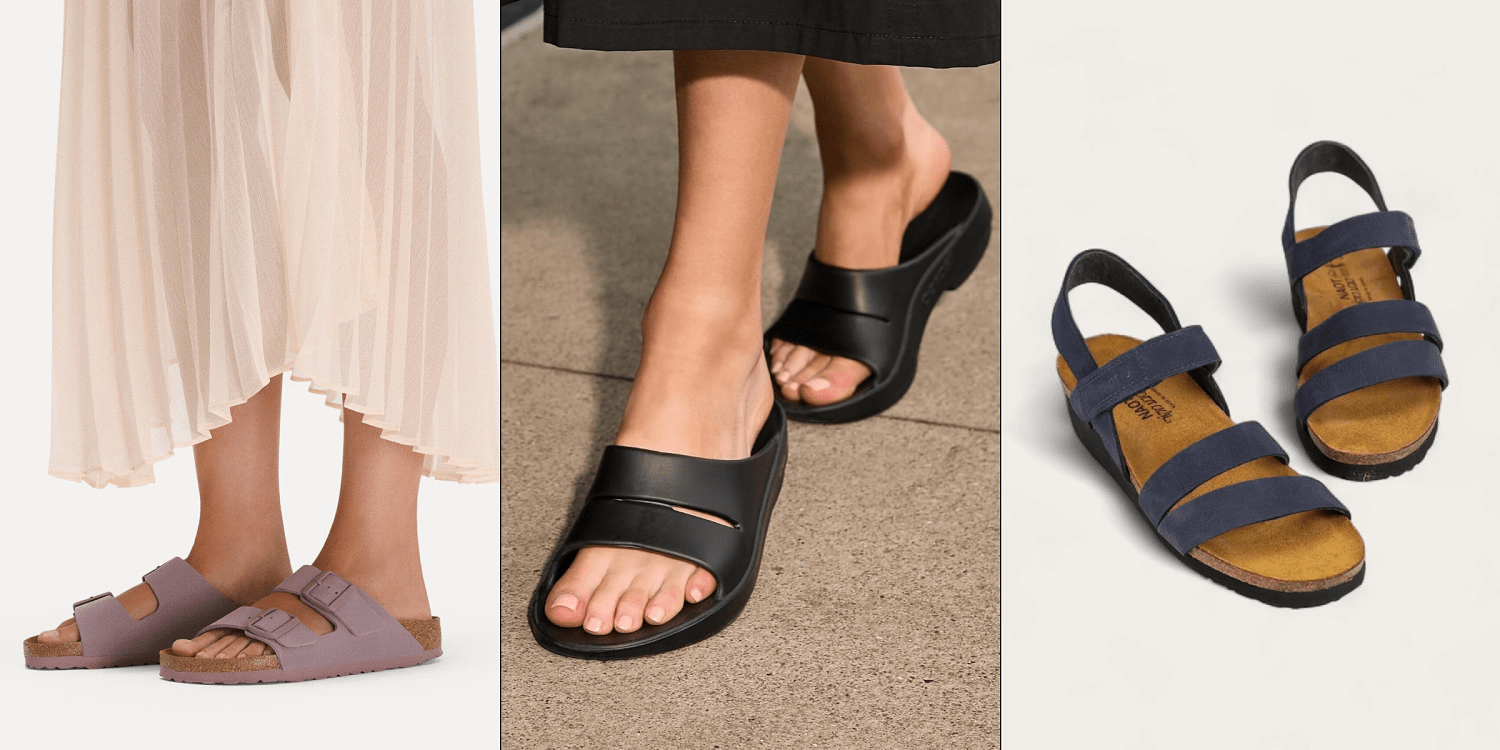
Every May, the same lazy publishing ritual occurs. Glossy magazines and lifestyle blogs sync up with a handful of celebrity podiatrists to release the ultimate list of "orthotic-friendly," "structurally sound" summer footwear. They parade chunky wedges with cork footbeds and orthopedic flip-flops, claiming these built-up contraptions are the secret to pain-free summer walking.
It is a multi-million-dollar lie.
By sheltering your feet in thick, rigid, "supportive" sandals, you are not curing your foot pain. You are actively engineering the atrophy of your own lower limbs.
The Myth of the Structural Scaffold
The mainstream orthopedic consensus treats the human foot like a collapsing building that requires external scaffolding. If your arches drop, the standard prescription is a stiff sole, deep heel cups, and aggressive arch cookies.
This logic is fundamentally flawed.
The human foot is an architectural masterpiece of bio-mechanics, containing 26 bones, 33 joints, and more than 100 muscles, tendons, and ligaments. It is designed to be a dynamic, adaptive shock absorber. When you strap a thick, rigid slab of EVA foam or cork to the bottom of your foot, you immobilize those joints. You turn a highly complex sensory organ into a stiff, dead weight.
Think about Wolff’s Law. This foundational principle of anatomy dictates that bone adapts to the loads placed upon it. If you stress a bone, it remodels itself to become stronger. The same applies to muscles and tendons. When an "approved" sandal does 100% of the stabilizing work for you, your intrinsic foot muscles—like the abductor hallucis and flexor digitorum brevis—simply turn off. Over a summer of heavy use, those muscles weaken.
The result? The moment you step out of those protective sandals in September, your feet are weaker, your arches are lazier, and your risk of plantar fasciitis skyrockets. You have built a dependency.
The Toxic Trio of Sandal Design
When evaluating the typical recommendations found in seasonal shopping guides, three design elements are routinely praised. In reality, they are destroying your natural gait.
1. Excessive Arch Support
Standard advice says your sandal must fill the space beneath your arch. But an arch is a structure that gains strength when pressure is applied from above, not below. Shoving a rigid wedge under the medial longitudinal arch prevents it from naturally compressing and rebounding. This compression is exactly how the foot absorbs the impact of your heel strike. Block that movement, and that impact force doesn't vanish. It travels straight up into your shins, knees, and lower back.
2. Thick, Cushioned Midsoles
The promise of "walking on clouds" is a marketing gimmick. High-stack cushioning numbs your brain to the ground. Your foot is packed with proprioceptors—nerve endings that tell your central nervous system exactly what kind of surface you are stepping on. When you mute that feedback with two inches of foam, your brain cannot properly calculate how hard to strike the ground or how to stabilize the ankle. You end up striking the pavement harder than you would bare-foot, relying on your joints rather than your muscles to take the blow.
3. The Missing Backstrap
Even the high-end orthopedic flip-flops fail here. If a sandal does not have a secure strap around the heel, it is a biomechanical disaster. To keep a backless sandal from flying off your foot with every step, your toes must subconsciously curl and grip the footbed. This constant gripping action over-activates the long flexor tendons, leading to hammer toes, tendonitis, and a shortened, unnatural stride. You are literally altering how your hip flexors and glutes fire just to keep your shoes on.
What the Industry Vets Won't Tell You
I have spent over a decade analyzing gait patterns and watching consumers pour billions into orthotic footwear, only to return with the exact same chronic injuries. The footwear industry loves a recurring problem. If a shoe actually fixed the underlying weakness of your foot, you wouldn't need to buy their new, extra-cushioned model next year.
Let’s look at the data from populations that don't wear structured footwear. Renowned podiatrist Dr. William Rossi spent decades studying habitually barefoot societies. His research consistently demonstrated that these populations possessed vastly superior foot strength, wider toe splays, and near-zero rates of congenital flat feet or plantar fasciitis compared to shoe-wearing Westerners.
When you strip away the synthetic casts we call shoes, the foot heals itself.
+------------------------+-------------------------+-------------------------+
| Feature                | "Podiatrist-Approved"   | Biomechanically Correct |
+------------------------+-------------------------+-------------------------+
| Toe Box Width          | Narrow / Tapered        | Wide / Foot-Shaped      |
| Sole Flexibility       | Rigid / Torsional Lock  | Fully Twistable         |
| Heel-to-Toe Drop       | Elevated (10mm+)        | Zero Drop (Flat)        |
| Retention              | Slip-on / Slide         | Secure Anchor Straps    |
+------------------------+-------------------------+-------------------------+
Dismantling the "People Also Ask" Propaganda
Online search behavior reveals just how deeply ingrained these misconceptions are. Let's correct the record on what people are actually searching for.
"What sandals do podiatrists recommend for walking all day?"
The standard answer is always a brand with a massive, molded footbed. But the question itself is wrong. You shouldn't be asking what shoe can cushion a dysfunctional foot for eight hours. You should be asking: How do I make my feet strong enough to handle walking all day?
If you must wear sandals for an all-day trek, look for options that feature a completely flat sole (zero-drop), a flexible base that allows your foot to twist naturally, and a secure ankle strap system that keeps the shoe glued to your foot without toe-clawing.
"Are Birkenstocks actually good for your feet?"
This is the holy grail of comfortable footwear consensus. While Birkenstocks are superior to cheap, flat flip-flops because they have a neutral heel and a wide toe box, their cork footbed is incredibly rigid. For a foot that is already compromised, that stiffness acts like a temporary splint, which feels good initially because it stops the foot from moving. But long-term? It locks the joints of the midfoot. Use them for casual wear, but do not mistake them for a tool that builds foot health.
"Can you fix flat feet with supportive sandals?"
Absolutely not. You cannot strengthen a weak muscle by putting it in a sling. Flat feet are often the result of weak intrinsic muscles and a locked ankle joint. Structural sandals merely mask the symptoms. To actually improve arch function, you need to allow the foot to move, splay, and react to the ground, forcing the posterior tibial tendon and intrinsic muscles to do their job.
The Rational Transition: Stop the Cold Turkey Mistake
There is a major catch to this contrarian approach. If you have spent the last twenty years wearing max-cushion sneakers and orthotic sandals, your feet are weak. Your Achilles tendons are likely shortened due to elevated heels.
If you go out tomorrow and buy ultra-minimalist, thin-soled sandals and walk five miles through the city, you will injure yourself. You cannot expect a muscle that has been in a cast for decades to run a marathon on day one.
The transition must be deliberate.
- Week 1-2: Spend two hours a day walking bare-foot on hard surfaces around your house. Let your brain recalibrate to the sensory input.
- Week 3-4: Switch your daily casual sandals to a pair that has a zero-drop sole but retains moderate flexibility. Ensure there is a backstrap.
- Month 2 and beyond: Gradually reduce the stack height of your footwear. Transition to sandals that allow your toes to splay completely flat and wide.
You will feel muscles aching that you didn't know existed. That isn't injury; that is awakening.
Stop Coddling Your Feet
The wellness industry has conditioned us to believe that comfort equals health. It doesn't. Comfort is often just the absence of engagement.
Ditch the over-engineered, thick-soled wedges that the paid-endorsement lists force down your throat every summer. Stop treating your feet like medical liabilities that need to be wrapped in foam layers. Buy sandals that secure firmly to your foot, get your heels down to the ground, and get out of the way of your body's natural mechanics.
Strong feet don't need approval.
/i.s3.glbimg.com/v1/AUTH_5dfbcf92c1a84b20a5da5024d398ff2f/internal_photos/bs/2022/7/q/6M5eaAQBGuPVBPz0xKuQ/whatsapp-image-2022-12-24-at-17.52.03.jpeg)