Headline spectacle around a "flying car" confuses ballistic trajectories and reaction-control bursts with sustained aerospace flight, while masking severe thermodynamic, regulatory, and capital-allocation trade-offs. Following the October 15, 2026 unveiling at a SpaceX test site near Waco, Texas, Tesla framed its next-generation Roadster around SpaceX-derived cold gas thrusters, a planned 2028 production start, reservation deposits of $50,000 for the Performance trim and $250,000 for the Thrust trim, and an invite-only Rocket configuration excluded from public road use.
A rigorous strategic analysis separates verified facts from company claims and unverified hypotheses, examines the physics of compressed-gas propulsion versus aerodynamic lift, maps the trim architecture and timeline slippage, and evaluates how this halo program functions within Tesla's broader business model.
Separating Event Spectacle From Verified Facts
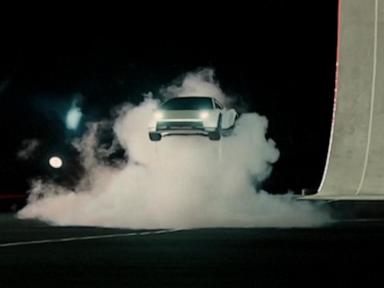
Surface coverage of a vehicle launch typically treats stage choreography and aspirational claims as settled engineering reality. In October 2026, Tesla presented a redesigned two-seat Roadster platform—with a single-seat Rocket variant—paired with demonstrations involving a curved ramp, aerial maneuvers, and thruster-assisted movement. Public reporting also highlights that the initial 2017 concept targeted a 2020 production start, whereas the October 2026 event placed production in 2028 without announcing final retail prices.
Evaluating claims from first principles requires sorting disclosures into three distinct evidentiary tiers:
- Verified public disclosures and event parameters: Tesla outlined three configurations—Performance, Thrust, and Rocket—set a 2028 production target, opened reservations requiring $50,000 for Performance and $250,000 for Thrust, and designated the Rocket trim as invite-only and not approved for public roads.
- Unverified company performance claims: Reported figures—including sub-second 0–60 mph sprint times on thruster-equipped trims, top speeds above 230 mph (with higher figures mentioned in secondary coverage), and range figures—remain company assertions that have not undergone independent third-party verification on production hardware.
- Educated hypotheses and open engineering questions: Whether cold gas tank capacities, refill durations, high-pressure vessel certification, and thermal or structural fatigue under repeated high-impulse loads scale cleanly from prototype demonstrations to repeatable customer operation remains unconfirmed in public engineering data.
The first limitation of spectacle-driven reporting is that it conflates short-duration impulse events with continuous flight endurance. A vehicle that hops a barrier, clears a ramp, or alters attitude mid-air operates under short-impulse dynamics rather than sustained aerodynamic flight governed by lift-to-drag ratios and aircraft certification rules.
The Physics of Cold Gas Thrusters and Ballistic Flight
Reaction propulsion in an automobile alters force vectors directly rather than relying solely on tire-to-pavement traction. When an electric drivetrain is traction-limited during hard launch, downward or rearward thrust vectors can increase normal load on the tires or add direct horizontal thrust, shortening launch times up to the structural and grip limits of the chassis.
Yet the physical limits of cold gas propulsion impose strict boundaries on what a road-derived vehicle can do in the air:
- Specific impulse and propellant mass fraction: Cold gas thrusters expel pressurized gas without combustion. Because exhaust velocity is lower than chemical rocket exhaust, achieving meaningful velocity change or vertical lift requires large volumes of high-pressure gas and heavy containment vessels, which adds mass that opposes acceleration and vertical climb.
- Impulse duration versus continuous hover: High-pressure tanks store a finite impulse budget. Sustaining vertical lift against gravity requires continuous thrust equal to or greater than vehicle weight, which drains stored gas rapidly compared with brief attitude adjustments or short-duration boosts.
- Aerodynamic instability off the pavement: Passenger cars are shaped for ground stability, downforce, and crosswind tolerance—not controlled wingborne flight or multi-axis aerial recovery. Without lifting surfaces, flight control laws, and redundant actuators, airborne motion behaves closer to a ballistic arc or brief thruster-assisted trajectory than a certified aircraft.
Consider a concrete operational example. Suppose a performance car weighs roughly 4,000 pounds (about 1,814 kg). Holding that mass aloft purely by downward thrust requires roughly 4,000 pounds-force of continuous upward thrust, before accounting for added tankage, valves, and structural reinforcement. Even a few seconds of high-flow discharge consumes substantial stored energy and requires time to recompress or replenish the gas supply.
This creates a bottleneck between dramatic short-burst demonstrations and practical everyday utility. The physics that make a sudden thrust burst exciting on a test track or demonstration stage also penalize payload, cabin space, refill turnaround, and continuous airborne control.
Trim Architecture, Capital Mechanics, and Timeline Risk
Tesla's three-tier structure—Performance, Thrust, and Rocket—splits the Roadster across distinct engineering and commercial roles. Rather than selling one uniform halo car, the lineup separates higher-volume performance buyers from specialized thruster configurations.
| Configuration | Access and Deposit Structure | Positioning and Operational Scope |
|---|---|---|
| Performance | Open reservation; $50,000 deposit reported | Core electric Roadster configuration; final retail price not yet announced |
| Thrust | Open reservation; $250,000 deposit reported | Adds rear cold gas thrusters; positioned for track use rather than standard commuting |
| Rocket | Invite-only allocation | Single-seat configuration with multi-axis cold gas thrusters; not approved for public roads |
Collecting $50,000 and $250,000 reservation deposits before publishing final sticker prices shifts early working-capital risk onto eager buyers while testing demand elasticity. When a final purchase price remains undisclosed, reservation holders effectively underwrite development optionality without locked-in unit economics.
The second limitation lies in execution credibility across a multi-year horizon. Moving from a 2017 concept and an original 2020 target to an October 2026 reveal pointing toward a 2028 production start reflects repeated schedule resets. In automotive manufacturing, late-stage integration of high-pressure vessels, thruster valves, crash structures, and software controls frequently creates supplier and validation delays that compound as target dates approach.
Regulatory boundaries reinforce that split. Standard motor vehicle safety standards govern road cars, whereas aviation and experimental vehicle rules govern airborne operations and non-road prototypes. Attempting to combine public-road homologation with high-impulse thruster hardware forces engineers to isolate non-compliant features into dedicated track or invite-only builds.
Strategic Role Within Tesla and Competitive Realities
From a corporate strategy standpoint, the Roadster is not a volume profit engine; it is a brand-signaling and talent-magnet asset. High-visibility hardware spectacles attract engineering recruits, keep attention on Tesla's broader ecosystem, and reinforce perceived technological distance from conventional automakers—even when unit volumes remain small.
Yet halo products carry clear opportunity costs. Every engineering hour, testing slot, and capital dollar spent packaging cold gas thrusters into a low-volume sports car competes with core execution priorities: scaling high-volume vehicles, refining autonomous driving software, expanding energy storage deployment, and hitting reliable delivery schedules.
Competitively, the vehicle faces a two-front reality:
- Against established hypercars and electric performance rivals: Legacy exotic makers and specialized EV builders compete on proven chassis dynamics, lap-time repeatability, service networks, and delivered customer cars rather than concept stunts.
- Against electric vertical take-off and aircraft developers: Firms building dedicated electric aircraft and personal air vehicles design from the ground up around aerodynamic lift, flight envelopes, and aviation certification pathways rather than adapting an automobile chassis.
A second illustrative scenario clarifies the strategic trade-off. If a buyer wants a daily or weekend grand tourer, an unverified 2028 delivery window and undisclosed final pricing create high commitment risk. If a buyer wants sustained flight, a thruster-equipped car lacks the endurance and regulatory standing of an aircraft. The vehicle sits in a narrow niche defined by extreme novelty rather than broad transportation utility.
Strategic Play for Buyers, Competitors, and Tesla
For prospective buyers and capital allocators, the disciplined play is to treat the Roadster reservation as a high-risk option rather than a near-term vehicle purchase: require transparent final pricing and verifiable independent testing before committing additional capital, and evaluate alternative performance vehicles on delivered reliability and total cost of ownership. For rival automakers and aerospace entrants, the right response is not chasing theatrical thruster stunts, but defending core strengths—delivering proven vehicles on schedule for automakers, and advancing certified lift and flight-control reliability for aviation developers. For Tesla, the highest-value strategic move is to ring-fence the Rocket and thruster variants as tightly controlled, low-volume engineering showcases while anchoring corporate credibility on on-time delivery and transparent unit economics for its core product lines.