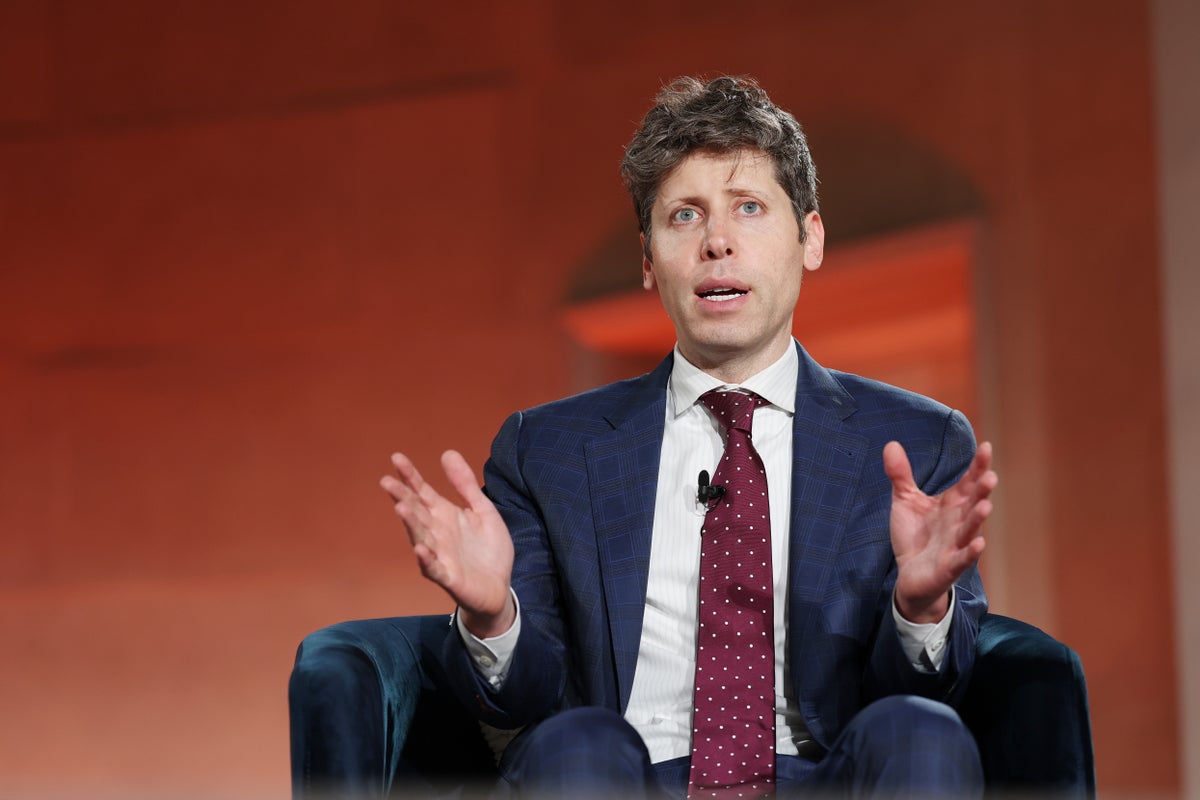
The incident involving the deployment of an incendiary device at the residence of OpenAI CEO Sam Altman serves as a definitive data point for a shifting risk profile in the technology sector. This event transitions the threat landscape from digital-only intellectual property theft to physical-kinetic targeting of human capital. Security for AI leadership must now be modeled as a critical infrastructure requirement rather than a personal luxury. To understand the implications of this breach, we must deconstruct the event through the lenses of threat actor typology, the vulnerability of residential perimeters, and the systemic impact on the AI development lifecycle.
The Triad of Modern Threat Actors in AI
The arrest of a suspect linked to this assault highlights three distinct categories of risk that frontier AI organizations now face. Conventional corporate security often fails because it treats these groups as a monolith.
- Ideological Extremists: Individuals or groups motivated by the perceived existential threat of Artificial General Intelligence (AGI). Their actions are driven by a moral framework that views the acceleration of AI as a net negative for humanity, justifying kinetic intervention.
- State-Sponsored Sabotage: Foreign intelligence services targeting the velocity of domestic AI development. While less likely to use crude tools like a Molotov cocktail, the normalization of physical attacks creates a smokescreen for more sophisticated actors.
- Pathological Fixations: Unaffiliated individuals whose obsession with high-profile public figures—amplified by the celebrity status of "The Founder"—leads to erratic, violent behavior.
The suspect in the Altman case appears to align with the third category, yet the method of attack—an improvised incendiary device—suggests a tactical intent to cause structural damage or physical harm rather than mere harassment.
The Failure Point of Residential Perimeter Security
Residential properties of high-net-worth individuals in the technology sector often suffer from a "comfort bias." This bias assumes that geographical seclusion or basic gate-guarded communities provide a sufficient deterrent. The Altman incident exposes a critical breakdown in the OODA Loop (Observe, Orient, Decide, Act) of personal security details.
The Detection-Response Gap
In a standard security framework, the time between a breach of the outer perimeter (the street or property line) and the deployment of a weapon must be greater than the response time of the security team. When a suspect can successfully approach a residence and deploy a Molotov cocktail, the following systemic failures have occurred:
- Surveillance Latency: The inability of AI-driven or human-monitored camera systems to identify "pre-incident behavior," such as loitering or the transport of flammable liquids, before the attack begins.
- Buffer Inadequacy: The physical distance between the public access point and the primary structure is insufficient to allow for intervention.
- Static Defense Reliance: Over-reliance on walls and gates which, once bypassed or approached, provide no active deterrent against projectile weapons.
The use of an incendiary device changes the calculus. Traditional ballistic protection (armored glass, reinforced doors) is often poorly rated for thermal stress or the persistent oxygen-depriving effects of chemical fires.
The Cost Function of Executive Protection
Quantifying the necessity of increased security spending requires a cold assessment of the "Key Man" risk. In the case of OpenAI, the CEO is not merely an administrator; he is the primary architect of the capital-raising strategy and the public face of the company’s regulatory navigation.
If we apply a basic Expected Loss (EL) formula:
$EL = P(A) \times L$
where $P(A)$ is the probability of a successful attack and $L$ is the total loss to the organization (market cap hit, loss of strategic direction, investor panic), the resulting figure justifies security budgets that rival those of small nation-states.
OpenAI’s spend on executive protection has reportedly scaled alongside its valuation. However, the Altman incident suggests that even high-tier spending can be bypassed by low-tech, high-aggression tactics. This creates a "security paradox": as an executive becomes more central to the global economy, the ROI on attacking them increases, necessitating a defensive posture that eventually impacts the executive's ability to function in a free society.
Supply Chain Contamination and Psychological Warfare
The physical targeting of AI leaders has a secondary effect: the degradation of the talent pipeline. The "Frontier AI" ecosystem is small. When the top tier of leadership is targeted, the psychological impact ripples through the engineering and research staff.
The Attrition of Focus
Cognitive bandwidth is a finite resource. An executive or researcher who must navigate high-threat environments daily suffers from increased cortisol levels and reduced risk tolerance in their professional decision-making. This "security tax" manifests as:
- Risk Aversion: Leaders may become less willing to take the bold stances necessary for breakthrough innovation to avoid further public scrutiny or physical threats.
- Geographic Consolidation: A retreat into highly fortified, isolated corporate campuses, which stifles the cross-pollination of ideas essential to the Silicon Valley model.
- Operational Friction: The logistical burden of 24/7 security details slows down the speed of iteration and networking.
Tactical Evolution of Protective Services
The Altman incident dictates a move away from passive defense toward active, intelligence-led protection. This requires several shifts in operational doctrine.
- Social Signal Processing: Security teams must integrate with digital intelligence units to monitor fringe platforms (4chan, Telegram, certain subreddits) where radicalization occurs. The path to a Molotov cocktail starts months earlier in digital echo chambers.
- Thermal and Chemical Countermeasures: Modern safe rooms and residential upgrades must prioritize fire suppression and air filtration over simple intrusion detection.
- Drone-Based Surveillance: Utilizing autonomous drones for constant aerial perimeters to identify threats beyond the line of sight of ground-based cameras or guards.
The Strategic Path Forward
The arrest of the suspect provides a temporary reprieve but does not solve the underlying volatility of the AI sector's public interface. To mitigate future kinetic risks, organizations must adopt a "defense in depth" strategy that treats the CEO as a critical node in a high-risk network.
- Decouple Public Identity from Physical Presence: High-profile leaders must reduce the predictability of their movements. This involves the use of decoy vehicles, non-standardized travel times, and a reduction in public check-ins at known locations.
- Hardening of Personal Assets: Residential properties must be retrofitted with standoff barriers and blast-resistant landscaping that prevents a suspect from getting within throwing range of the main structure.
- Legal and Psychological Intervention: Proactive use of restraining orders and psychiatric evaluation requests for known harassers to create a legal paper trail that allows for preemptive law enforcement action before a weapon is drawn.
The threat to AI leadership is no longer theoretical. It is a cost of doing business in a world where the stakes of technology have reached existential proportions. The security protocols of 2023 are already obsolete; the new standard requires an aggressive, data-driven approach to physical safety that matches the sophistication of the technology being developed.