Everybody loves a folk hero.
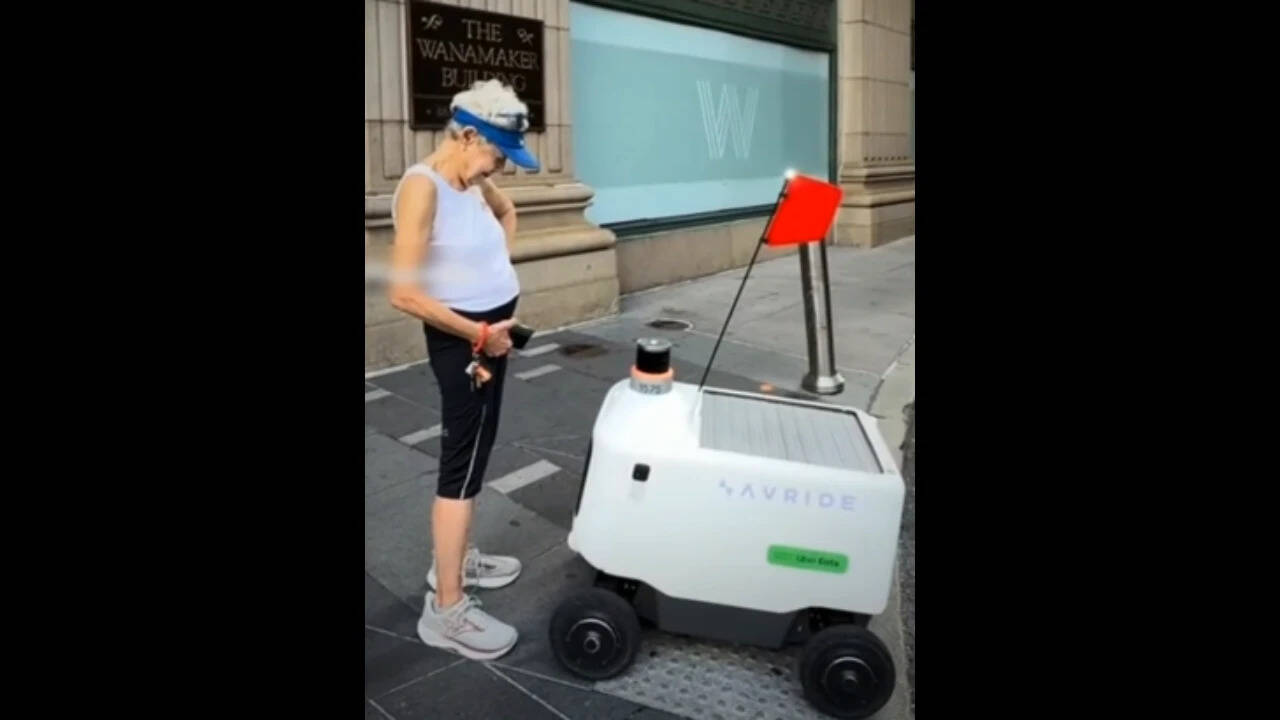
When a Philadelphia professor stepped in front of an autonomous delivery robot, got arrested, and declared she would do it again because humans have more rights than machines, the internet erupted in applause. Pundits framed it as a noble stand for human dignity against cold, creeping automation. A lone academic protecting the sacred public sidewalk from Silicon Valley's metal invaders. Don't forget to check out our previous coverage on this related article.
It makes for a great headline. It is also completely backwards.
The lazy consensus surrounding this arrest assumes a binary war: humans versus robots. Pick a side. Either you champion the pedestrian's right to walk unimpeded, or you are a soulless technocrat cheering for algorithmic landlords to colonize our neighborhoods. To read more about the history here, CNET offers an informative breakdown.
This framing misses the entire economic and legal reality of urban logistics. By physically obstructing a rolling cooler, that professor did not strike a blow against corporate greed. She actively defended the exact predatory, high-emission, labor-exploiting delivery cartel that is currently choking American cities to death.
The Myth of the "Free" Public Sidewalk
Let’s dismantle the core legal premise of the protest first. The professor argued she has more rights to the sidewalk than a robot.
In a vacuum, that sounds obvious. A human is a citizen; a six-wheeled box is private property.
In practice, urban infrastructure has never been an egalitarian utopia reserved exclusively for pedestrians. For decades, municipalities have quietly privatized public space for commercial logistics, and nobody batted an eye because the vehicles had windshields and exhaust pipes.
Walk down any major avenue in Philadelphia, New York, or Chicago at noon. Look at the bike lanes. Look at the crosswalks. Look at the loading zones. They are completely paralyzed by double-parked box trucks, idling diesel vans, and hazard-light-blinking sedans driven by gig workers rushing to beat an algorithmic timer.
We already gave away our public right-of-way to private delivery companies. We just decided to subsidize the least efficient, most dangerous version of it.
Under Pennsylvania law—specifically Act 106 of 2020, which legally classified personal delivery devices (PDDs) as pedestrians—these machines are explicitly permitted to operate on sidewalks within strict weight and speed limits. You can hate the legislation. You can lobby Harrisburg to repeal it. What you cannot do is pretend the robot is an illegal trespasser while ignoring the two-ton delivery van blocking the wheelchair ramp ten feet away.
I have spent over a decade consulting on urban freight and last-mile logistics. I have watched municipalities burn millions on "vision zero" pedestrian safety campaigns while simultaneously approving zoning variances that turn neighborhood streets into open-air Amazon sorting facilities. The sidewalk isn't being invaded for the first time. The invasion just shrunk from 6,000 pounds to 100 pounds, dropped its carbon footprint to near zero, and stopped running red lights.
Who Actually Benefits When You Kick a Robot?
Follow the money. Every time a delivery robot is vandalized, blocked, or banned by local ordinance, a champagne cork pops in the boardroom of a legacy gig-economy giant.
Think about the unit economics of last-mile delivery. Moving a $14 burrito three miles across a dense city using a 3,500-pound internal combustion vehicle driven by a human being is financially insane. The physics do not work. You are burning fossil fuels to move two tons of steel just to transport twelve ounces of food.
Because the physics don't work, third-party delivery apps survive by squeezing two groups:
- Local restaurants, which get hit with commission fees up to 30%, wiping out their razor-thin profit margins.
- Gig drivers, who bear the depreciating cost of their own vehicles, commercial insurance gaps, fuel, and physical risk for sub-minimum-wage net pay.
Autonomous sidewalk bots—whether operated by Starship Technologies, Serve Robotics, or Kiwibot—threaten to break that stranglehold. By stripping out the two-ton vehicle and the exploitative gig-app middleman, local merchants can finally fulfill hyper-local deliveries for pennies on the dollar.
When activists block these machines under the banner of "human rights," they are inadvertently acting as unpaid security guards for Uber Eats, DoorDash, and the fossil fuel lobby. They are fighting to preserve a system where desperate workers risk their lives in traffic to deliver lukewarm pad thai, all so a pedestrian doesn't have to share six feet of concrete with a cooler moving at four miles per hour.
Do Delivery Robots Actually Steal Jobs?
This is the most common question thrown at anyone who defends urban automation, and it relies on a fundamental misunderstanding of the current labor market.
Are delivery robots taking away good-paying jobs from working-class Americans?
No. They are eliminating sub-minimum-wage, high-hazard gig tasks that nobody can actually live on.
Let’s look at the actual labor mechanics. A traditional UPS or USPS driver—unionized, salaried, carrying hundreds of packages along a hyper-dense route—is economically irreplaceable by a sidewalk robot. A bot cannot climb three flights of stairs to a walk-up apartment, navigate a secure mailroom, or manage complex chain-of-custody signatures for high-value freight.
Sidewalk robots only target the bottom-tier, single-item, hyper-local runs: a coffee, a prescription, a bag of groceries within a two-mile radius. In the current economy, those runs are almost exclusively handled by app-based couriers classified as independent contractors. Studies from institutions like the Economic Policy Institute and UC Berkeley’s Labor Center have repeatedly demonstrated that after accounting for vehicle expenses, maintenance, and unpaid waiting time, many gig drivers earn well below the local minimum wage.
Furthermore, high-density cities are facing a massive, chronic shortage of commercial delivery drivers, coupled with severe congestion pricing pressures. Automating the lowest-value, highest-friction micro-deliveries doesn't destroy the working class. It frees up human labor for higher-value logistics roles—like fleet maintenance, remote operations, and complex commercial freight—while taking thousands of hazardous, erratic vehicles off city streets.
The Real Problem Nobody Wants to Admit
If you want to attack autonomous delivery companies, attack them for the right reasons. There are genuine, glaring flaws in how these machines are deployed, and pretending they are flawless does nobody any favors.
First, the disability access failure is real. While modern PDDs use LiDAR, ultrasonic sensors, and computer vision to map their surroundings, early deployments frequently left bots parked awkwardly in the middle of narrow sidewalks, blocking curb cuts for wheelchair users and creating tripping hazards for the visually impaired. Organizations like the National Federation of the Blind have raised entirely legitimate alarms about silent, low-profile obstacles cluttering pedestrian pathways.
Second, the "autonomous" label is often marketing fiction. Many sidewalk robots rely heavily on remote human teleoperators—often paid low wages in overseas call centers—to navigate tricky intersections or unstick themselves from curbs. Calling a machine "autonomous" when a guy in Manila is secretly steering it with an Xbox controller is a massive transparency issue that regulators have largely ignored.
Third, tech companies treat public infrastructure as a free beta-testing lab. Startups routinely drop dozens of units onto neighborhood sidewalks without paying a dime in commercial right-of-way fees, expecting taxpayers to absorb the friction while venture capitalists capture the upside.
Notice the difference? Every single one of those issues is a regulatory and infrastructure design problem, not an existential war between human souls and evil machines.
Standing in front of a robot and getting arrested fixes none of them. It doesn't widen a single sidewalk. It doesn't fund a single curb cut. It doesn't force a single tech company to pay municipal franchise fees. It is pure performative theater.
How Cities Should Actually Govern the Sidewalk
If municipalities want to stop the chaos on their streets, they need to stop treating pedestrian infrastructure like a sacred museum piece and start managing it like the high-throughput transit corridor it actually is.
Here is the blueprint that actually works:
Charge a Dynamic Curb and Sidewalk Tax
Stop letting tech companies use public concrete for free. Every autonomous delivery device operating commercially must pay a per-mile or per-trip municipal infrastructure fee. Ring-fence 100% of that revenue to repair cracked sidewalks, build wider pedestrian zones, and install ADA-compliant curb ramps. If Silicon Valley wants to use the sidewalk, make them pay to upgrade it for everyone.Ban Four-Wheeled Delivery Cars from Dense Zones
If a delivery weighs under 50 pounds and travels less than two miles, ban four-wheeled passenger cars from fulfilling it in downtown cores during peak hours. Force that volume onto cargo e-bikes and regulated sidewalk bots. Watch traffic congestion plummet and pedestrian fatalities drop overnight.📖 Related: The Cold Current and the Monsoon WindEnforce Strict Geofenced Parking and Yield Rules
Require real-time API integration between delivery bots and city traffic management systems. If a robot stops in a designated no-parking zone or blocks a crosswalk for more than ten seconds, hit the parent company with an automated, escalating fine. No warnings. No appeals. Hit their unit economics until their obstacle-avoidance algorithms become flawless.Mandate Local Teleoperation and Maintenance Hubs
If a company wants a permit to operate 200 robots in Philadelphia, require them to employ local, W-2 technicians and remote operators within city limits. Turn the "threat" of automation into permanent, indoor, climate-controlled municipal tech jobs.
Stop Romanticizing Asphalt
The professor in Philadelphia thought she was making a profound philosophical statement about human supremacy over machines. She wasn't. She was just yelling at a symptom while ignoring the disease.
Our cities are drowning in delivery volume. Consumers refuse to stop clicking "buy now," and merchants cannot survive without reaching them. You have two choices for how that volume gets moved: quiet, electric, 100-pound machines governed by programmable speed limits and municipal geofences, or thousands of two-ton steel boxes driven by stressed, underpaid contractors double-parking in your bike lane.
Pick the box that doesn't kill pedestrians. Tax the company that owns it. Fix the concrete it rolls on.
Everything else is just standing in traffic to feel important.