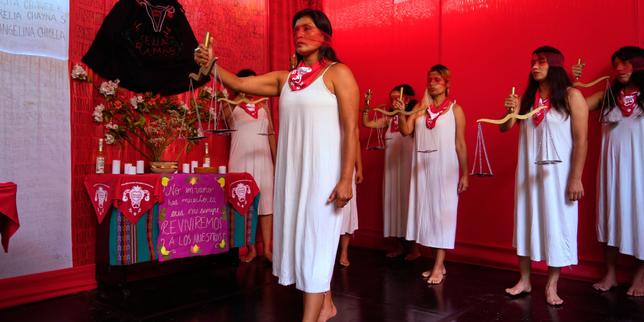
Peru just faced a reckoning it couldn't dodge any longer. The Inter-American Court of Human Rights recently handed down a massive ruling against the Peruvian state for the death of Mamérita Mestanza. She wasn't just a statistic. She was a mother from Cajamarca who died in 1998 after being harassed and coerced into a tubal ligation she didn't want.
This isn't just about one tragic medical error. It’s about a systemic, state-sponsored campaign that targeted the most vulnerable people in the country. If you think this is ancient history, you're wrong. The ripples of Alberto Fujimori’s "National Reproductive Health and Family Planning Program" are still felt today by thousands of indigenous and rural women who were treated like objects rather than citizens.
The court’s decision is a blunt reminder that "public health" can't be used as a cover for state violence. For decades, the Peruvian government tried to sweep the Mamérita Mestanza case under the rug. They've finally run out of room.
Why the Mamérita Mestanza Case Changed Everything
Mamérita Mestanza was 33 years old. She already had seven children. Health officials didn't just suggest she stop having kids; they intimidated her. They told her she’d be reported to the police if she didn't get sterilized. They told her she’d have to pay fines she couldn't afford.
After she gave in and had the surgery, things went south fast. She developed an infection. Her husband, Jacinto Salazar, begged for help. The doctors ignored him. They told him it was a normal recovery. She died days later.
The Inter-American Court didn't mince words. They ruled that Peru violated her right to life, her right to personal integrity, and her right to be free from violence and discrimination. This is huge because it formally acknowledges that the sterilization wasn't an isolated accident. It was part of a pattern of institutionalized racism and sexism.
The Dark Reality of the Fujimori Era Sterilizations
Between 1996 and 2000, roughly 270,000 women and 22,000 men underwent sterilization procedures in Peru. On paper, it looked like a progressive family planning initiative. In reality, it was a numbers game.
Health workers had quotas. If they didn't hit their targets, they risked losing their jobs. This created a perverse incentive to hunt for "candidates." They didn't go to the wealthy neighborhoods in Lima. They went to the Andes and the Amazon. They targeted Quechua-speaking women who often didn't fully understand the consent forms they were being told to thumbprint.
The Tactics of Coercion
It wasn't always physical force. Sometimes it was "food for surgery." In regions struggling with extreme poverty, offering basic staples in exchange for a medical procedure is inherently coercive.
- Threats of Legal Action: Telling uneducated villagers they'd go to jail for having too many kids.
- Medical Misinformation: Claiming the procedure was temporary or "reversible" when it wasn't.
- Lack of Aftercare: Once the surgery was done and the quota was filled, the state stopped caring.
Mamérita died because of that lack of aftercare. She was a number on a spreadsheet until she became a liability the state spent twenty years trying to ignore.
What This Ruling Means for the 300000 Others
Peru has been ordered to pay reparations. That's a start. But the court also told Peru it has to actually investigate and punish those responsible.
For years, the legal battle in Peru has been a total mess. Prosecutors have opened and closed the case against Alberto Fujimori and his former health ministers multiple times. The defense always says the same thing: "These were individual excesses by overzealous doctors."
The Inter-American Court just blew that defense out of the water. By recognizing the death of Mamérita Mestanza as a state-level failure, they’ve made it much harder for Lima’s political elite to pretend this was just a few bad apples. It was the whole orchard.
The Victims Registry
Peru created a registry for victims of forced sterilization (REVIES). Thousands signed up. They want more than just a "sorry." They want specialized healthcare for the long-term complications they’ve suffered. Many of these women were left with chronic pain, hormonal imbalances, and psychological trauma that destroyed their marriages and standing in their communities.
The court’s ruling isn't just about Mamérita’s family. It’s a legal lever for every single woman in that registry. It proves the state was at fault.
The Fight for Accountability Isn't Over
Don't think this ruling magically fixes everything. The Peruvian judicial system is notoriously slow and often influenced by political winds. Alberto Fujimori, now in his late 80s, has spent years in and out of prison for other crimes against humanity. His supporters still hold significant power in the Peruvian Congress.
The real challenge now is enforcement. International rulings are powerful, but they rely on the domestic government to actually cut the checks and seat the judges.
We should look at this as a blueprint for other nations. This isn't just a "Peru problem." Forced sterilization has happened in the US, in Canada, and across Europe throughout the 20th century. The Mamérita Mestanza ruling sets a global precedent. It says that the state's desire to "manage" its population can never override an individual's right to bodily autonomy.
If you’re following this case, the next thing to watch is how the Peruvian Treasury handles the reparations. They often claim they don't have the budget. That’s a lie. It’s a matter of priority, not math.
Keep an eye on the Peruvian National Association of Women Affected by Forced Sterilizations (AMPAEF). They’re the ones on the ground making sure the government doesn't "forget" the court’s orders. Support their work or share their stories. The only way the Peruvian state actually changes is if the international community keeps the pressure high. Silence is exactly what the architects of this program are betting on.