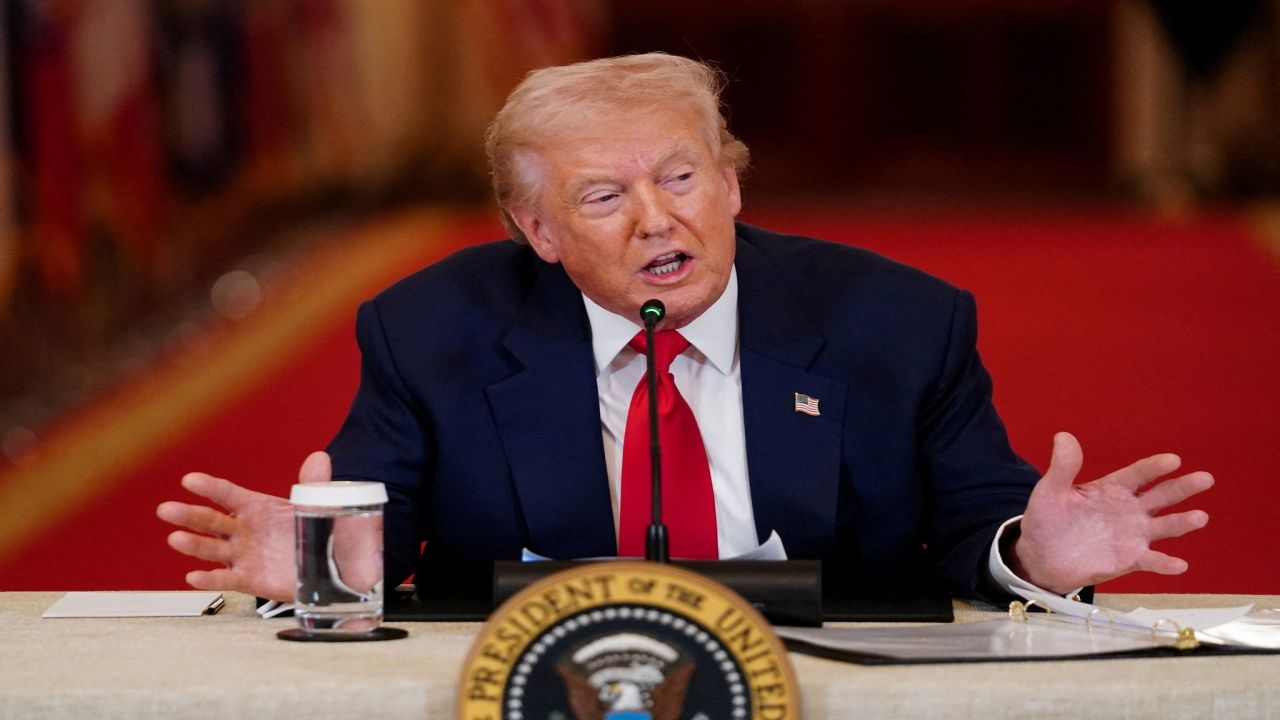
The American military presence in Iran has moved beyond a temporary tactical deployment and morphed into a permanent fixture of Middle Eastern geopolitics. President Trump has signaled that troop withdrawals are not on the table until a "real agreement" is signed, effectively tethering the Pentagon’s regional footprint to a diplomatic breakthrough that remains elusive. This isn't just about regional security or the containment of nuclear ambitions. It is a fundamental shift in how the United States uses its military as a primary negotiating tool rather than a last resort. By maintaining a footprint on the ground, the administration is betting that the physical presence of American hardware and personnel will eventually force a concession that decades of sanctions could not achieve.
The current situation is a departure from the "maximum pressure" campaigns of the past. It is an evolution into "maximum presence." While previous administrations focused on economic strangulation through the SWIFT banking system and oil embargoes, the current strategy treats the Persian Gulf and specific Iranian border zones as a high-stakes bargaining table where the chips are battalions and carrier strike groups.
The Illusion of the Short Term
Military deployments are rarely as brief as the press briefings suggest. History shows us that "until a deal is reached" is often a euphemism for a decade-long engagement. The administration’s refusal to set a timeline creates a strategic ambiguity that serves two purposes. First, it keeps Tehran in a state of constant defensive readiness, which is an exhausting and expensive way to run a country. Second, it signals to regional allies like Saudi Arabia and Israel that the United States is not looking for an exit ramp.
The "real agreement" Trump refers to is a far cry from the 2015 Joint Comprehensive Plan of Action (JCPOA). The goal now is a comprehensive treaty that addresses ballistic missile programs, regional proxy activities, and a permanent end to enrichment—not just a temporary freeze. But by making the military withdrawal the reward for such a deal, the U.S. has created a paradox. If the troops leave, the leverage disappears. If the troops stay, the tension remains a hair-trigger away from kinetic conflict.
Hard Power as the New Diplomacy
For decades, the State Department led the charge on Iranian relations, with the Department of Defense providing the muscle in the background. That hierarchy has flipped. The military is now the primary envoy. This shift is visible in how the administration communicates. Instead of traditional diplomatic cables, the "negotiation" happens through the movement of B-52 bombers and the deployment of additional Patriot missile batteries.
This isn't just theater. It's a calculated application of the "madman theory," where the uncertainty of American action is used to keep the adversary off balance. However, the risk of a miscalculation is higher than it has been in forty years. When you have thousands of troops stationed in close proximity to Iranian-backed militias, the line between a "deterrent" and a "target" becomes dangerously thin.
The Iranian leadership finds itself in a corner. They cannot afford to look weak by coming to the table while the U.S. military is at their doorstep, yet they cannot afford the economic and social cost of the status quo. This stalemate is the intended outcome of the current U.S. policy. The administration believes that by holding the line, the internal pressures within Iran will eventually reach a boiling point, making any deal—no matter how lopsided—preferable to continued isolation.
The Logistics of Forever
Maintaining a deployment of this scale requires more than just political will; it requires a massive logistical tail. We are seeing a quiet but significant buildup of infrastructure in neighboring countries. Bases in Qatar, Bahrain, and the UAE are being upgraded not for a surge, but for a long-haul stay.
Congressional critics point to the "not-a-war-but-not-a-peace" status as a way to bypass the War Powers Act. Since there is no active combat, the administration can maintain this posture indefinitely without a formal declaration of war or specific authorization. It is a gray-zone operation conducted in the light of day. The costs are mounting, reaching into the billions of dollars annually, but the White House views this as a necessary investment in "global stability."
The Proxy Factor
One of the most significant hurdles to a "real agreement" is the decentralized nature of Iranian influence. Even if the leadership in Tehran wanted to sign a deal tomorrow, they don't have total control over every militia in Iraq or every Houthi cell in Yemen. The U.S. military presence is designed to act as a dam against these peripheral threats.
If the U.S. pulls out before these groups are neutralized or decoupled from Iranian support, the vacuum would be filled instantly. This is why the administration insists on a "comprehensive" deal. They aren't just looking for a signature on a piece of paper; they are looking for a fundamental restructuring of the Middle Eastern power balance.
Economic Warfare by Other Means
The deployment is also a form of economic warfare. By forcing Iran to maintain a high state of military alert, the U.S. is effectively draining the Iranian treasury. Every dollar Tehran spends on air defense or naval patrols is a dollar that isn't going toward fixing their crumbling domestic infrastructure or stabilizing their currency.
The American taxpayer is also footing a bill, but the disparity in resources is vast. The U.S. can afford to maintain this posture for years; Iran likely cannot. This is a war of attrition where the primary weapon is the defense budget.
Regional Reactions and the Silence of Allies
While the U.S. talks about "real agreements," regional players are making their own calculations. Some Gulf states are quietly hedging their bets, opening back-channel communications with Tehran even as they host American troops. They see the writing on the wall. A permanent U.S. presence is a double-edged sword: it provides security, but it also makes them a prime target in the event of a flare-up.
European allies remain largely on the sidelines, skeptical that this "presence-first" strategy will lead to anything other than a more entrenched and bitter Iranian regime. They argue that by removing the incentive of a clear withdrawal timeline, the U.S. has removed the primary reason for Iran to negotiate in good faith.
The Strategy of No Return
There is a growing sense among industry analysts and intelligence veterans that there is no "Plan B." The administration has tied its prestige so closely to this specific outcome that anything less than a total Iranian capitulation will be framed as a failure. This creates a dangerous "sunk cost" dynamic. Having deployed the troops and spent the money, the political cost of withdrawing without a "victory" becomes too high to pay.
The military is now an integral part of the regional economy and political structure. It isn't just about Iran anymore; it's about maintaining the current global order through a visible, localized show of force. The "real agreement" might be the stated goal, but the presence itself has become the policy.
The reality on the ground is that the U.S. military is no longer waiting for a deal to be made. They are the environment in which the deal must be made. If Tehran wants the shadow to lift, they have to accept the terms of the person casting it. Until then, the engines of the C-17s and the radar arrays of the Aegis destroyers will remain active, a constant, humming reminder that the American exit is a door that only opens from the outside.
Every day the troops remain, the definition of a "real agreement" moves further away from compromise and closer to a demand for total realignment. The boots on the ground are not just a security measure; they are the ink in the pen that the U.S. is handing to Iran. You don't leave the table when you think you're winning the long game.